
Introduction
In the structural design of DTF Film, not all functional layers are located on the printing side. While most attention is placed on surface-facing layers, the backside of the film also plays a defined role within the overall structure.
Within the Structural Architecture of DTF Film, different layers serve different purposes, including surface interaction, separation control, and mechanical stability. The backside of the film is not left untreated but is often defined by a dedicated functional layer.
The back coating layer belongs to this category and is defined as part of the structural system rather than as a visible performance feature.
What Is Back Coating Layer
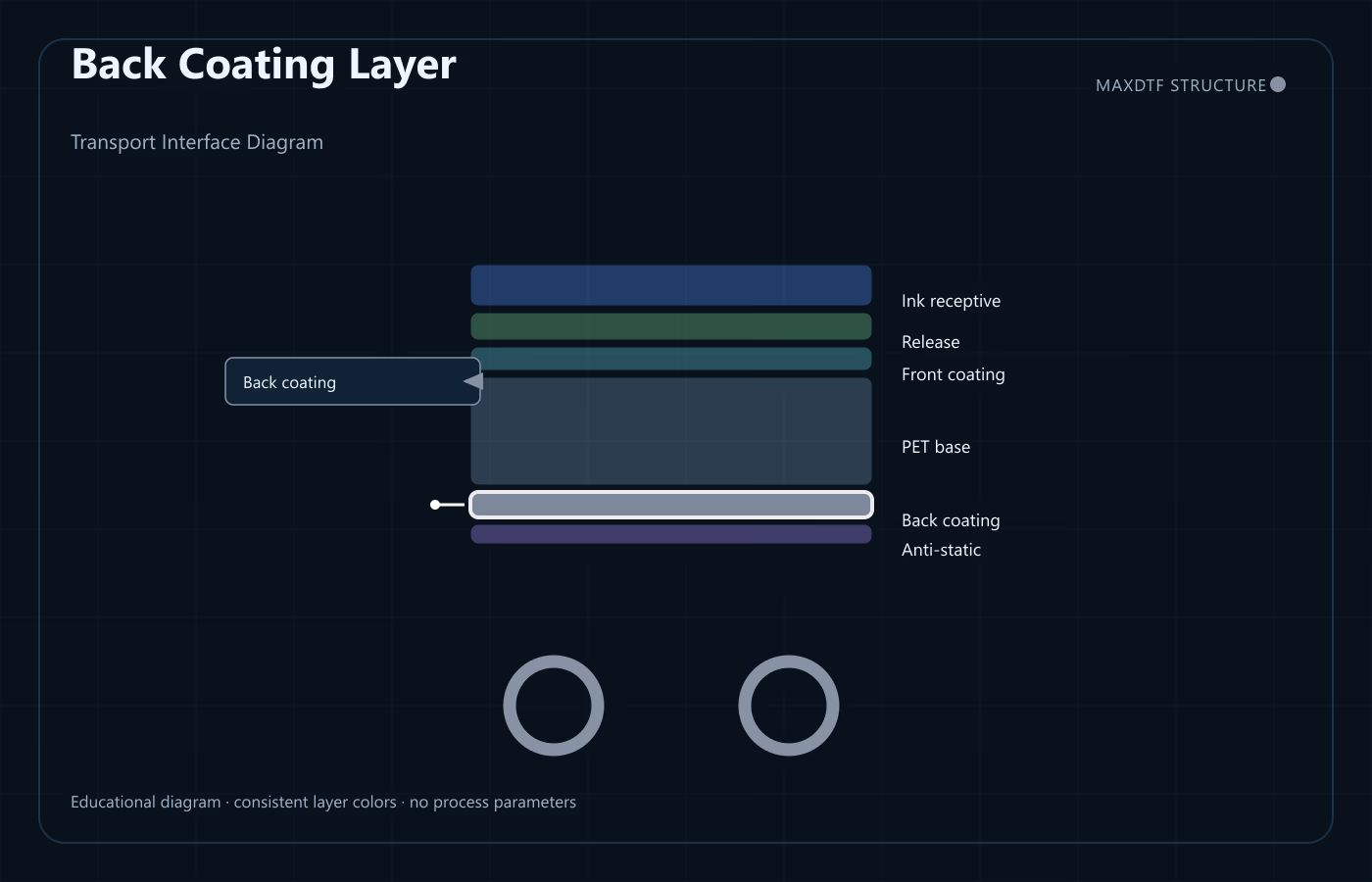
Back coating layer is a functional layer applied to the backside of DTF Film that defines mechanical interaction between the film and external contact surfaces within the system.
It exists opposite to the surface-facing layers such as the Ink Receptive Layer and Release Layer, and forms the backside boundary of the film structure.
How Back Coating Layer Functions in the DTF System
Within the DTF system, the back coating layer functions as a surface control layer that regulates how the film behaves Back coating layer functions as a mechanical interface on the backside of the film.
It defines:
- how the film interacts with transport surfaces
- how the film maintains stability during movement
- how contact conditions are structured on the non-printing side
Within the layered system, the back coating layer operates in coordination with the Base PET Film and the overall Layer Stack Structure in DTF Film.
In certain structural configurations such as Double-Sided DTF Film Structure, the back coating layer forms part of a balanced layer distribution across both sides of the film.
Back coating layer exists independently from surface-facing layers and does not participate in surface interaction or separation processes.
What Back Coating Layer Does NOT Do
Back coating layer does not control ink absorption.
Back coating layer does not define image formation or color density.
Back coating layer does not determine separation behavior defined by the Release Layer.
Back coating layer does not replace the function of the Anti-Static Layer.
Back coating layer does not define bonding behavior associated with DTF Adhesive Powder.
It defines backside mechanical interaction only, not surface-level or transfer-related functions.
Structural Nature
Back coating layer is a backside functional coating within the DTF Film system.
It exists as part of the layered structure supported by the Base PET Film and positioned opposite to surface-facing layers such as the Ink Receptive Layer and Release Layer.
Unlike structural support components or surface interaction layers, the back coating layer defines a backside interface rather than contributing to image formation or separation.
Within the Structural Architecture of DTF Film, it is classified as a functional layer that defines backside behavior rather than surface behavior.
Performance Boundaries
Back coating layer operates within defined boundaries such as backside surface condition, contact stability, and mechanical interaction consistency.
It defines how the film behaves when in contact with external surfaces but does not extend into:
- surface interaction defined by the Ink Receptive Layer
- separation behavior defined by the Release Layer
- electrostatic regulation defined by the Anti-Static Layer
Back coating layer remains limited to defining backside mechanical behavior.
Common Misunderstandings
Back coating layer is often misunderstood as a substitute for electrostatic control.
In practice, it defines mechanical interaction but does not replace the function of the Anti-Static Layer.
Another common misunderstanding is that backside coating directly influences print quality. However, print quality is defined by surface-facing layers such as the Ink Receptive Layer and Release Layer, not by the backside structure.
It is also sometimes assumed that back coating layer contributes to bonding or adhesion. In reality, bonding is defined by DTF Adhesive Powder, not by backside coatings.
Where Back Coating Layer Sits in the System
Back coating layer sits on the backside of the film within the DTF Film structure.
It is positioned opposite the surface-facing layers and supported by the Base PET Film.
Within the system hierarchy:
back coating layer defines backside mechanical interface
DTF Film defines the complete material structure
surface layers define interaction and separation