
Introduction
In discussions about DTF film construction, attention is often focused on surface-visible layers such as the ink receptive layer or the release layer. These layers directly participate in printing and transfer behavior, making them easier to observe and evaluate.
However, beneath these functional surfaces, there are structural layers that are not directly visible during printing but are essential to the integrity of the system. One of these layers is the front coating layer.
This concept is part of the Structural Architecture of DTF Film, which defines how layered film systems are constructed and stabilized.
What Is Front Coating Layer
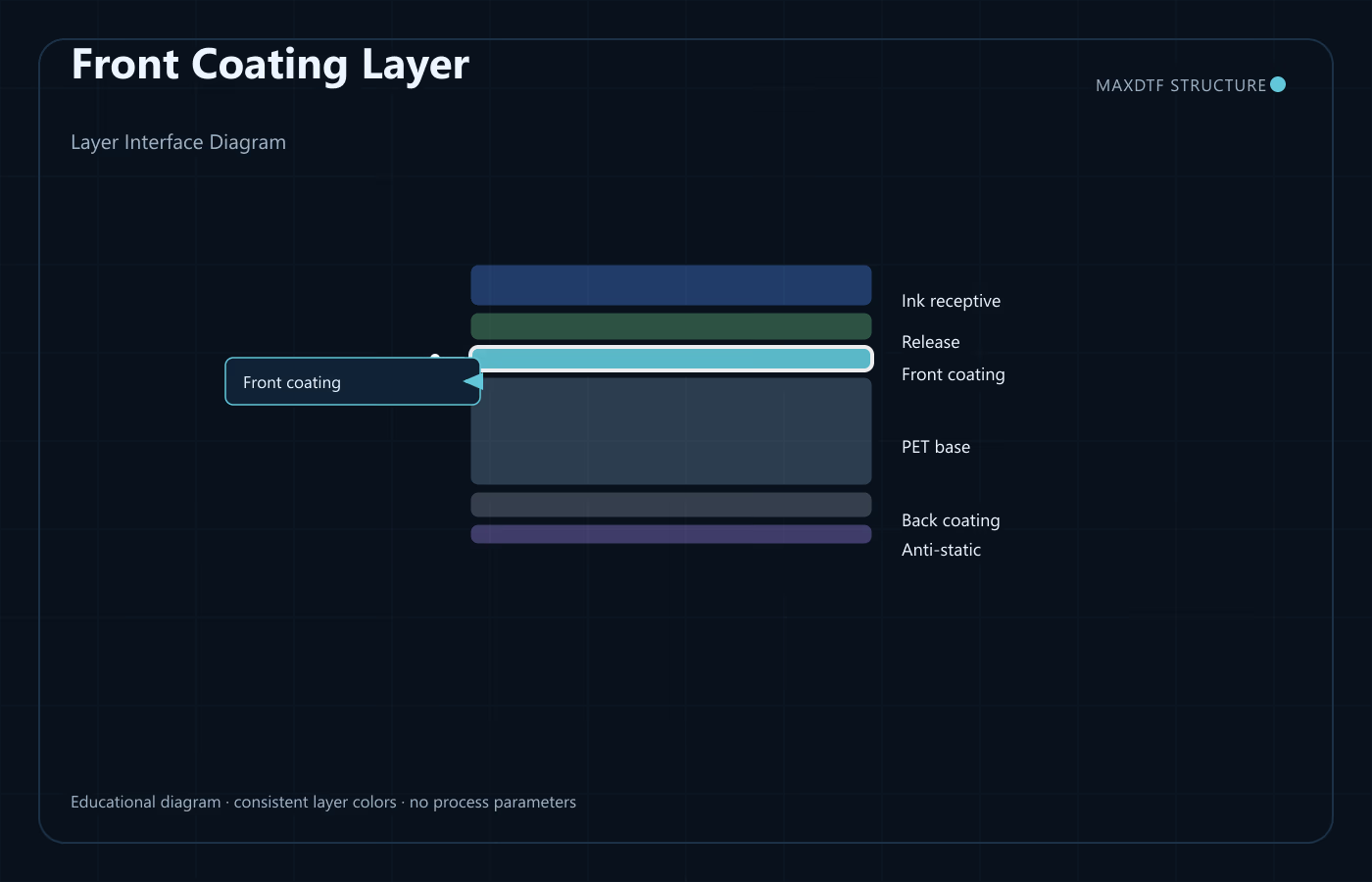
Front coating layer is an intermediate bonding layer that defines the structural interface between the PET base film and the upper functional coating layers in the DTF film.
It does not function as a printing surface and does not directly interact with DTF ink or DTF adhesive powder during the printing process.
Instead, it exists within the internal structure of the film and is applied as part of the coating sequence to establish controlled adhesion between layers.
How Front Coating Layer Functions in the DTF System
Within the DTF system, the front coating layer functions as a structural interface that connects dissimilar materials into a unified layered system.
Its role is to:
- Establish adhesion between the PET base film and upper coatings
- Provide a stable base for layers such as the release layer
- Maintain layer continuity during handling and processing
- Support the structural alignment of the coating stack
The function of front coating is internal and structural, operating beneath the surface layer where the ink receptive layer performs image-related functions.
What Front Coating Layer Does NOT Do
Front coating layer does not control ink absorption.
Front coating layer does not define release timing.
Front coating layer does not influence color appearance.
Front coating layer does not determine powder adhesion behavior.
Front coating layer does not replace the function of the ink receptive layer or the release layer.
Its role is structural rather than functional at the printing surface.
Structural Nature
Front coating layer belongs to the internal structural system of the DTF film.
It is positioned between the PET base film and upper functional layers, forming part of a layered composite structure.
Unlike surface coatings, it does not interact with external materials during printing.
Instead, it operates as a bonding interface within the coating stack, supporting the structural integrity defined in the Structural Architecture of DTF Film.
Performance Boundaries
Front coating layer operates within defined boundaries such as:
- Adhesion strength between layers
- Compatibility with PET base film surface properties
- Coating thickness uniformity
- Stability under thermal and mechanical stress
Outside these boundaries, the structural integrity of the layered system may vary.
Front coating layer does not control performance outside its defined structural role.
Common Misunderstandings
Front coating layer is often misunderstood as a printing-related layer.
It is sometimes confused with the ink receptive layer due to its position within the coating stack.
Another common misunderstanding is that front coating directly improves print quality.
In reality, its role is structural rather than visual.
It is also incorrectly assumed that all DTF films include a front coating layer as a standard component.
Where Front Coating Layer Sits in the System
Front coating layer sits within the internal structure of the DTF film.
A simplified structure includes:
- ink receptive layer
- release layer
- Front Coating Layer
- PET base film
On the reverse side:
- back coating layer
This layered structure is defined within the Structural Architecture of DTF Film.