“Direct Transfer vs. Indirect Transfer: Understanding the Difference” -MAXDTF- UV DTF Transfer AB Film Manufacturer, PET UV DTF Film Factory, Made in China
In the realm of digital printing, transfer technologies play a pivotal role in determining design quality, substrate compatibility, and production efficiency. Two fundamental approaches—direct transfer and indirect transfer—dominate the industry, each with distinct mechanisms, advantages, and ideal use cases. For In the realm of digital printing, transfer technologies play a pivotal role in determining design quality, substrate compatibility, and production efficiency. Two fundamental approaches—direct transfer and indirect transfer—dominate the industry, each with distinct mechanisms, advantages, and ideal use cases. For creators, small business owners, and printing professionals, clarifying the differences between these methods is essential to selecting the right solution for specific projects. This article breaks down the core characteristics of direct and indirect transfer, compares their key attributes, and offers guidance on when to use each.
1. Defining the Basics: What Are Direct and Indirect Transfer?
At their core, direct and indirect transfer differ in whether the design is printed directly onto the final substrate or via an intermediate medium. This foundational distinction shapes every aspect of the printing process, from equipment requirements to end results.
Direct Transfer: Print Straight to the Substrate
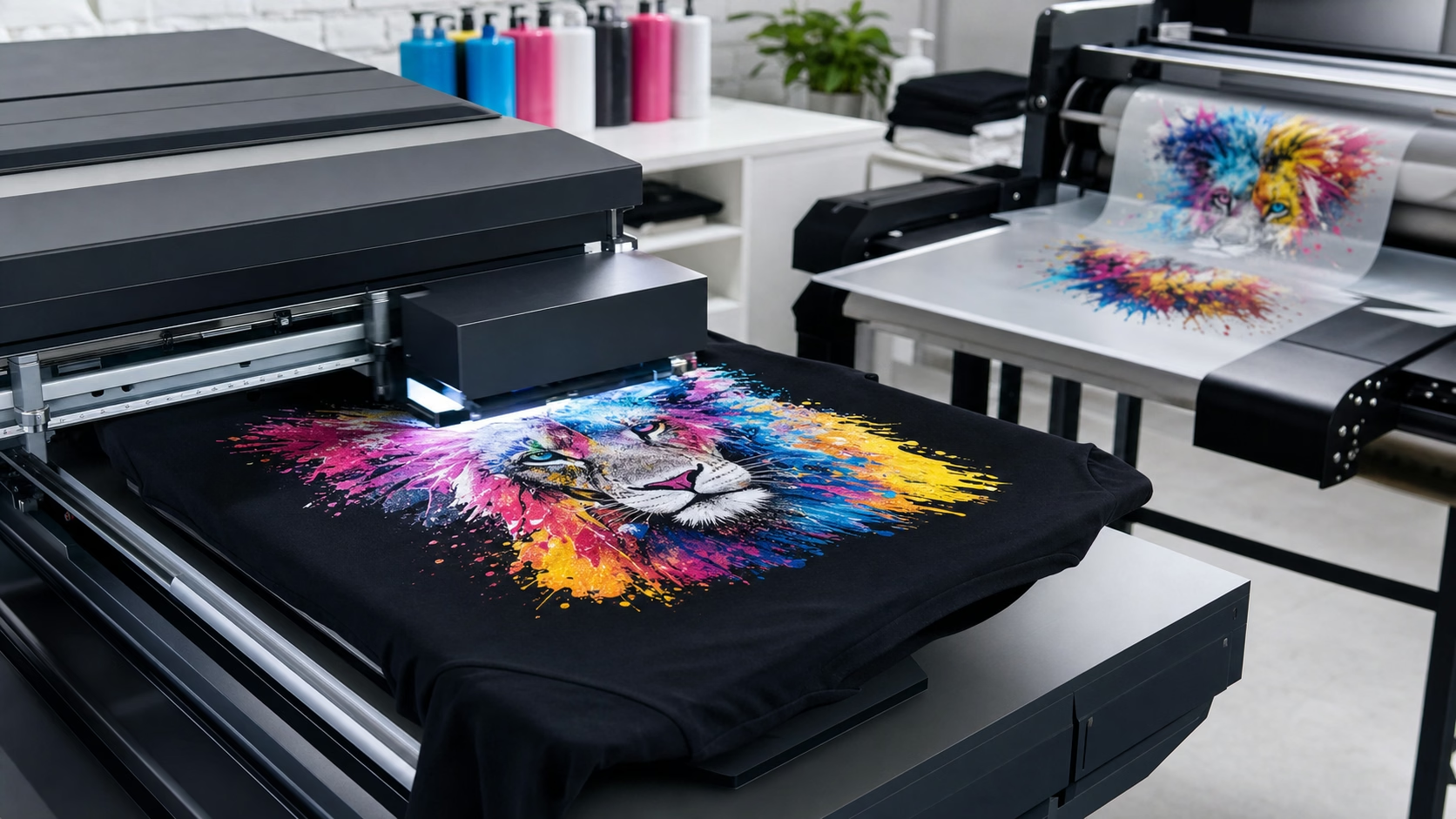
Direct transfer, as the name suggests, involves printing a digital design directly onto the target substrate without the use of a separate transfer medium (such as film or paper). The ink is deposited onto the material—whether fabric, metal, plastic, or glass—and cured or dried in place. This method eliminates the “transfer step” entirely, creating a direct bond between the ink and the substrate.
Common examples of direct transfer technologies include Direct-to-Garment (DTG) printing (used for apparel), Direct-to-Substrate (DTS) printing (for hard goods like mugs and signage), and traditional sublimation (where dye is transferred directly into polyester fibers via heat). In each case, the printer is calibrated to work with the specific properties of the substrate, ensuring ink adhesion and durability.
Indirect Transfer: Print First, Transfer Later
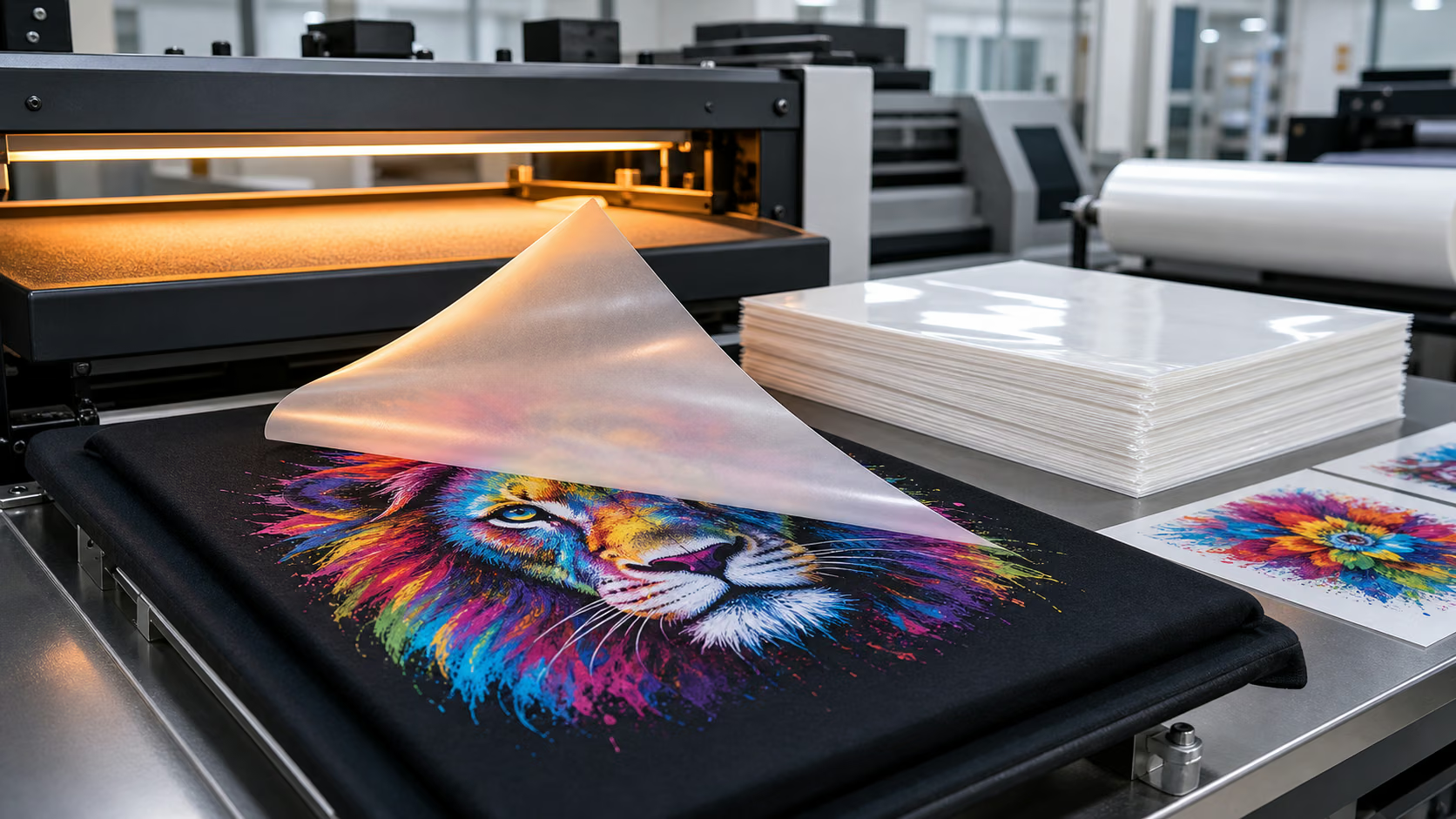
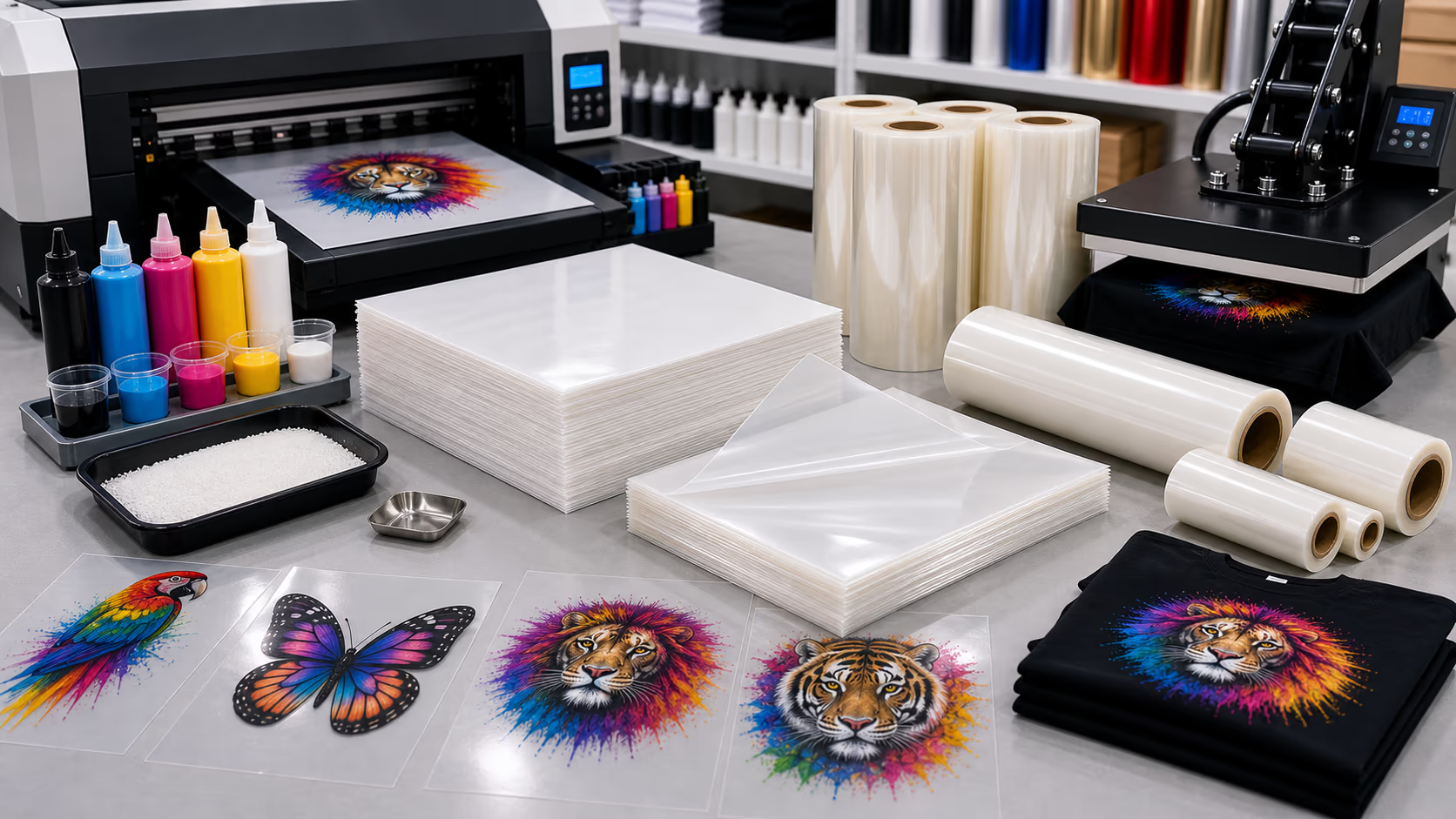
Indirect transfer, by contrast, relies on an intermediate medium to bridge the gap between the printer and the final substrate. The design is first printed onto a specialized transfer material (e.g., DTF film, heat transfer paper, or UV DTF film), then transferred to the target substrate using heat, pressure, or chemical bonding. The intermediate medium acts as a carrier, ensuring the design is transferred cleanly and precisely.
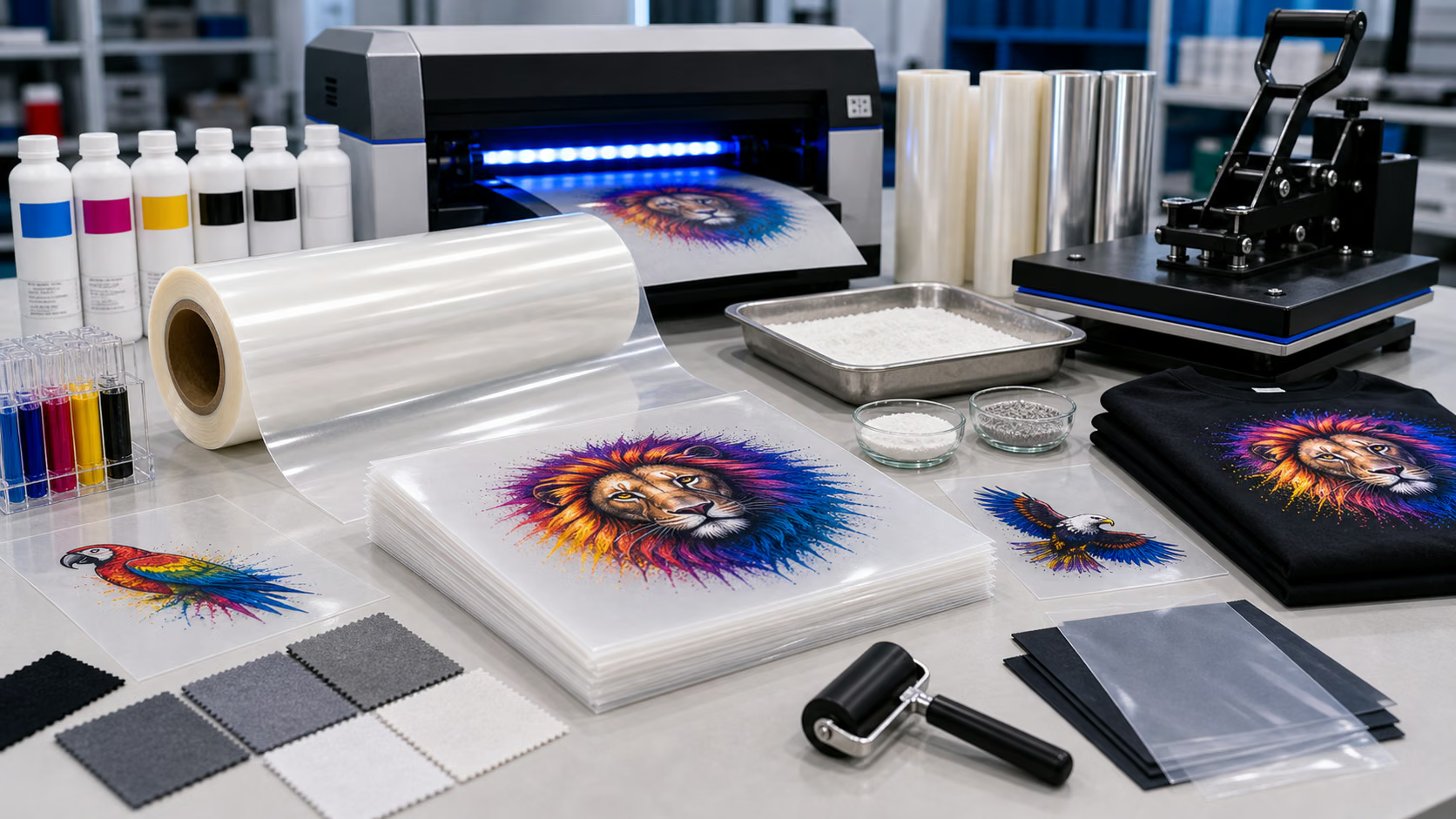
Prominent indirect transfer methods include Direct-to-Film (DTF) printing, heat transfer vinyl (HTV) application, and UV DTF printing. For instance, in DTF printing, a design is printed onto a PET film with adhesive backing; after curing, the film is peeled away, and the design is pressed onto fabric or hard goods. This two-step process allows for greater flexibility in substrate compatibility.
2. Core Mechanisms: How Each Transfer Method Works
The operational workflows of direct and indirect transfer highlight their structural differences, with each method requiring specific equipment and steps to achieve optimal results.
Direct Transfer Workflow
The direct transfer process is streamlined and linear, typically involving three key steps:
- Substrate Preparation: The target material is cleaned, pre-treated (if necessary), and positioned in the printer. For example, DTG printing may require a pre-treatment solution on cotton to improve ink absorption.
- Direct Printing: The printer deposits ink directly onto the substrate using printheads calibrated for the material’s texture and porosity. Inks vary by technology—water-based inks for DTG, UV-curable inks for DTS, and sublimation dyes for polyester.
- Curing/Drying: The printed design is cured or dried to ensure adhesion. This may involve heat (for sublimation), UV light (for UV inks), or air-drying (for water-based inks).
Indirect Transfer Workflow
Indirect transfer adds a critical “transfer step” after printing, resulting in a four-step process:
- Design Printing on Transfer Medium: The design is printed onto the intermediate transfer material (e.g., DTF film or transfer paper) using inks compatible with the medium (e.g., UV-curable inks for UV DTF film).
- Preparing the Transfer Medium: The printed medium is cured or dried to set the ink. For DTF or UV DTF, this may involve applying a powder layer or using UV light to solidify the ink.
- Positioning and Transfer: The transfer medium is aligned with the target substrate, and heat, pressure, or adhesive activation is used to transfer the design. A heat press is commonly used for this step, with settings adjusted for the substrate type.
- Removing the Medium: The intermediate transfer material is peeled away, leaving the design bonded to the substrate. Some methods (e.g., HTV) require the medium to be removed while hot, while others (e.g., DTF) allow for cool peeling.
3. Key Comparison: Direct vs. Indirect Transfer
To better understand when to choose one method over the other, it’s essential to compare their performance across critical factors:
Substrate Compatibility
Direct Transfer: Limited by substrate properties. Direct methods require the substrate to be compatible with the printer’s ink and feeding mechanism. For example, DTG printing works best on cotton and cotton blends, while DTS printing requires substrates that can withstand UV curing. Traditional sublimation is restricted to polyester and polymer-coated materials.
Indirect Transfer: Highly versatile. The intermediate medium acts as a buffer, allowing designs to be transferred to almost any substrate—including cotton, leather, wood, metal, glass, and even curved surfaces. This makes indirect transfer ideal for projects involving mixed or non-traditional materials.
Design Quality and Durability
Direct Transfer: Offers exceptional detail and color vibrancy. Since ink is deposited directly onto the substrate, there is minimal loss of resolution. Durability varies by ink type—UV-curable inks provide excellent resistance to fading and abrasion, while water-based DTG inks may fade slightly after repeated washes.
Indirect Transfer: Quality depends on the transfer medium and process. High-quality DTF or UV DTF transfers can match direct transfer detail, but some methods (e.g., low-cost heat transfer paper) may result in a “plastic-like” feel or edge peeling. UV DTF and high-tack DTF films, however, offer durability comparable to direct transfer, with the added benefit of a protective ink layer.
Production Efficiency and Cost
Direct Transfer: Efficient for large batches. Once the printer is set up, direct transfer allows for continuous printing without the need for separate transfer steps. However, equipment costs are often higher—DTG and DTS printers are more expensive than standard transfer printers. Pre-treatment steps (e.g., for cotton) can also add time for small batches.
Indirect Transfer: Flexible for small batches and custom orders. The ability to print designs in advance and transfer them on-demand makes indirect transfer ideal for one-off projects or personalized items. Equipment costs are generally lower (e.g., a DTF printer is more affordable than a DTG printer), but the extra transfer step can slow down large-scale production.
Ease of Use and Accessibility
Direct Transfer: Requires specialized knowledge. Calibrating direct transfer printers for different substrates (e.g., adjusting ink flow for thick fabrics) demands training. Maintenance is also more complex—DTG printheads, for example, need regular cleaning to prevent clogging.
Indirect Transfer: More beginner-friendly. Many indirect methods (e.g., HTV, basic DTF) have simpler workflows, and transfer printers are often easier to maintain. The ability to test transfers on scrap material before applying to the final substrate also reduces the risk of errors.
4. When to Choose Direct vs. Indirect Transfer
The decision between direct and indirect transfer hinges on project goals, substrate type, batch size, and budget. Here are clear guidelines for each scenario:
Choose Direct Transfer When:
- You’re printing large batches of the same design (e.g., 100+ custom t-shirts for a brand).
- The substrate is compatible with direct methods (e.g., polyester for sublimation, cotton for DTG).
- You prioritize maximum design detail and a “no-feel” finish (e.g., high-end apparel).
- You have the budget for specialized direct transfer equipment and training.
Choose Indirect Transfer When:
- You’re working with non-traditional substrates (e.g., leather jackets, wooden signs, glass mugs).
- You need flexibility for small batches or one-off custom orders (e.g., personalized gifts).
- You have a limited budget and want to avoid investing in high-cost direct transfer printers.
- You want to combine multiple design effects (e.g., a sublimated base with a UV DTF overlay).
5. Conclusion: Synergy, Not Competition
Direct and indirect transfer are not mutually exclusive—they often complement each other in advanced printing workflows. For example, a creator might use direct sublimation to print a full-color base design on a polyester hoodie, then add a raised logo using indirect UV DTF transfer. Understanding the strengths of each method allows for strategic decision-making, ensuring that every project benefits from the most suitable technology.
Ultimately, the choice between direct and indirect transfer boils down to aligning the method with project requirements. By considering substrate compatibility, batch size, design goals, and budget, creators and businesses can leverage these transfer technologies to unlock maximum creativity and efficiency in their printing endeavors.