
Introduction
DTF film structures are often described using terms such as single-sided or double-sided. These terms are commonly used in the industry to distinguish different types of film construction.
However, these descriptions are often interpreted from a performance perspective rather than from a structural definition.
Understanding these terms correctly requires placing them within the Structural Architecture of DTF Film, where they represent different configurations of how coating layers are distributed across the PET base film.
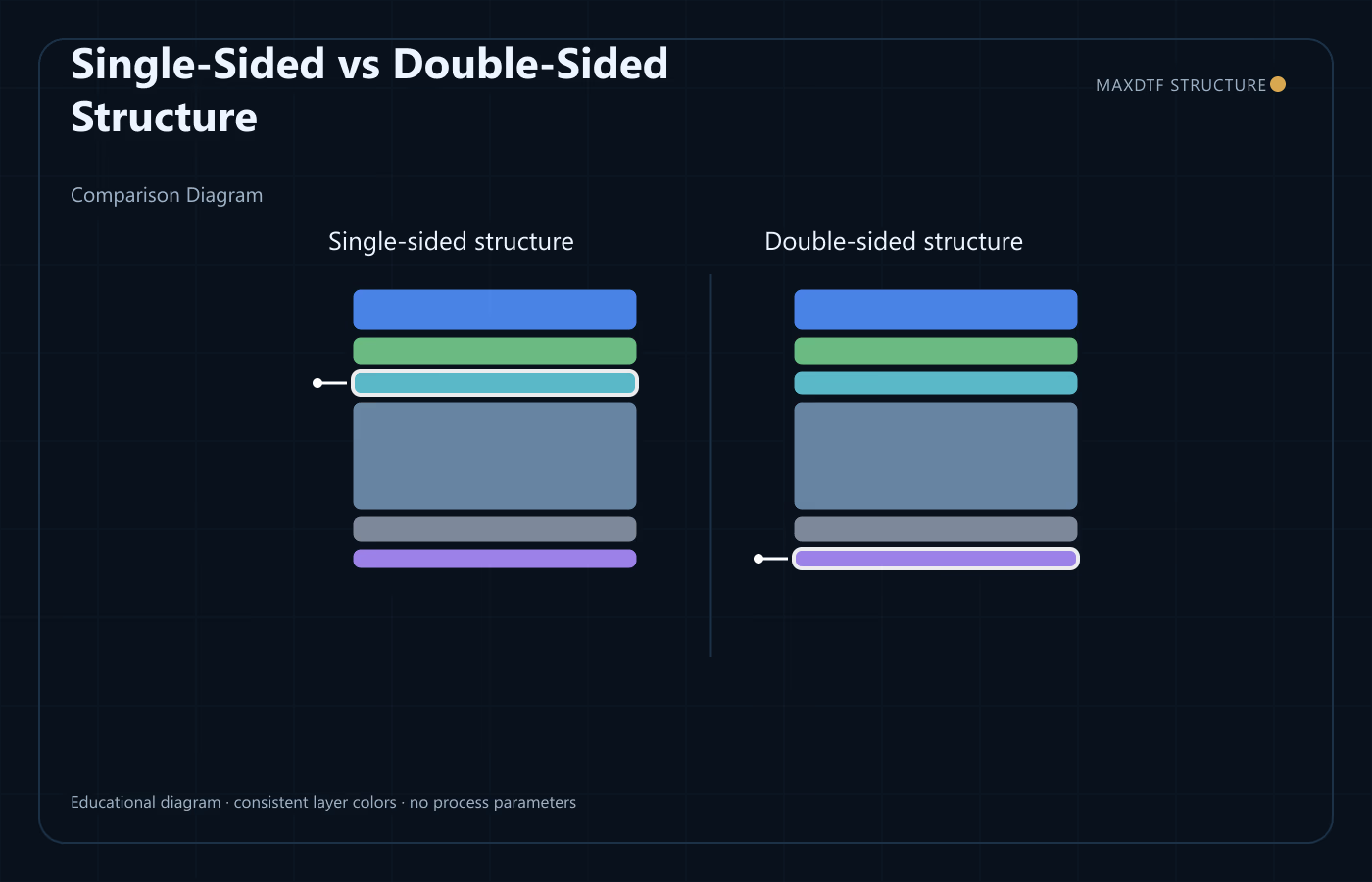
What Is Single-Sided DTF Film Structure
Single-sided DTF film structure is a coating configuration that defines functional layers applied primarily on one side of the PET base film in the DTF system.
In this structure:
- The front side contains functional layers such as the ink receptive layer and the release layer
- The backside has minimal or simplified treatment
This structure defines an asymmetrical distribution of coatings within the DTF film.
What Is Double-Sided DTF Film Structure
Double-sided DTF film structure is a coating configuration that defines functional layers applied on both sides of the PET base film in the DTF system.
In this structure:
Front side:
Back side:
This structure defines a symmetrical or balanced coating distribution across the film.
How Back Coating Influences Structural Behavior
Back coating plays a role in:
- Tension balance
- Curl control
- Flatness stability
- Feeding consistency
When functional layers are applied only on one side, internal stress distribution may become uneven.
Back coating helps stabilize the PET base under thermal and mechanical stress.
How These Structures Function in the DTF System
Within the DTF system, single-sided and double-sided structures function as different coating distribution models.
Their role is to:
- Define how layers are arranged across the PET base film
- Establish structural configuration of the DTF film
- Determine whether the coating system is asymmetrical or balanced
These structures describe configuration, not behavior.
What These Structures Do NOT Do
Single-sided or double-sided structure does not control ink absorption.
It does not define release timing.
It does not determine color appearance.
It does not define powder adhesion behavior.
It does not replace the role of individual layers such as the ink receptive layer or release layer.
These structures define how layers are arranged, not how each function operates.
Structural Nature
Single-sided and double-sided structures belong to the configuration layer of the DTF film.
They describe how functional layers are distributed across the base material.
This classification is independent of individual layer functions.
It represents a design-level distinction within the Structural Architecture of DTF Film.
Performance Boundaries
These structures operate within defined boundaries such as:
- Coating distribution across the film
- Structural symmetry or asymmetry
- Layer stacking configuration
Outside these definitions, the structure itself does not define performance outcomes.
Single-sided and double-sided structures do not control behavior beyond their configuration role.
Common Misunderstandings
Single-sided and double-sided structures are often interpreted as indicators of performance quality.
They are sometimes assumed to directly determine print results or transfer behavior.
Another misunderstanding is that backside coating automatically defines system performance.
In reality, these structures define arrangement rather than function.
They are configuration descriptors, not performance variables.
Where These Structures Sit in the System
Single-sided and double-sided configurations sit at the structural design level of the DTF film.
They define how layers are arranged around the PET base film.
They exist within the broader framework of the Structural Architecture of DTF Film.