
Introduction
In DTF printing, electrostatic charge is often treated as a defect condition, typically associated with powder scattering, material sticking, or unstable handling behavior. However, electrostatic charge is not a problem by definition. It is a fundamental physical condition that exists in all material interactions.
Electrostatic charge is present whenever materials come into contact, separate, or move relative to each other. In the DTF system, these interactions occur continuously between film, ink, powder, and surrounding air.
Rather than being an isolated issue, electrostatic charge functions as an underlying environmental condition that influences how materials behave within the system.
Understanding electrostatic charge requires shifting from a problem-based perspective to a system-based perspective. It is not something that appears occasionally but something that exists continuously and varies in intensity.
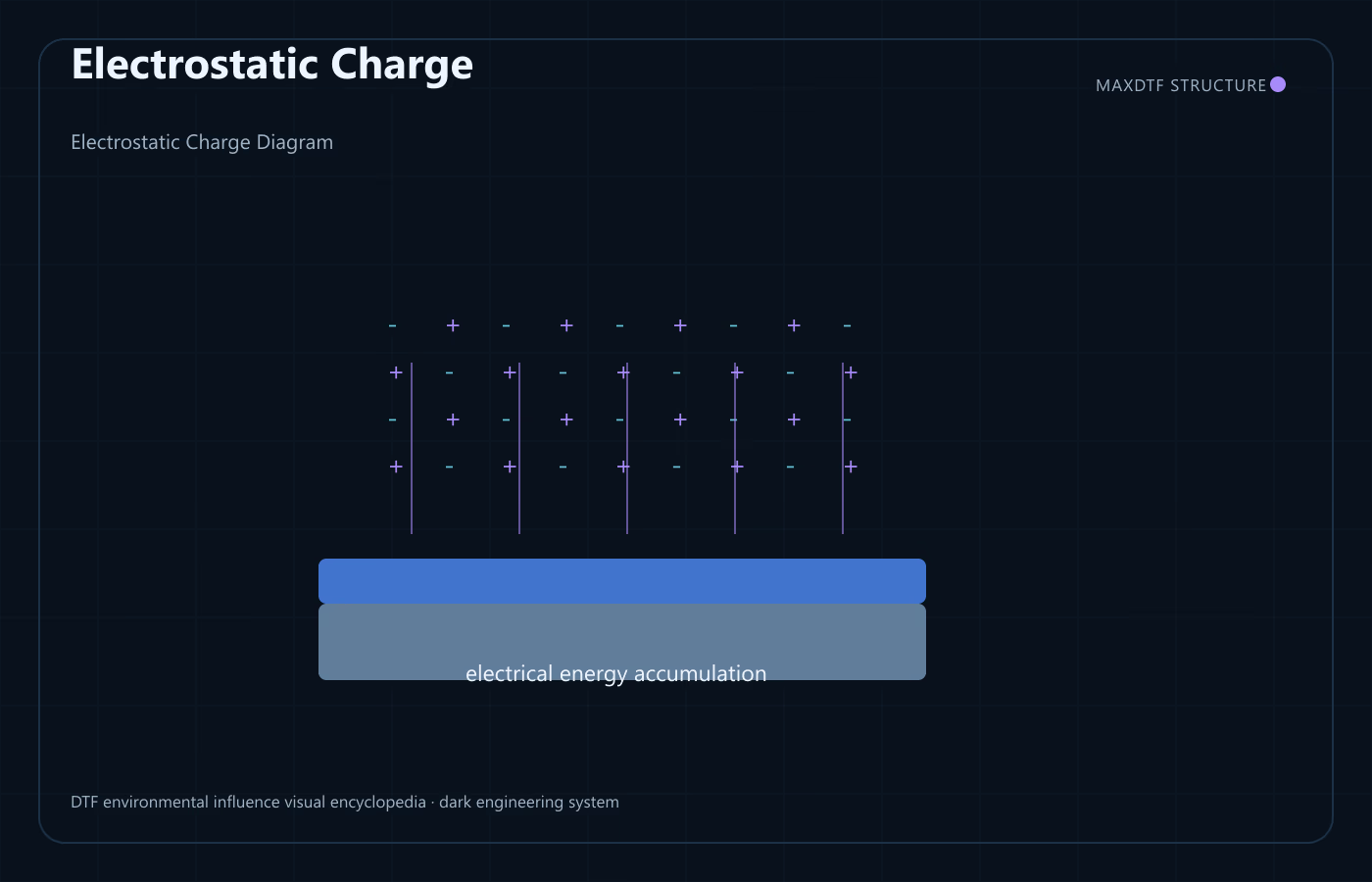
What Is Electrostatic Charge
Electrostatic charge refers to the accumulation of electrical charge on the surface of materials.
It occurs when electrons are transferred between materials during contact, separation, or friction. This results in a charge imbalance, where surfaces may become positively or negatively charged.
Electrostatic charge is not a material layer or a designed feature. It is a physical condition that emerges from interactions between materials and their environment.
It is closely related to Surface Resistivity, which defines how easily charge can move across or dissipate from a surface.
Electrostatic charge is also influenced by environmental variables such as Humidity, Temperature, and Airflow, which determine how charge accumulates and behaves over time.
How Electrostatic Charge Functions in the DTF System
Within the DTF system, electrostatic charge functions as a force that influences particle movement and surface interaction.
Charged surfaces can attract or repel particles such as adhesive powder, affecting how powder distributes across the film. This directly connects electrostatic behavior to Adhesive Bonding Architecture in DTF Printing.
Electrostatic charge also affects how materials interact with each other. It influences how film behaves during feeding, how powder settles, and how particles move within the environment.
In relation to ink behavior, electrostatic conditions may influence how droplets interact with surfaces, linking it indirectly to Ink Behavior Architecture in DTF Printing.
Electrostatic charge does not operate independently. It interacts continuously with environmental variables, particularly Humidity, which affects charge buildup, and Airflow, which influences how charge is redistributed.
Interaction Path
Electrostatic charge builds up through material interaction and changes dynamically based on environmental conditions.
When materials such as film move through the system, friction and separation processes generate charge. This charge accumulates on surfaces and creates localized electric fields.
These fields influence how particles behave. Adhesive powder may be attracted to charged areas, repelled from others, or behave unpredictably depending on charge distribution.
The behavior of electrostatic charge is strongly influenced by Humidity. Higher moisture levels tend to reduce charge accumulation, while lower humidity allows charge to build more easily.
Air movement also affects charge behavior. Through Airflow, charged particles may be redistributed, and charge balance across surfaces may shift.
Electrostatic charge also interacts with material properties defined by Surface Resistivity and system-level behavior described in System Interaction Architecture in DTF Printing.
Through this mechanism, electrostatic charge does not directly define outcomes but shapes how materials interact within the system.
What Electrostatic Charge Does NOT Do
Electrostatic charge does not define material structure, including layers such as Release Layer, nor does it determine how these layers are constructed.
It does not define ink formulation or chemical composition, which belong to Ink Behavior Architecture in DTF Printing.
It does not define adhesive formulation or bonding mechanisms, which are described in Adhesive Bonding Architecture in DTF Printing.
Electrostatic charge does not define release timing or separation behavior, which are part of Release Timing Architecture in DTF Printing.
It is not a defect by itself and does not automatically indicate a problem in the system.
It does not independently determine print quality or final transfer results.
Structural Nature
Electrostatic charge exists as a physical condition that emerges from interactions between materials and the environment.
It is not embedded within the structure of film, ink, or adhesive layers. Instead, it is generated dynamically through movement and contact.
Its behavior depends on both material properties and environmental conditions. It interacts with Surface Resistivity, which determines how charge moves, and with Charge Dissipation, which defines how charge is released over time.
Electrostatic charge also interacts with environmental variables such as Humidity, Temperature, and Airflow, forming part of a broader environmental system.
It does not exist in isolation. It exists as part of a continuously evolving interaction network.
Performance Boundaries
Electrostatic charge defines interaction conditions but does not define performance outcomes.
It operates within a range where material interactions remain stable. Outside this range, it influences how particles move and how surfaces interact.
Electrostatic charge does not determine whether system performance is acceptable. It defines the electrostatic conditions under which performance is observed.
Common Misunderstandings
Electrostatic charge is often treated as a defect that should be eliminated. In reality, it is a natural condition that cannot be completely removed.
Another misunderstanding is that electrostatic charge originates only from the film. In practice, it results from interactions between multiple materials, including film, powder, and surrounding air.
Electrostatic charge is also often considered independent from environmental conditions. However, it is strongly influenced by Humidity, Temperature, and Airflow, which together define how charge behaves.
It is also commonly assumed that electrostatic charge directly determines system outcomes. In reality, it influences interaction conditions rather than directly controlling results.
Where Electrostatic Charge Sits in the System
Electrostatic charge belongs to the Environmental Influence layer of the DTF system.
It is not part of structural or material layers. Instead, it represents a physical condition that emerges from interactions across the system.
Within the system, it connects environmental variables such as Humidity, Temperature, and Airflow with material-level behavior defined in System Interaction Architecture in DTF Printing.
Related Concepts
This concept is part of the Environmental Influence Architecture in DTF Printing system.
– Humidity
– Temperature
– Airflow
– Surface Resistivity
– Charge Dissipation
– Adhesive Bonding Architecture in DTF Printing
– System Interaction Architecture in DTF Printing