“Does UV DTF use sublimation inks?” -MAXDTF- UV DTF AB Paper Supplier, UV DTF Direct Transfer Sticker Factory, Made in China
UV DTF (Ultraviolet Direct-to-Film) and sublimation printing are two popular digital printing techniques, both valued for their ability to create high-quality, durable designs on diverse substrates. However, a common misconception arises around their ink compatibility: Does UV DTF rely on sublimation ink? The short answer is no—UV DTF and sublimation ink are distinct in composition, functionality, and application. This article explores the key differences between UV DTF inks and sublimation inks, clarifies their respective roles in printing processes, and highlights why they are not interchangeable.
1. Core Definitions: UV DTF and Sublimation Printing
To understand why UV DTF does not use sublimation ink, it is first critical to define each technique and its fundamental operating principles.
1.1 UV DTF Printing
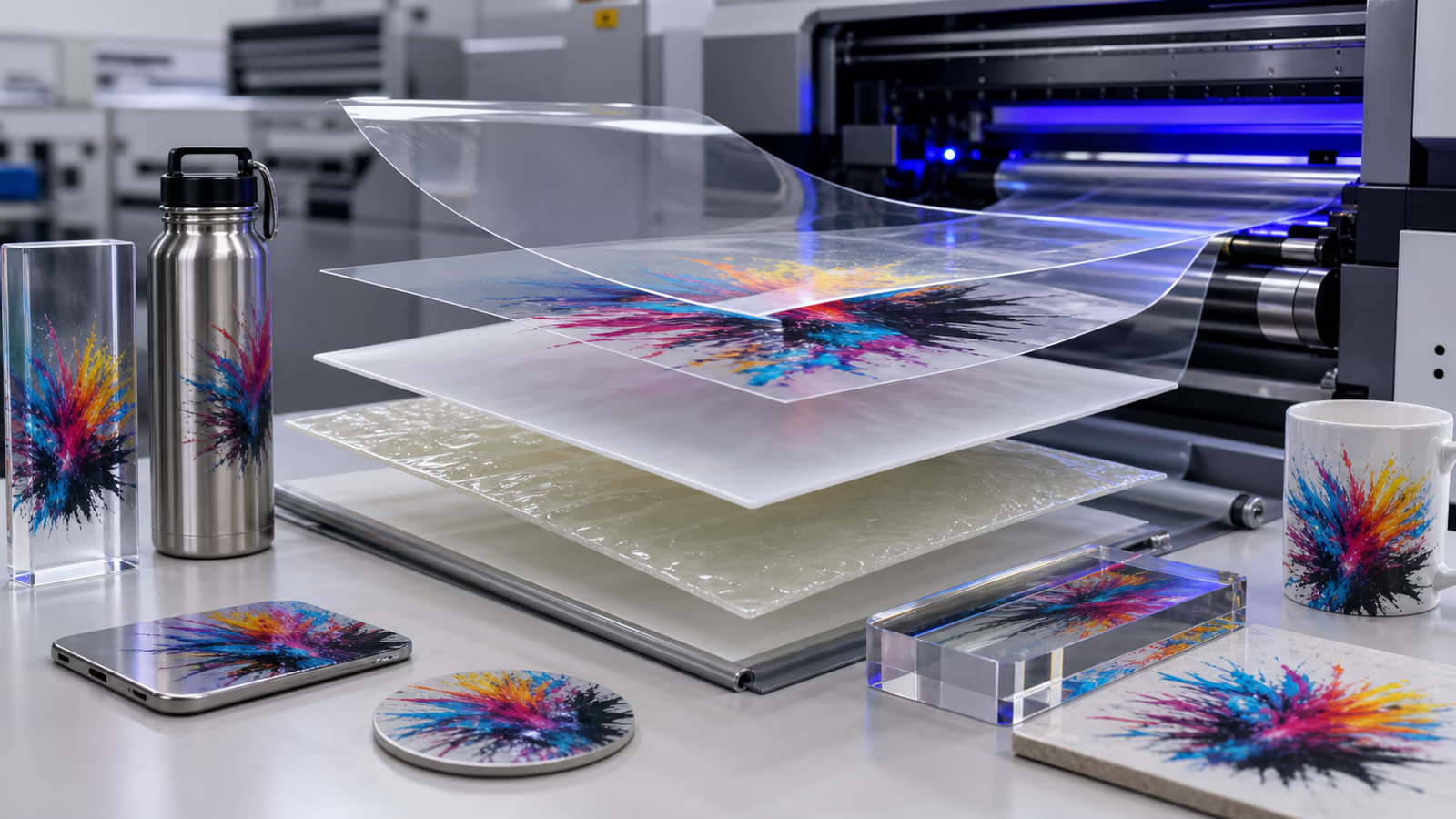
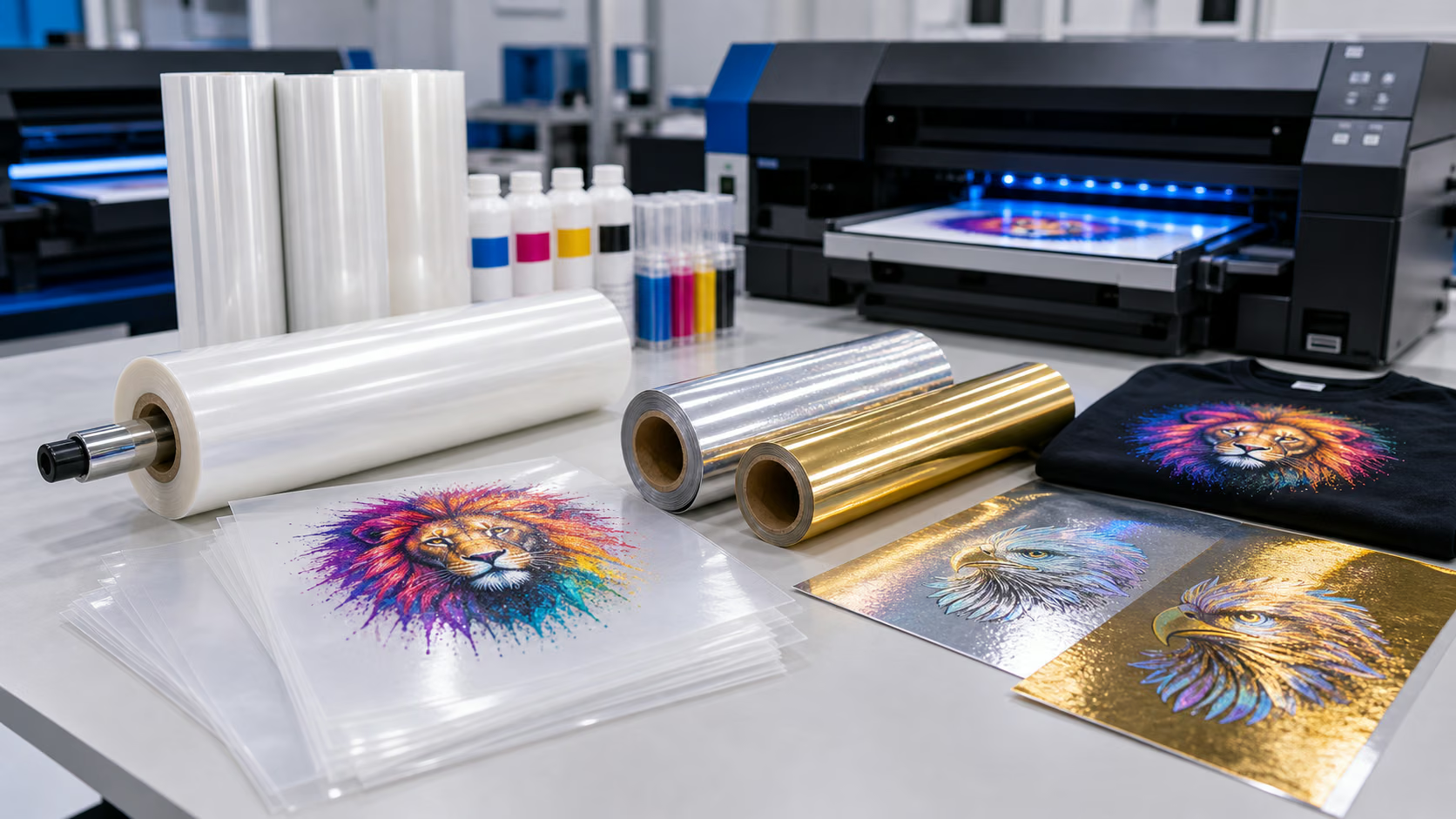
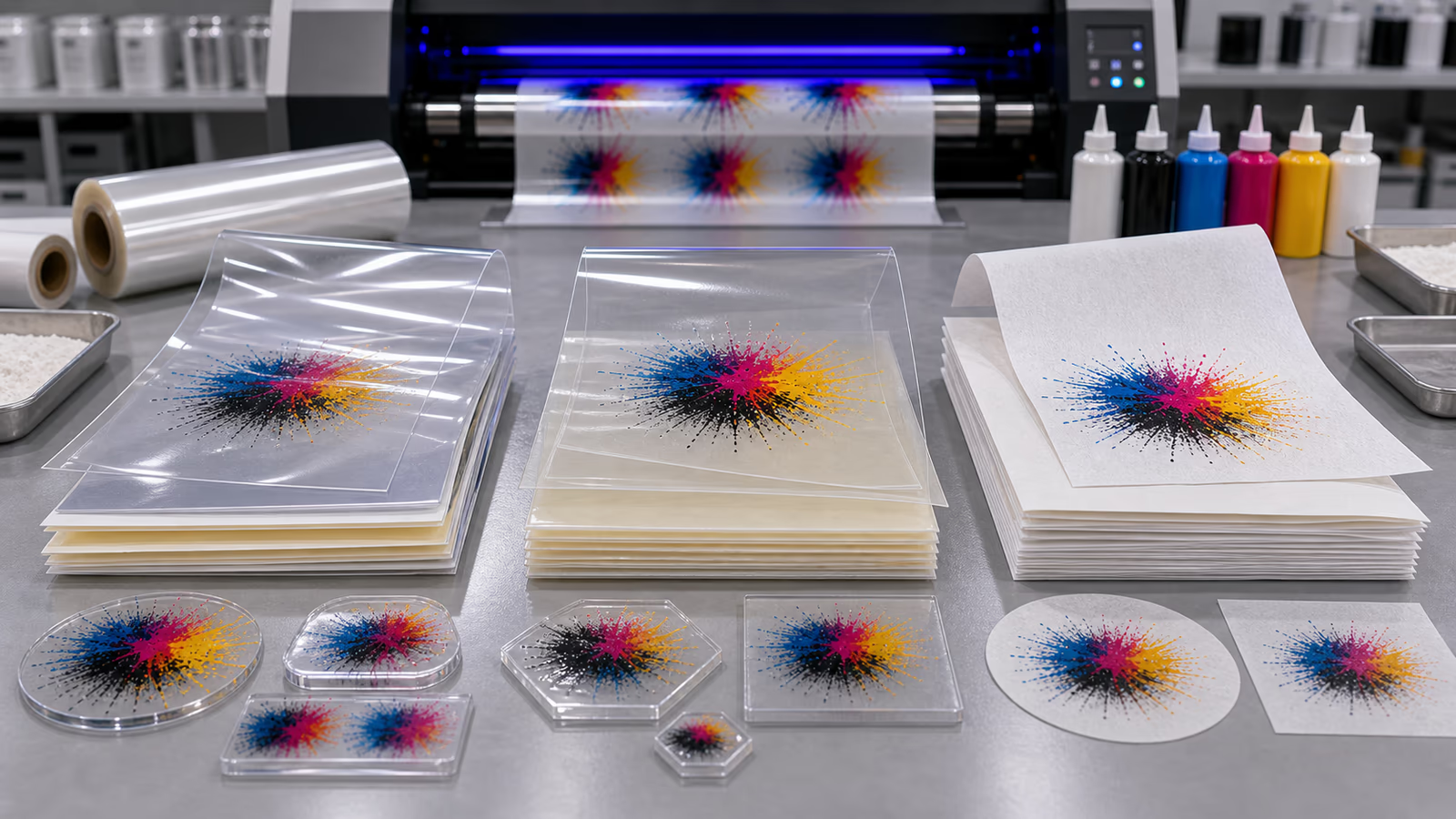
UV DTF is an advanced digital printing method that combines direct-to-film technology with ultraviolet (UV) curing. The process involves printing a design onto a specialized DTF film using UV-curable inks, which are instantly dried (cured) by UV light as they are deposited. After printing and curing, an adhesive layer is applied to the film, allowing the design to be transferred onto a wide range of substrates—including plastics, glass, metal, wood, and fabrics—via heat pressing or cold lamination. UV DTF is celebrated for its fast curing speed, high color density, and compatibility with non-absorbent substrates, making it ideal for signage, promotional products, and decorative items.
1.2 Sublimation Printing
Sublimation printing uses heat to convert solid sublimation ink into a gas, which then penetrates the surface of polyester-based substrates (or coated materials) and solidifies within the fibers. Unlike UV DTF, there is no film or adhesive involved; the ink becomes part of the substrate itself, resulting in a seamless, fade-resistant finish. Sublimation ink relies on dye-sublimation technology, where the ink molecules bond with the substrate’s fibers rather than sitting on top of it. This technique is commonly used for apparel, mugs, and other polyester or polymer-coated items.
2. Key Differences Between UV DTF Inks and Sublimation Inks
UV DTF inks and sublimation inks differ drastically in composition, curing mechanism, and bonding method—factors that make them incompatible with each other’s processes.
2.1 Composition and Chemical Properties
UV DTF inks are formulated as UV-curable resins, containing photoinitiators that react to UV light to harden (cure) instantly. These inks are typically solvent-free or low-solvent, offering environmental benefits and reducing VOC emissions. High-quality UV DTF inks boast excellent color density and adhesion, and many meet international environmental standards such as Reach and Green Guard. Their chemical structure is designed to form a hard, durable layer on the DTF film, resisting scratches and wear.
Sublimation inks, by contrast, are dye-based inks composed of sublimable dyes dissolved in a carrier liquid. These dyes are engineered to undergo a phase change (solid to gas) when exposed to high temperatures (typically 180–200°C) without passing through a liquid state. The dye molecules are small enough to penetrate polyester fibers, where they re-solidify and bond permanently. Sublimation inks do not contain photoinitiators and cannot be cured by UV light—they require heat to activate their transfer process.
2.2 Curing and Activation Mechanisms
The most striking difference lies in how each ink type is activated. UV DTF inks cure instantly upon exposure to UV light, which triggers a chemical reaction that hardens the ink into a solid layer. This instant curing eliminates the need for drying time, increasing production efficiency and preventing ink smudging. The UV curing process is critical to UV DTF’s ability to print on non-absorbent substrates, as it does not rely on the substrate to absorb the ink.
Sublimation inks require high heat and pressure to activate. When heated, the dye molecules vaporize and penetrate the substrate’s surface, bonding with its fibers or coating. This process is time-sensitive—too little heat results in incomplete transfer, while too much can damage the substrate. Unlike UV DTF inks, sublimation inks do not cure in the traditional sense; their bonding depends on molecular diffusion into the substrate.
2.3 Bonding with Substrates
UV DTF inks bond to the DTF film first, forming a solid layer that is then transferred to the substrate via adhesive. The ink remains on the surface of the substrate (protected by the adhesive and cured ink layer), creating a durable, tactile finish. This surface bonding allows UV DTF to work with non-polyester substrates, including cotton, glass, and metal, as it does not require penetration into the substrate’s fibers.
Sublimation inks bond by penetrating the substrate’s fibers, becoming an integral part of the material. This requires the substrate to be polyester or coated with a polymer layer that can absorb the dye molecules. On non-polyester substrates (e.g., pure cotton), sublimation ink will not bond effectively, resulting in faded, peeling designs. This molecular bonding creates a soft, seamless finish with no surface texture, but limits substrate compatibility.
3. Why UV DTF Cannot Use Sublimation Ink
The incompatibility between UV DTF and sublimation ink stems from fundamental mismatches in their design and the requirements of the UV DTF process.
First, sublimation inks lack photoinitiators, so they cannot be cured by UV light—the core activation step of UV DTF printing. Without UV curing, the ink would remain liquid on the DTF film, smudging easily and failing to form a stable layer for transfer. Second, sublimation inks require high heat to vaporize, which is not part of the UV DTF workflow; UV DTF relies on UV light for curing and moderate heat for adhesive transfer, not for ink activation. Third, sublimation inks are designed to penetrate substrates, while UV DTF inks need to form a surface layer on the film—their bonding mechanisms are diametrically opposed.
Using sublimation ink in a UV DTF printer would result in poor print quality, smudging, and failed transfers. Conversely, UV DTF inks cannot be used in sublimation printing, as they do not vaporize with heat and would not bond to polyester substrates.
4. Applications: Choosing Between UV DTF and Sublimation Printing
Understanding the ink differences helps clarify which technique is suitable for specific projects:
- UV DTF is ideal for non-polyester substrates, small-batch production, and projects requiring fast turnaround. It excels in signage, phone cases, glassware, and mixed-fabric apparel, offering durable surface prints with vibrant colors and sharp details.
- Sublimation Printing is best for polyester or polymer-coated substrates, such as sportswear, polyester mugs, and fabric flags. It delivers soft, seamless prints that resist fading and washing, making it perfect for apparel where comfort is key.
Conclusion
UV DTF does not use sublimation ink—these are two distinct ink types designed for different printing processes. UV DTF relies on UV-curable inks that cure with UV light, form a surface layer on DTF film, and bond to diverse substrates via adhesive. Sublimation inks are dye-based, activate with heat, penetrate polyester fibers, and become part of the substrate. Their differences in composition, curing, and bonding make them incompatible, but each serves unique purposes in the printing industry. By understanding these distinctions, printers can select the right technique and ink for their projects, ensuring optimal results, durability, and substrate compatibility.