“Exploring the Compatibility of Sublimation Ink on UV DTF Film” -MAXDTF- China UV DTF Transfer AB Paper, UV DTF Printing Paper Manufacturer, Made in China
The intersection of sublimation printing and UV Direct to Film (DTF) technology has sparked significant interest in the customization industry, as professionals seek to combine the vibrant color reproduction of sublimation inks with the substrate versatility of UV DTF films. Sublimation ink, known for its ability to penetrate and bond with polyester-based materials, and UV DTF film, a staple in the DTF process for its heat-resistant and adhesive properties, represent two powerful tools—but their compatibility is not a given. This article delves into the technical dynamics of pairing sublimation ink with UV DTF film, examining the underlying principles, key compatibility factors, testing methodologies, challenges, and potential breakthroughs that define this innovative pairing.
Foundational Understanding: Sublimation Ink and UV DTF Film Basics
Before evaluating their compatibility, it is essential to grasp the core characteristics of sublimation ink and UV DTF film, as these properties directly influence how the two materials interact.
Sublimation Ink: How It Works
Sublimation ink operates on a unique phase-change principle: when exposed to high heat (typically 180°C–210°C) and pressure, the ink’s solid particles convert directly into a gas, bypassing the liquid state. This gas penetrates the surface of polyester or polymer-coated substrates, and as it cools, it reverts to a solid, forming a permanent bond within the material. Key traits of sublimation ink include exceptional color vibrancy, fade resistance, and a soft, no-feel finish—qualities that make it ideal for apparel, flags, and photo panels. However, its reliance on polyester-based substrates has historically limited its application range.
UV DTF Film: Structure and Function
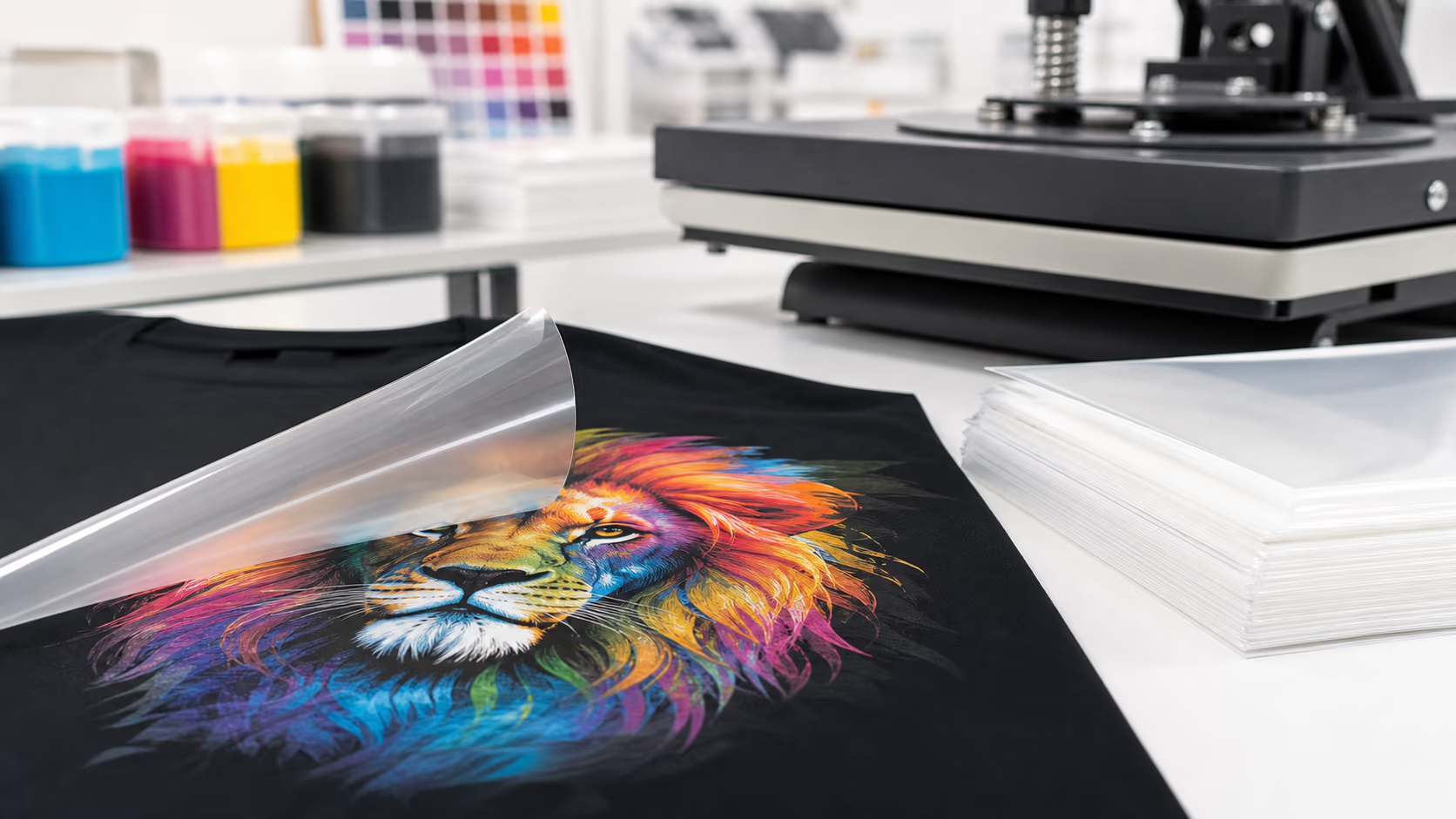
UV DTF film is a multi-layered material designed to act as a carrier for designs in the DTF printing process. Its core structure includes a base layer (for stability), a release coating (to facilitate easy peeling post-transfer), and a top layer optimized for ink adhesion. Unlike traditional DTF film, UV DTF film is cured using ultraviolet light, which crosslinks the ink and adhesive components to create a durable, scratch-resistant design. It is engineered to work with UV-curable inks and hot-melt powders, supporting transfer to a wide array of substrates—from cotton and leather to wood and metal—thanks to its adhesive properties.
Key Factors Influencing Compatibility
The compatibility of sublimation ink with UV DTF film hinges on a delicate balance of chemical, thermal, and structural factors. Each element plays a critical role in determining whether the ink can effectively adhere to the film, maintain stability during curing, and transfer successfully to the target substrate.
1. Chemical Adhesion: Ink-Film Bonding
Sublimation ink is formulated with disperse dyes and a water-based or solvent-based carrier, while UV DTF film’s top layer is typically made of polyester, polypropylene, or a proprietary polymer blend. For adhesion to occur, the ink’s carrier must be able to wet the film’s surface, and the disperse dyes must form a stable bond with the film’s polymer chains. UV DTF films with a polyester top layer tend to perform better, as sublimation ink naturally adheres to polyester. However, films with non-polyester coatings may require surface treatment (e.g., corona discharge) to increase surface tension, enabling the ink to spread evenly and bond effectively.
2. Thermal Stability: Withstanding Sublimation Temperatures
A major compatibility challenge lies in the differing temperature requirements of the two technologies. Sublimation ink requires high heat to sublimate, while UV DTF film is designed to withstand the lower temperatures of DTF transfer (150°C–180°C). Exposing UV DTF film to sublimation-level heat can cause it to warp, shrink, or degrade, compromising the design’s integrity. Additionally, the film’s release coating may melt or break down at high temperatures, leading to the ink sticking to the film rather than transferring to the substrate. Manufacturers are addressing this by developing heat-resistant UV DTF films with reinforced base layers and high-temperature release coatings that can tolerate sublimation conditions.
3. UV Curing Compatibility
UV DTF film relies on UV curing to set the ink and adhesive, but sublimation ink is not designed to be UV-cured. This creates a potential conflict: UV light can cause sublimation ink’s disperse dyes to degrade, resulting in faded colors or uneven pigmentation. To mitigate this, some professionals use a “hybrid” approach: printing the sublimation ink onto the UV DTF film first, allowing it to dry, and then applying a thin layer of UV-curable clear coat to seal the ink before curing. The clear coat protects the sublimation ink from UV damage while leveraging the UV DTF film’s adhesive properties for transfer.
4. Hot-Melt Powder Integration
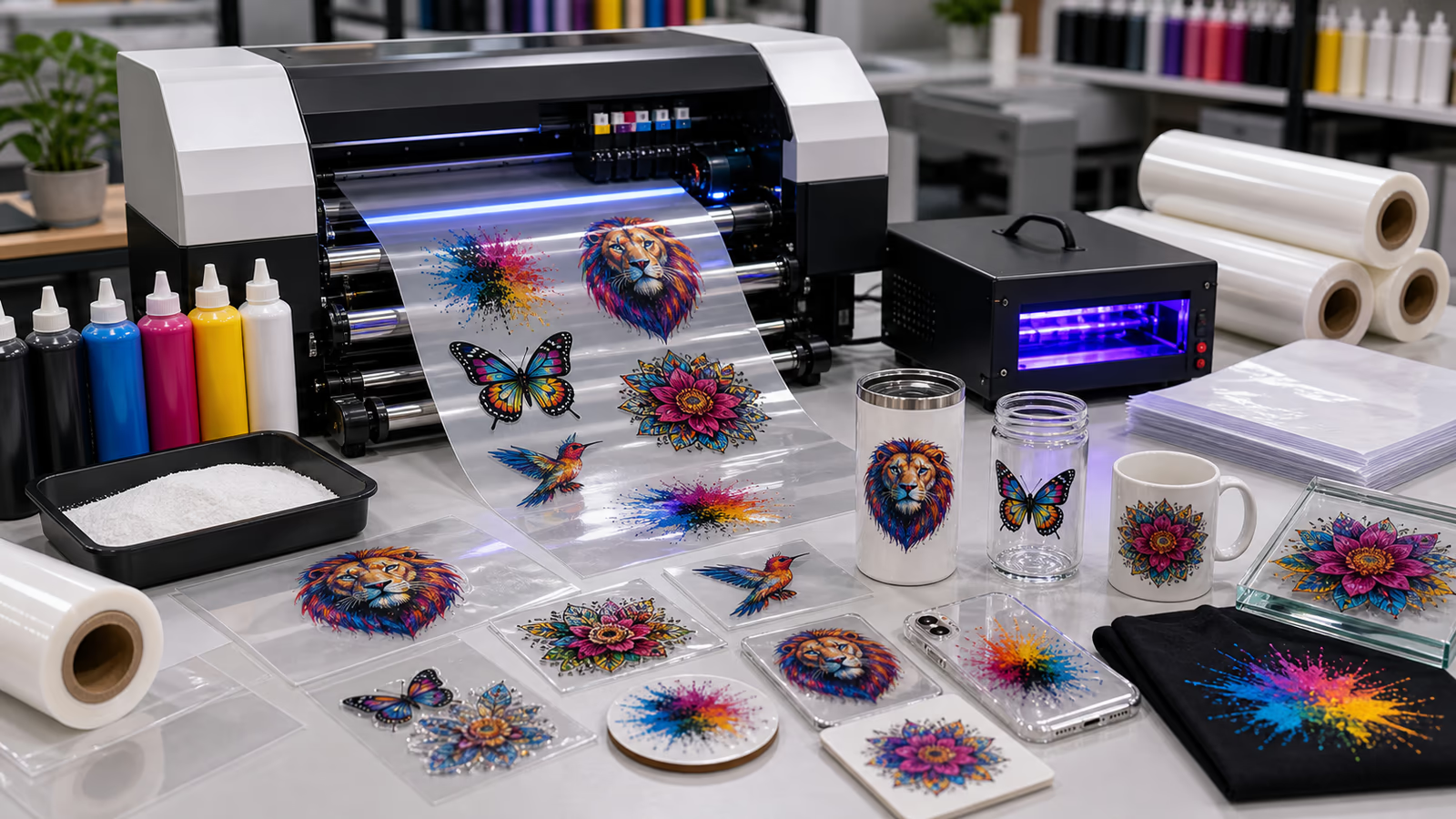
In the DTF process, hot-melt powder is applied to the printed film to enable transfer. For sublimation ink on UV DTF film, the powder must adhere to the ink layer without disrupting the ink’s bond to the film. Sublimation ink’s dry, porous finish can make powder adhesion challenging, as the powder may not stick evenly. This issue can be resolved by adjusting the ink’s drying time—allowing it to remain slightly tacky before powder application—or using a specialized powder with enhanced adhesion properties for sublimation-based designs.
Testing Compatibility: A Structured Approach
Given the variables involved, testing is critical to determining the compatibility of specific sublimation ink and UV DTF film combinations. A systematic testing process ensures that the pairing works reliably for intended applications, and typically includes the following steps:
1. Material Selection and Preparation
Start by selecting representative samples: choose a sublimation ink (water-based or solvent-based) and a UV DTF film (polyester-top or non-polyester). If the film has a non-polyester surface, prepare half the sample with surface treatment (e.g., corona discharge) and leave the other half untreated to compare adhesion.
2. Print and Dry
Print a standard test pattern (including solid colors, gradients, and fine text) onto the UV DTF film using a sublimation printer. Allow the ink to dry completely—follow the ink manufacturer’s recommended drying time to ensure the carrier has evaporated without leaving the ink too tacky or too dry.
3. Powder Application and Curing
Apply hot-melt powder to the printed film, ensuring even coverage. Cure the film using a UV curing system (following the film’s recommended UV dosage) or a combination of air drying and UV sealing (for hybrid approaches). For thermal stability testing, expose a cured sample to sublimation temperatures (180°C–210°C) for 30 seconds and check for warping or ink degradation.
4. Transfer and Performance Testing
Transfer the cured film to a target substrate (e.g., polyester t-shirt, cotton hoodie) using a heat press. After transfer, conduct performance tests: wash the substrate (20+ cycles) to check for fading or peeling, rub the design with a dry cloth to test scratch resistance, and stretch the fabric to evaluate flexibility. Compare results between treated and untreated films, and between different ink-film combinations.
Challenges and Practical Solutions
While the pairing of sublimation ink and UV DTF film holds promise, it is not without challenges. Below are common issues and actionable solutions to improve compatibility:
Challenge 1: Poor Ink Adhesion to Film
Solution: Use UV DTF film with a polyester top layer, as it is chemically compatible with sublimation ink. For non-polyester films, use corona discharge or plasma treatment to increase surface tension. Additionally, adjust the printer’s ink density—applying a slightly thicker ink layer can improve bond strength.
Challenge 2: Film Degradation at Sublimation Temperatures
Solution: Invest in heat-resistant UV DTF films, which are engineered with high-temperature polymers (e.g., polyimide blends) in the base layer. These films can tolerate sublimation heat without warping. Alternatively, reduce the sublimation temperature slightly (to 170°C–190°C) and extend the press time to ensure ink sublimation without film damage.
Challenge 3: UV Curing Fades Sublimation Ink
Solution: Implement a hybrid workflow: print the sublimation ink, allow it to dry, and apply a UV-curable clear coat (compatible with sublimation ink) before UV curing. The clear coat acts as a barrier, protecting the ink from UV light. Choose a clear coat with low yellowing properties to maintain color accuracy.
Challenge 4: Hot-Melt Powder Does Not Adhere to Ink
Solution: Adjust the ink’s drying time to leave a slightly tacky surface—this improves powder adhesion. Use a low-temperature hot-melt powder, which melts more easily and bonds with the ink’s surface. Alternatively, apply a thin layer of UV-curable adhesive between the ink and powder to create a stronger bond.
Applications and Future Outlook
When compatibility is optimized, the combination of sublimation ink and UV DTF film opens up new applications in the customization industry. Key use cases include:
- Polyester-Cotton Blends: Sublimation ink penetrates the polyester fibers, while the UV DTF film’s adhesive bonds with the cotton, enabling high-quality prints on blended fabrics that were previously challenging for sublimation.
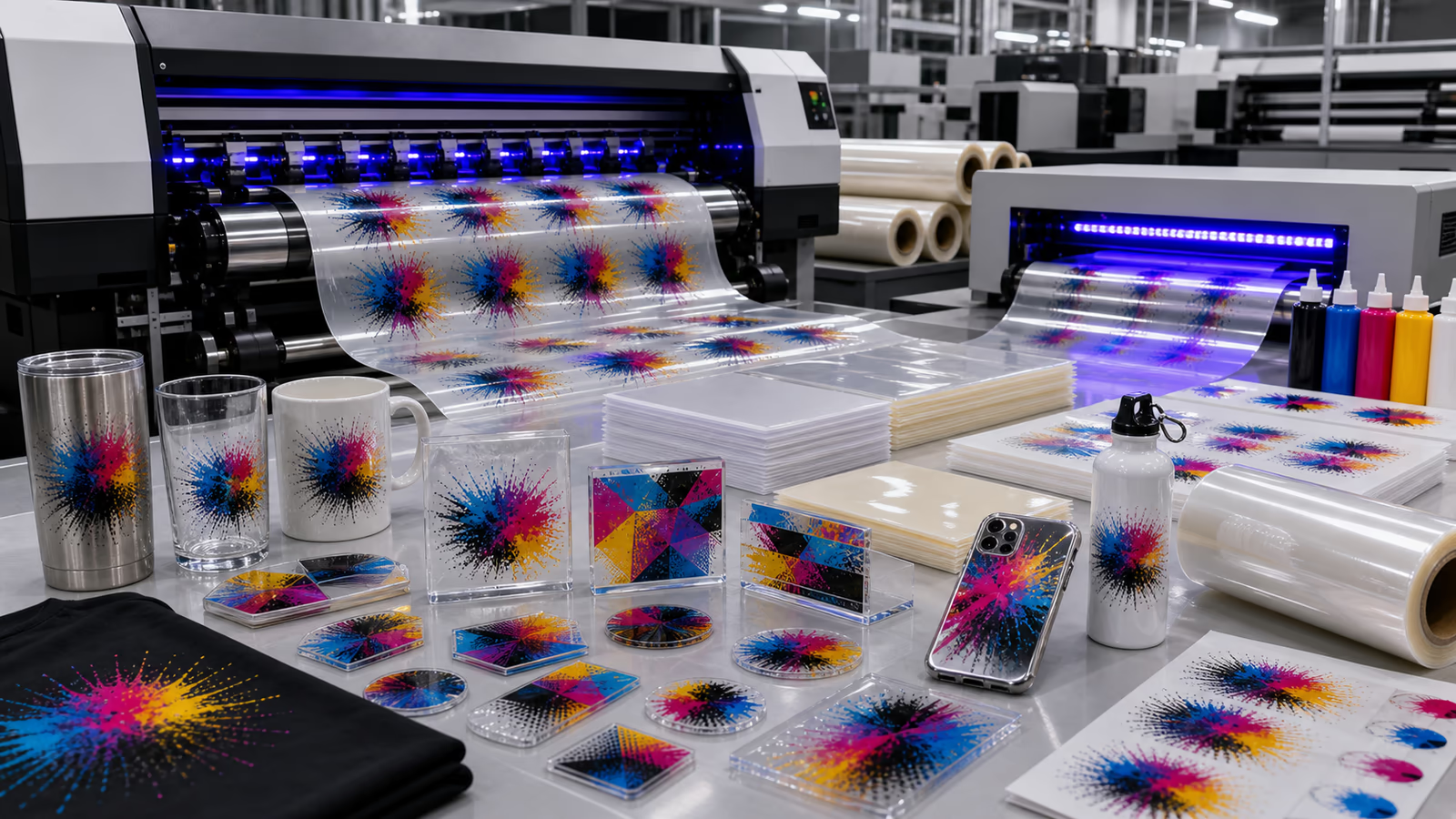
- Hard Substrates: UV DTF film’s ability to transfer to wood, metal, and plastic, paired with sublimation ink’s vibrant colors, creates new opportunities for custom home decor, electronics cases, and promotional items.
- Outdoor Apparel: The fade resistance of sublimation ink and the durability of UV DTF film make this pairing ideal for outdoor gear (e.g., jackets, backpacks) that requires both color vibrancy and weather resistance.
Looking ahead, manufacturers are likely to develop specialized products to enhance compatibility—such as UV DTF films pre-treated for sublimation ink, and sublimation inks formulated to withstand UV curing. The integration of AI-driven printer settings may also streamline the process, automatically adjusting ink density, drying time, and curing parameters based on the specific ink-film combination.
Conclusion: Balancing Innovation and Practicality
The compatibility of sublimation ink on UV DTF film is not a “one-size-fits-all” proposition—it requires careful consideration of chemical properties, thermal requirements, and workflow adjustments. While challenges exist, the potential benefits—expanded substrate range, vibrant colors, and durable transfers—make this pairing a valuable area of exploration for printing professionals.
By understanding the key compatibility factors, implementing structured testing, and leveraging practical solutions (such as heat-resistant films and hybrid curing workflows), users can unlock the full potential of this innovative combination. As technology advances, the gap between sublimation and UV DTF will continue to narrow, offering even more versatile and high-quality customization solutions for the industry.