“Can You Use UV DTF Film with an Inkjet Printer? A Comprehensive Guide” -MAXDTF- China Direct to Transfer UV DTF Film, Transfer DTF UV Film Supplier, Made in China
As UV DTF (Direct-to-Film) printing gains traction for its versatility across substrates, a common question emerges among small businesses and hobbyists: Can standard inkjet printers be used with UV DTF film? The answer hinges on understanding the technical requirements of UV DTF film, the capabilities of different inkjet printer types, and the critical role of inks and curing. This article breaks down the compatibility between UV DTF film and inkjet printers, addressing feasibility, limitations, and practical alternatives for those seeking cost-effective printing solutions.
1. The Core Requirement: Why UV DTF Film Relies on Specialized Inks
To determine if an inkjet printer works with UV DTF film, it’s first essential to grasp what makes UV DTF film functional. Unlike standard DTF film, which uses water-based or solvent-based inks, UV DTF film is engineered to pair with UV-curable inks. These inks contain photoinitiators that react to ultraviolet light, instantly curing from liquid to solid—a process that bonds the ink to the film’s receptive layer and ensures durability post-transfer.
UV DTF film’s surface is coated to optimize adhesion with UV-curable inks. This coating is not designed for the water-based inks (dye or pigment) used in most consumer and office inkjet printers. Water-based inks sit on top of the film rather than bonding with it, leading to smudging, poor color vibrancy, and complete failure during the heat transfer step. Thus, the ink type, not just the printer mechanism, is the first barrier to using standard inkjet printers with UV DTF film.
2. Standard Inkjet Printers: Inherent Limitations with UV DTF Film
Most off-the-shelf inkjet printers (e.g., Epson, HP, Canon consumer models) are not designed to handle UV DTF film or UV-curable inks, due to three key limitations:
2.1 Ink Compatibility Issues
Standard inkjet printers use dye or pigment-based water inks, which are incompatible with UV DTF film’s coating. Dye inks are water-soluble and will bleed or wash off the film, even after drying. Pigment inks, while more durable, lack the chemical bond with UV DTF film needed to withstand the heat press process. Additionally, UV-curable inks are thicker and more viscous than water-based inks, clogging the fine nozzles of standard inkjet printers—leading to printer damage and inconsistent prints.
2.2 No Built-In UV Curing System
UV DTF printing requires two curing steps: first, curing the UV ink on the film, and second, curing the UV adhesive applied over the ink. Standard inkjet printers have no integrated UV lamps to trigger this curing. Without instant UV curing, UV-curable inks remain liquid on the film, smearing during handling or adhesive application. Even if users attempt to add an external UV light source, the lack of synchronized printing and curing leads to inefficiencies and poor print quality.
2.3 Film Handling and Feeding Problems
UV DTF film is a thin, flexible PET material with a specialized coating that can be tacky or sensitive to heat. Standard inkjet printers are calibrated for paper or standard film, not UV DTF film’s unique texture and thickness. This often results in feeding jams, uneven printing, or damage to the film’s coating—ruining the print before it even reaches the curing stage.
3. When It Works: Modified Inkjet Printers for UV DTF Film
While standard inkjet printers are incompatible with UV DTF film, modified UV inkjet printers can effectively handle the task. These printers are retrofitted or purpose-built to address the limitations of standard models:
3.1 UV-Curable Ink Conversion
Specialized technicians modify inkjet printers to use UV-curable inks, replacing standard ink cartridges with UV ink reservoirs and adjusting the printer’s nozzle pressure to accommodate the ink’s higher viscosity. This conversion ensures the ink bonds properly with UV DTF film’s coating.
3.2 Integrated UV Curing Lamps
Modified UV inkjet printers add UV LED lamps directly after the print head, allowing the ink to cure instantly as it’s printed onto the film. This synchronized printing and curing prevents smudging and ensures the ink adheres firmly to the film’s surface.
3.3 Film-Friendly Feeding Mechanisms
Modified printers often include adjustable feed rollers and anti-static components to handle UV DTF film’s texture and thickness. This reduces jams and ensures the film moves smoothly through the printer, maintaining consistent print alignment.
4. Practical Alternatives: Cost-Effective Options for UV DTF Printing
For users without access to modified UV inkjet printers, several alternatives balance performance and affordability while working with UV DTF film:
4.1 Entry-Level UV DTF Printers
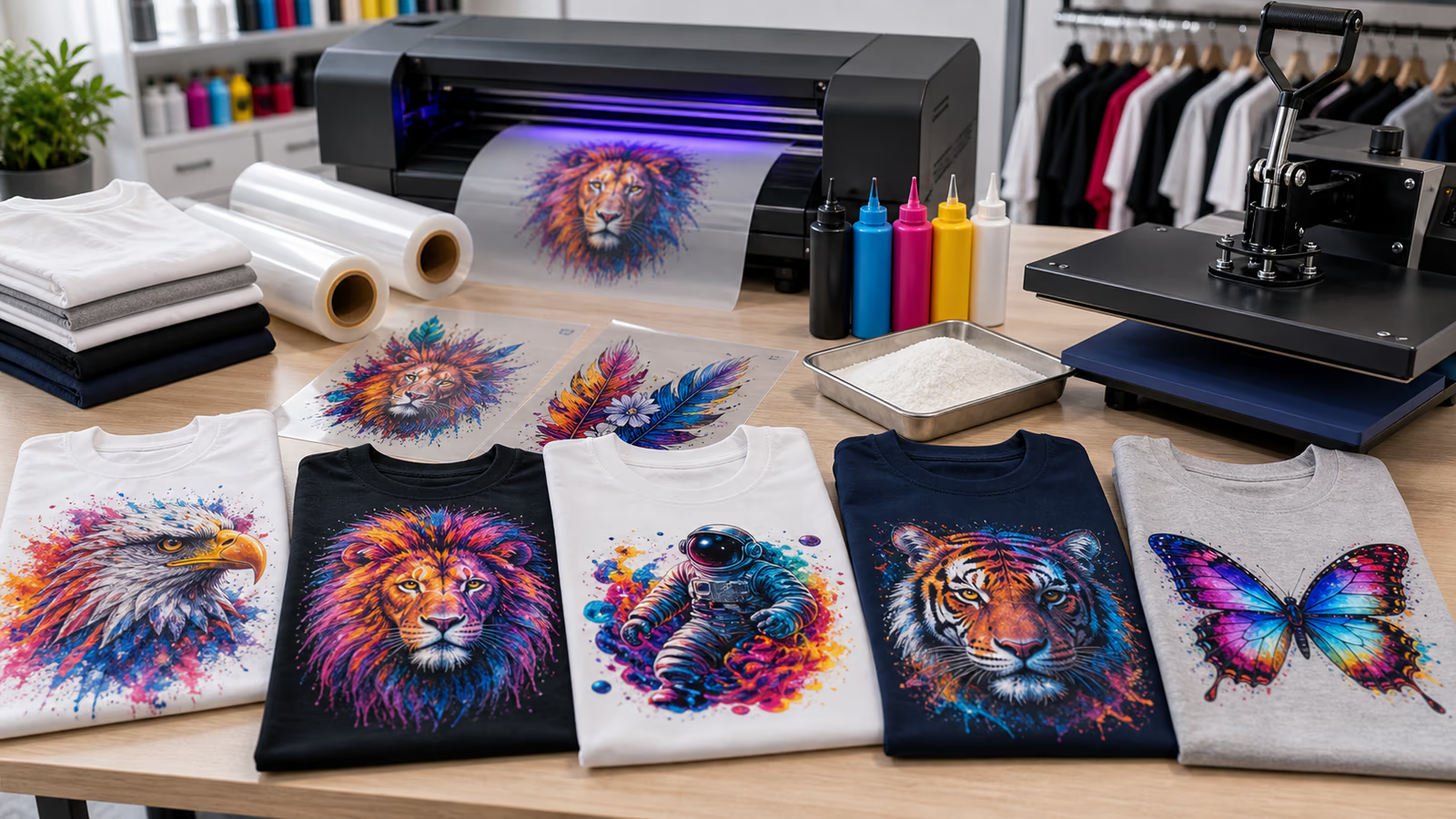
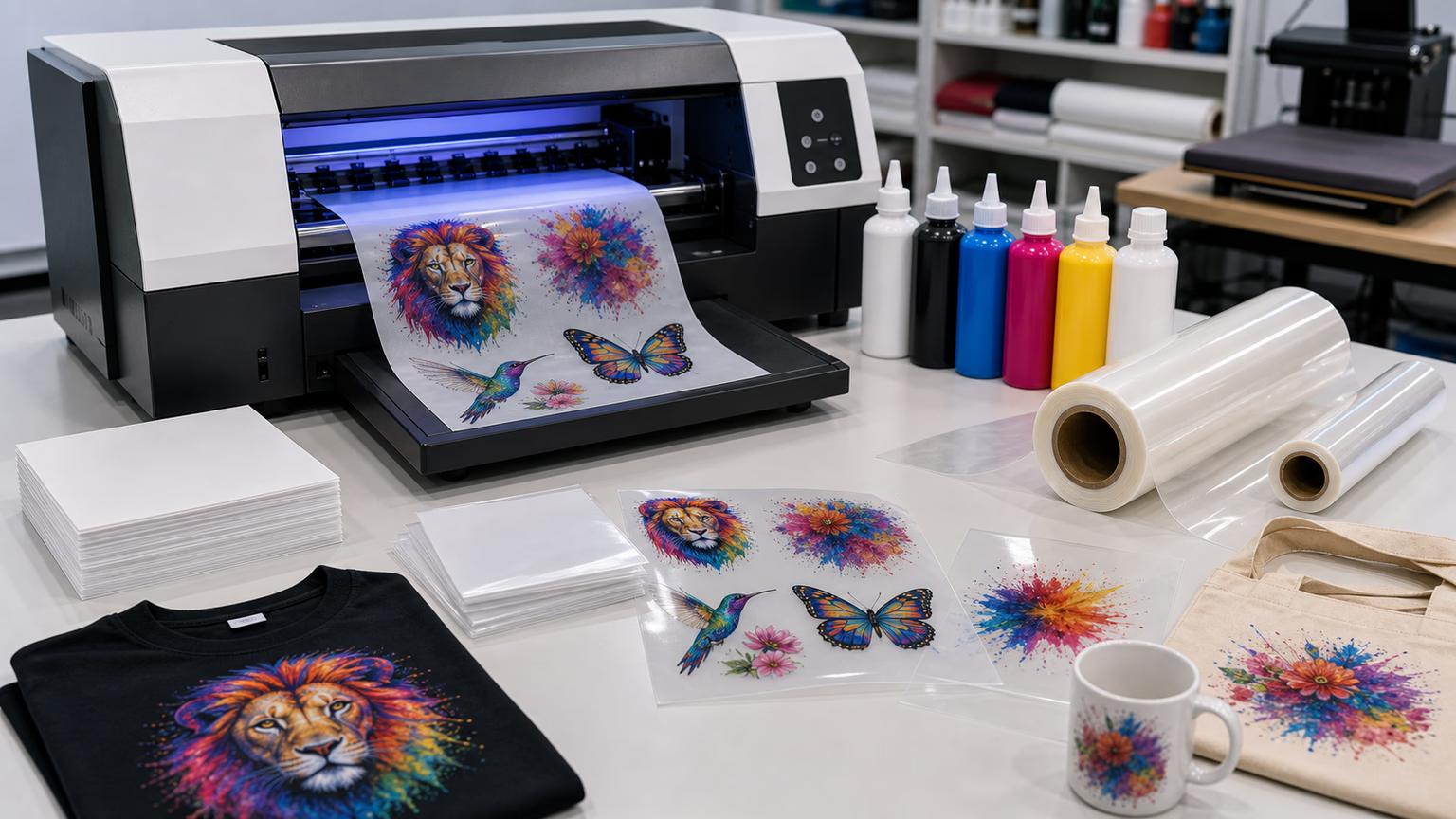
Manufacturers now offer compact, budget-friendly UV DTF printers designed specifically for small businesses and hobbyists. These printers come pre-calibrated for UV DTF film, UV-curable inks, and integrated curing systems—eliminating the need for modification. Models like the XP600 UV DTF printer are popular for their ease of use and compatibility with standard UV DTF film rolls.
4.2 Outsourced Printing of UV DTF Transfers
For low-volume users, outsourcing the printing of UV DTF transfers to professional print shops is a cost-effective option. Users can design the graphics, send them to a shop with specialized UV DTF printers, and receive pre-printed, cured UV DTF films ready for heat transfer. This avoids upfront printer costs while still leveraging UV DTF’s versatility.
4.3 Standard DTF Printing as a Substitute
If a UV finish isn’t mandatory, standard DTF film (compatible with water-based DTF inks) works with modified inkjet printers. While standard DTF lacks UV DTF’s enhanced durability and UV resistance, it’s a viable alternative for indoor applications or short-term merchandise—requiring only a simple ink and film swap.
5. Key Takeaways: Making the Right Choice
To answer the core question: No, standard inkjet printers cannot be used with UV DTF film due to ink incompatibility, lack of UV curing, and film handling issues. However, modified UV inkjet printers or purpose-built UV DTF printers offer reliable compatibility.
When deciding, consider: 1) Print Volume – Low-volume users benefit from outsourcing or entry-level UV DTF printers; 2) Application Needs – UV DTF’s durability is essential for outdoor or high-wear items; 3) Budget – Modified printers require upfront investment, while outsourcing avoids equipment costs. By aligning the printer and film with your specific needs, you can leverage UV DTF’s versatility without technical pitfalls.