
Introduction
In DTF printing, electrostatic behavior is often associated with charge buildup, but the persistence of that charge is equally important. Charge does not remain indefinitely on material surfaces. It moves, redistributes, and eventually dissipates.
Charge dissipation describes how electrostatic charge leaves a surface or neutralizes over time. It defines the duration and stability of electrostatic conditions within the system.
While electrostatic charge is continuously generated through material interaction, its impact depends on how quickly it can dissipate.
Understanding charge dissipation requires distinguishing it from Electrostatic Charge and Surface Resistivity. While electrostatic charge defines the presence of charge, and surface resistivity defines how charge moves, charge dissipation defines how charge disappears.
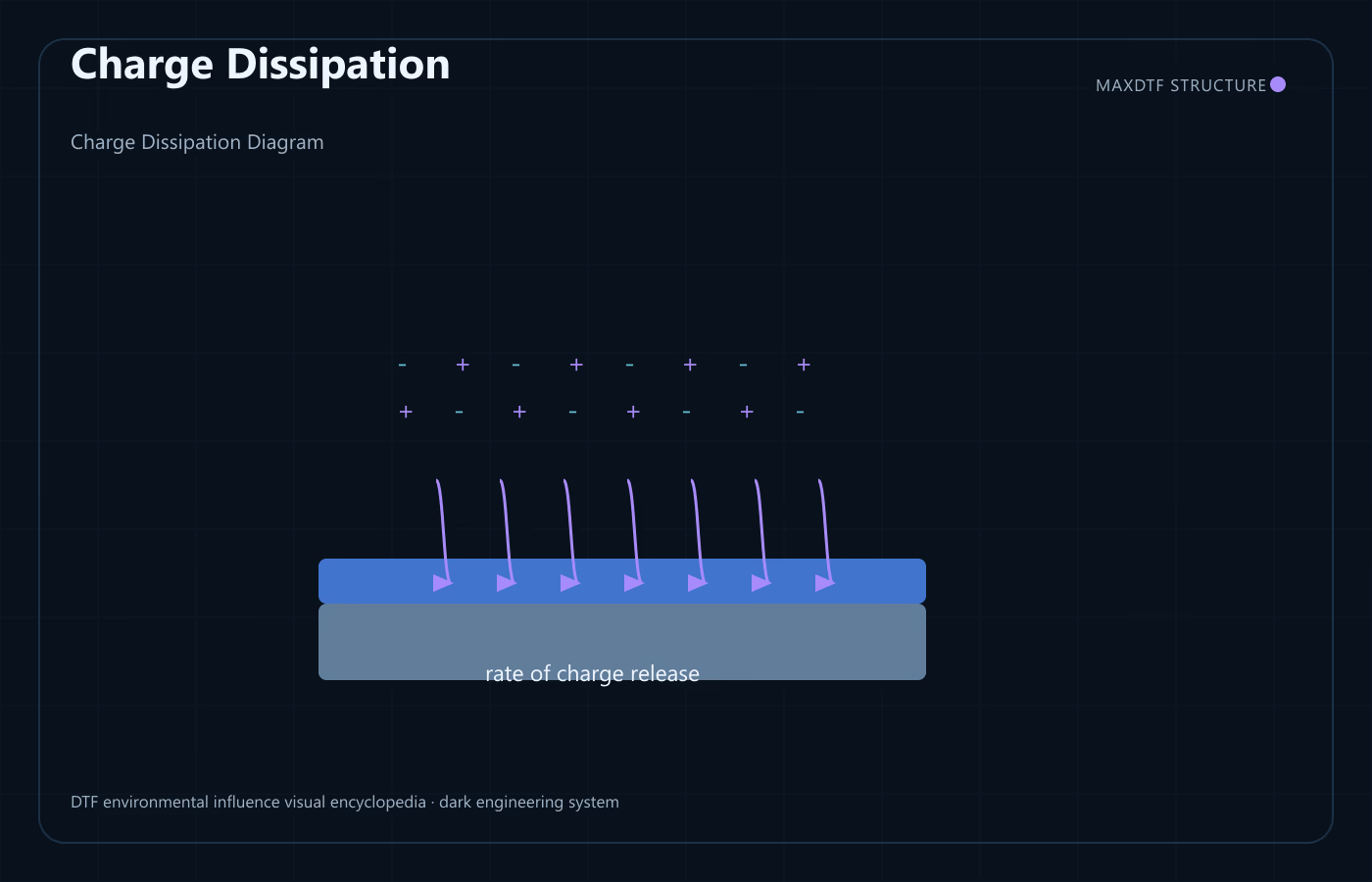
What Is Charge Dissipation
Charge dissipation refers to the process by which electrostatic charge is released, neutralized, or reduced on a material surface.
It describes how charge transitions from a localized condition to a neutral state over time.
Charge dissipation is not a material layer or a fixed property. It is a dynamic process influenced by both material characteristics and environmental conditions.
It is closely related to Surface Resistivity, which determines how easily charge can move across a surface before it dissipates.
Charge dissipation is also influenced by environmental variables such as Humidity, Temperature, and Airflow, which affect how charge is neutralized.
How Charge Dissipation Functions in the DTF System
Within the DTF system, charge dissipation functions as the mechanism that stabilizes electrostatic conditions.
As electrostatic charge is generated through material movement, dissipation determines how long that charge remains active.
When dissipation is effective, charge is neutralized over time, reducing its influence on material interaction.
When dissipation is limited, charge persists on surfaces, creating stable electrostatic fields that influence particle behavior.
This directly affects how adhesive powder behaves, linking charge dissipation to Adhesive Bonding Architecture in DTF Printing.
Charge dissipation also influences how materials interact during movement and handling, affecting system-level behavior described in System Interaction Architecture in DTF Printing.
Through this mechanism, charge dissipation does not prevent charge generation but controls how long electrostatic conditions remain active.
Interaction Path
Charge dissipation influences the system by defining the lifecycle of electrostatic charge.
After charge is generated through interaction, it remains on surfaces until it dissipates. The rate of this process determines whether electrostatic conditions are temporary or persistent.
When dissipation is fast, charge is released quickly. Electrostatic conditions remain weak and transient.
When dissipation is slow, charge accumulates and remains on surfaces for longer periods. This leads to stable electrostatic fields that influence particle movement.
Charge dissipation depends on how easily charge can move across surfaces, linking it to Surface Resistivity.
It also depends on environmental conditions. Through Humidity, moisture in the air can facilitate charge neutralization. Through Airflow, charge redistribution may affect how dissipation occurs.
Temperature also plays a role by influencing material activity, linking dissipation behavior to Temperature.
Through this mechanism, charge dissipation defines how long electrostatic conditions persist within the system.
What Charge Dissipation Does NOT Do
Charge dissipation does not define how electrostatic charge is generated, which is determined by Electrostatic Charge.
It does not define how charge moves across surfaces, which is controlled by Surface Resistivity.
It does not define material structure, including layers such as Release Layer, nor does it determine how these layers are constructed.
It does not define ink formulation or chemical behavior, which belong to Ink Behavior Architecture in DTF Printing.
It does not define adhesive composition or bonding mechanisms, which are described in Adhesive Bonding Architecture in DTF Printing.
Charge dissipation does not define release timing or separation behavior, which are part of Release Timing Architecture in DTF Printing.
It does not eliminate electrostatic charge entirely and does not guarantee the absence of electrostatic effects.
Structural Nature
Charge dissipation exists as a dynamic process that depends on both material properties and environmental conditions.
It is not a standalone structural feature but a behavior that emerges from how charge interacts with surfaces and surroundings.
It interacts with Surface Resistivity, which determines how charge can move, and with environmental variables such as Humidity, Temperature, and Airflow, which influence how charge is neutralized.
Charge dissipation also connects to system-level behavior described in System Interaction Architecture in DTF Printing, where electrostatic conditions influence overall system interaction.
It does not act independently. It exists as part of a broader electrostatic system.
Performance Boundaries
Charge dissipation defines how electrostatic conditions evolve over time but does not define performance outcomes.
It operates within a range where electrostatic behavior remains stable. Outside this range, charge may persist or fluctuate in ways that influence system interaction.
Charge dissipation does not determine whether system performance is acceptable. It defines how long electrostatic conditions remain active.
Common Misunderstandings
Charge dissipation is often treated as the elimination of static. In reality, it does not prevent charge from being generated but defines how it is reduced over time.
Another misunderstanding is that faster dissipation is always better. While faster dissipation reduces persistent charge, it also changes how charge interacts within the system.
Charge dissipation is also often assumed to be a fixed material property. In practice, it depends on both material characteristics and environmental conditions.
It is also commonly confused with surface resistivity, even though one defines movement and the other defines release.
Where Charge Dissipation Sits in the System
Charge dissipation belongs to the Environmental Influence layer of the DTF system, while interacting closely with material-level properties.
It is not a structural layer but a dynamic process that defines how electrostatic conditions evolve over time.
Within the system, it connects Electrostatic Charge and Surface Resistivity, and its effects become visible through interactions described in System Interaction Architecture in DTF Printing.
Related Concepts
This concept is part of the Environmental Influence Architecture in DTF Printing system.
– Electrostatic Charge
– Surface Resistivity
– Humidity
– Temperature
– Airflow
– Adhesive Bonding Architecture in DTF Printing
– System Interaction Architecture in DTF Printing