Understanding DTF As A System
Understanding how structure, ink, powder, bonding, release, and environment interact within the DTF process.

Structure

Ink

Powder

Bonding

Release

Environment
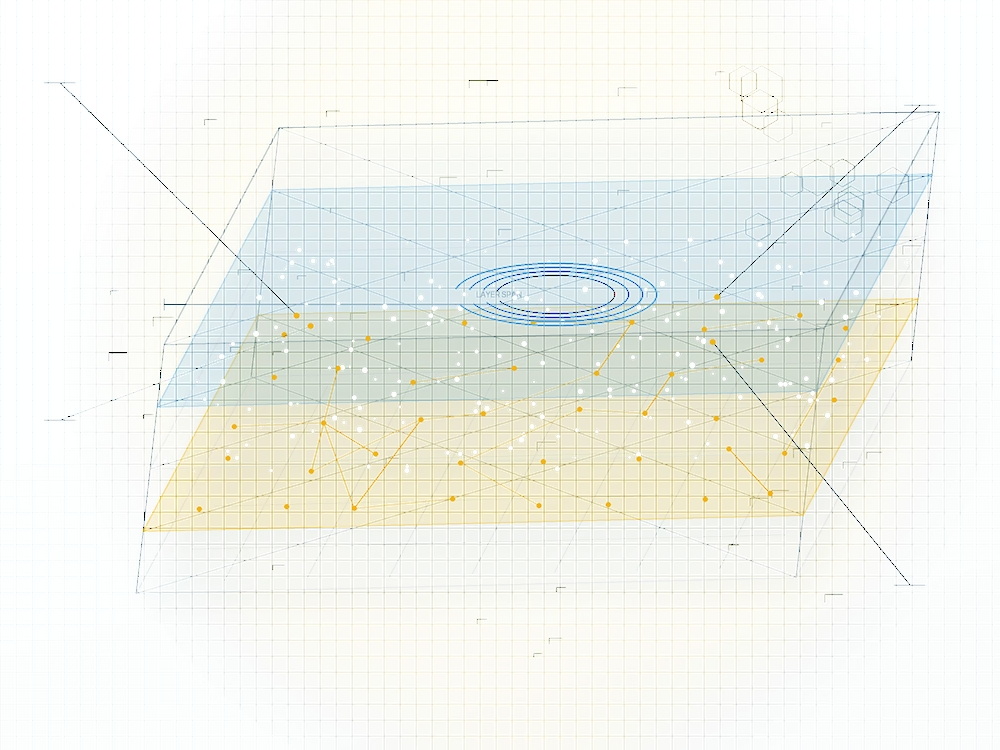
This Knowledge section defines DTF printing as a structured material interaction system, not as a collection of isolated materials or problems.
It establishes how film, ink, powder, bonding, release, and environmental conditions interact to form real-world DTF behavior.
All content in this section follows a manufacturing-first approach, focusing on system boundaries, structural roles, and interaction logic before any discussion of performance or solutions.
What This Knowledge System Defines
This section defines how DTF printing should be understood from a system perspective.
It defines:
- how each material functions within the DTF process
- how different stages interact with each other
- where the boundaries of manufacturing control exist
- why many DTF issues are structural rather than accidental
This section does NOT provide:
- troubleshooting instructions
- machine parameter recommendations
- application tips or shortcuts
For practical interpretation and system-level explanations, refer to the Technical Support section.
How to Read This System
Each article in this section defines a single concept within the DTF system.
These concepts are intentionally written without solutions, so that system behavior can be understood without bias.
To use this system effectively:
- read each concept as a definition, not a solution
- understand how concepts connect across different systems
- avoid interpreting individual concepts in isolation
This structure allows DTF behavior to be understood as a system rather than as disconnected issues.
System Interpretation Model
System Interpretation Model
The DTF system is not a sequence of operations, but a chain of material state transitions.
Each system defines a transformation:
Structure defines the boundary
Ink defines the information layer
Powder defines particle interaction
Bonding defines structural formation
Release defines separation
Environmental conditions influence all transformations simultaneously.
This model explains how observable DTF behavior emerges from interaction between systems.
Structure → Ink → Powder → Bonding → Release
Core Systems of DTF Printing
Each system defines a distinct stage within the DTF process. Together, they form a continuous interaction chain from material structure to final separation.
Structural Architecture of DTF Film
Defines how the film structure establishes the physical and functional foundation of the DTF printing system.
Role in system:
Provides the structural base for all material interaction.
Position in system:
Forms the starting point of the DTF process.
System function:
Defines the physical boundary within which all other behaviors occur.
System interaction:
Provides the boundary condition for Ink Behavior and all subsequent systems.
System boundary:
Does not define printed image behavior or transfer outcomes.
Ink Behavior Architecture in DTF Printing
Defines how ink exists as a structured material layer on the film within the DTF printing system.
Role in system:
Defines the structural form of printed information.
Position in system:
Acts between structure and particle interaction.
System function:
Defines how printed information becomes a surface condition.
System interaction:
Creates the surface condition that Powder Behavior interacts with.
System boundary:
Does not define bonding or final adhesion.
Powder Behavior Architecture in DTF Printing
Defines how powder exists and behaves as discrete particles within the DTF printing system.
Role in system:
Defines how powder is positioned before bonding.
Position in system:
Acts between ink and bonding.
System function:
Defines the transition from surface-defined structure to particle interaction.
System interaction:
Bridges ink-defined surfaces with bonding formation.
System boundary:
Does not define melting or bonding strength.
Adhesive Bonding Architecture in DTF Printing
Defines how adhesive powder forms bonding structures between the printed layer and the substrate within the DTF printing system.
Role in system:
Defines how adhesion is created.
Position in system:
Transforms particles into bonding structures.
System function:
Defines how material becomes a structural connection.
System interaction:
Converts powder structures into bonded layers.
System boundary:
Does not define ink or film structure.
Release Timing Architecture in DTF Printing
Defines how the timing of film separation controls release behavior within the DTF printing system.
Role in system:
Defines separation timing.
Position in system:
Acts after bonding.
System function:
Defines how the bonded layer separates.
System interaction:
Controls how bonded structures exit the film.
System boundary:
Does not define bonding or ink behavior.
Environmental Influence Architecture In DTF Printing
Defines how environmental conditions form a dynamic system that sets the boundaries of behavior in the DTF printing process.
Role in system:
Defines external conditions.
Position in system:
Acts across all stages.
System function:
Defines how external variables influence system behavior.
System interaction:
Affects all systems simultaneously.
System boundary:
Does not define material structure itself.
View System → /knowledge/environmental-influence-architecture-dtf-printing/
Foundational Definitions
What Is DTF Film? — A Manufacturing-First Definition
Defines DTF film as a structured material system and its role in supporting image transfer within the DTF process.
What Is DTF Adhesive Powder in DTF Printing — A Manufacturing-First Definition
Defines DTF adhesive powder as a bonding material and its role in forming the transfer layer within the DTF process.
What Is DTF Ink in DTF Printing — A Manufacturing-First Definition
Defines DTF ink as a deposition material system and its role in forming image layers within the DTF process.
From Definitions to System Interpretation
Once core concepts are defined, DTF behavior can be interpreted at the system level.
This Knowledge section defines structure.
The Technical Support section explains how these structures appear in real production behavior.
Use the sections below to move from definition to interpretation.
DTF Manufacturing Insights
System-level explanations of process behavior, batch variability, and manufacturing logic.
Technical Support & Problem Interpretation
Application boundaries, compatibility considerations, and issue interpretation based on defined system limits.
Who This Knowledge Is For
This system is designed for:
- DTF distributors and importers
- professional users managing production consistency
- partners evaluating long-term manufacturing reliability
It is not designed for casual usage, quick fixes, or price-only decisions.
Manufacturing Governance
All definitions in this Knowledge system follow a manufacturing governance approach.
This includes:
- defining responsibility boundaries
- acknowledging system limitations
- prioritizing long-term consistency over short-term optimization
DTF behavior is interpreted within these boundaries, not outside of them.
To understand how this framework applies to real production environments, refer to DTF Manufacturing Insights.