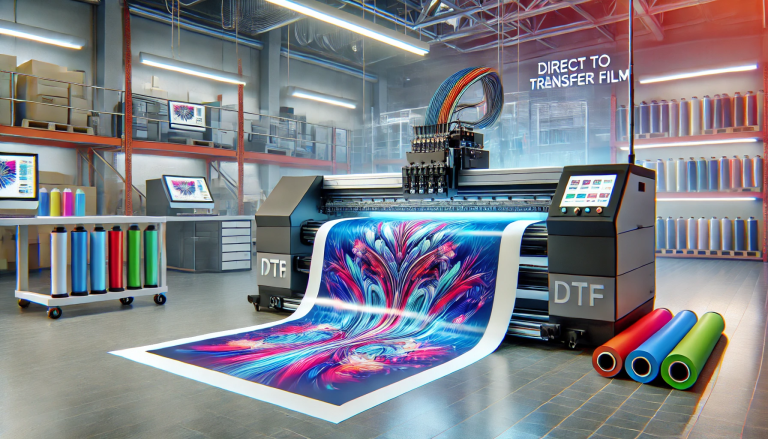
“Reuse A3 PET Film for a Sustainable Future!” -MAXDTF- Direct to film transfer paper Factory, DTF Transfer Film 8.5 x 11 Manufacturer, Made in china
A3 PET (polyethylene terephthalate) film stands as a cornerstone in Direct-to-Film (DTF) printing, valued for its durability, ink receptivity, and compatibility with various substrates. As sustainability becomes a priority for printers and businesses, a critical question emerges: Can A3 PET film be reused to reduce waste and cut costs? The answer, rooted in the film’s physical properties, printing processes, and application requirements, is not a simple “yes” or “no.” This article delves into the feasibility of reusing A3 PET film, examining the technical and practical factors that influence its reusability, along with guidelines for safe and effective reuse when possible.
1. Understanding A3 PET Film: Key Properties That Shape Reusability
To evaluate if A3 PET film can be reused, it is first essential to grasp the inherent characteristics of PET film and how printing processes alter it. These properties dictate whether the film can maintain performance across multiple cycles.
1.1 Inherent Durability of PET Material
PET is a thermoplastic polymer known for its high tensile strength, chemical resistance, and dimensional stability. A3 PET film designed for DTF printing typically has a thickness of 100–150 microns, providing enough rigidity to withstand feeding through printers and heat pressing without tearing. Unlike paper or thin plastic films, PET resists degradation from water, mild solvents, and moderate heat (up to 180°C, the typical range for DTF heat pressing). This inherent durability suggests theoretical potential for reuse—if the film remains structurally intact after initial use.
1.2 How DTF Printing Alters A3 PET Film
The DTF printing process transforms the surface of A3 PET film, creating both permanent and semi-permanent changes. During printing, UV-curable or water-based inks bond to the film’s coated surface; subsequent application of hot-melt adhesive powder further adheres to the ink layer. After heat pressing, the ink-adhesive layer transfers to the target substrate, but residues often remain on the film. These residues—including leftover ink, adhesive, and occasional substrate fibers—alter the film’s surface texture and ink receptivity. Additionally, repeated exposure to heat during pressing can cause minor thermal fatigue, reducing the film’s dimensional stability over time.
2. Feasibility of Reusing A3 PET Film: Scenarios and Limitations
A3 PET film’s reusability varies dramatically based on the printing scenario, ink type, and post-use condition of the film. While reuse is possible in specific cases, it is not universally applicable.
2.1 Reusable Scenarios: Low-Stakes, Non-Critical Applications
Reuse of A3 PET film is most feasible for low-volume, non-critical projects where print quality is not a primary concern. For example: Prototyping and Testing: Printers often use A3 PET film to test design alignment, ink density, or adhesive compatibility before final production. These test prints typically have partial or light ink coverage, leaving most of the film surface unaltered. Such films can be cleaned and reused for additional prototypes, reducing material waste during the setup phase.Internal or Temporary Labels: For in-house use (e.g., labeling storage boxes, temporary workshop signs), A3 PET film with minimal ink residue can be repurposed. The lower demand for crispness or color accuracy makes these applications tolerant of minor surface imperfections from prior use.Single-Color, Large-Margin Designs: If the initial print uses only a small portion of the A3 film (e.g., a single logo in one corner), the unused area can be trimmed or repositioned for a second print—provided the remaining surface is free of residue and structurally sound.
2.2 Non-Reusable Scenarios: High-Quality or Industrial Applications
In scenarios where print quality, durability, or consistency is critical, reusing A3 PET film is generally not recommended. Key examples include: Commercial Branding and Merchandise: For customer-facing products (e.g., branded t-shirts, custom drinkware), even minor ink residues or surface blemishes on reused film can cause uneven ink application, blurry designs, or poor adhesive bonding. This compromises the product’s professional appearance and may damage brand reputation.High-Resolution or Multi-Color Prints: Photorealistic designs, gradients, or fine details require a smooth, uniform film surface. Residues from prior use create uneven ink absorption, leading to color bleeding or pixelation. Multi-color prints, which rely on precise alignment, are particularly vulnerable to dimensional changes in reused film caused by thermal fatigue.Industrial or Outdoor Applications: Prints for industrial labels (resistant to oil/chemicals) or outdoor signage (UV-resistant) demand maximum adhesion and ink stability. Reused film may have weakened surface coatings, reducing the ink’s bond strength and long-term durability.
3. Challenges of Reusing A3 PET Film: Technical and Practical Barriers
Even in feasible scenarios, reusing A3 PET film presents significant challenges that can undermine print quality or increase operational costs. These barriers often outweigh the potential savings from reuse.
3.1 Residue Removal: Labor-Intensive and Imperfect
The primary obstacle to reusing A3 PET film is removing leftover ink and adhesive residues. While mild solvents (e.g., isopropyl alcohol) or warm water can dissolve some residues, the process is time-consuming—especially for films with heavy ink coverage. Moreover, aggressive cleaning may scratch the film’s ink-receptive coating, rendering it unsuitable for subsequent prints. Even with thorough cleaning, micro-residues often remain, creating “hot spots” where ink adheres unevenly.
3.2 Dimensional Stability and Print Alignment Issues
DTF printing involves heat pressing at 140°C–180°C, which can cause A3 PET film to expand slightly and then contract as it cools. Repeated exposure to heat exacerbates this thermal cycling, leading to minor warping or shrinkage. Warped film may jam in printers or misalign with the substrate during heat pressing, resulting in wasted ink and defective prints. For multi-color projects, even 1–2mm of misalignment renders the final design unusable.
3.3 Coating Degradation and Reduced Performance
A3 PET film for DTF printing features a specialized coating that enhances ink adhesion and transfer. This coating can degrade with each use: heat pressing may wear it down, cleaning solvents may strip it, and ink residues may bond permanently to its surface. A degraded coating reduces ink receptivity, leading to faded colors, poor opacity, and incomplete transfer during heat pressing. In many cases, the loss of coating performance makes reused film less reliable than new film, even for low-stakes applications.
4. Best Practices for A3 PET Film: Maximizing Value Without Compromising Quality
While reusing A3 PET film has limited practicality, printers can minimize waste and maximize value through alternative strategies that prioritize sustainability and performance.
4.1 Optimize Film Usage to Reduce Waste
Instead of reusing film, focus on reducing initial waste by optimizing A3 sheet usage. Use design software to arrange multiple small designs on a single A3 film sheet (a practice called “nesting”) to minimize unused space. For test prints, use smaller film sizes (e.g., A4) when possible, reserving A3 film for full-size production runs. Many DTF printers also allow adjusting print margins to fit more designs per sheet.
4.2 Choose Recyclable A3 PET Film
Most PET films are fully recyclable, as PET is one of the most widely accepted recycling materials. Partner with local recycling facilities to collect used A3 PET film, ensuring it is clean of excessive adhesive (a quick wipe with a dry cloth is sufficient for recycling). Some film manufacturers also offer take-back programs, where used film is recycled into new PET products, creating a closed-loop system.
4.3 Invest in High-Quality Film for Extended Single-Use Performance
High-quality A3 PET film (with a durable coating and consistent thickness) reduces the need for reprints due to film failure, indirectly cutting waste. While premium film has a higher upfront cost, it minimizes material loss from defective prints and ensures better customer satisfaction—offsetting the initial expense over time.
4.4 Reuse for Non-Printing Purposes
If reuse in printing is unfeasible, repurpose used A3 PET film for non-printing applications. It can serve as protective covers for workbenches, stencils for craft projects, or liners for storage containers. This extends the film’s lifecycle without compromising printing quality.
5. Conclusion: Reusability Is Possible—But Not Practical for Most Printing Needs
While A3 PET film’s inherent durability allows for limited reuse in low-stakes scenarios like prototyping or internal labeling, its performance degrades significantly after initial use due to residue buildup, coating wear, and thermal fatigue. For commercial, high-quality, or industrial printing, the risks of defective prints and compromised brand reputation far outweigh the cost savings of reuse. Instead of focusing on reuse, printers are better served by optimizing film usage, investing in recyclable materials, and exploring recycling programs to minimize waste.
As DTF technology evolves, manufacturers may develop specialized reusable A3 PET films with enhanced coatings or heat resistance. Until then, the most sustainable and cost-effective approach remains using new, high-quality A3 PET film for production runs and repurposing or recycling used film for non-printing applications. By balancing performance, sustainability, and practicality, printers can maximize the value of A3 PET film while minimizing their environmental footprint.