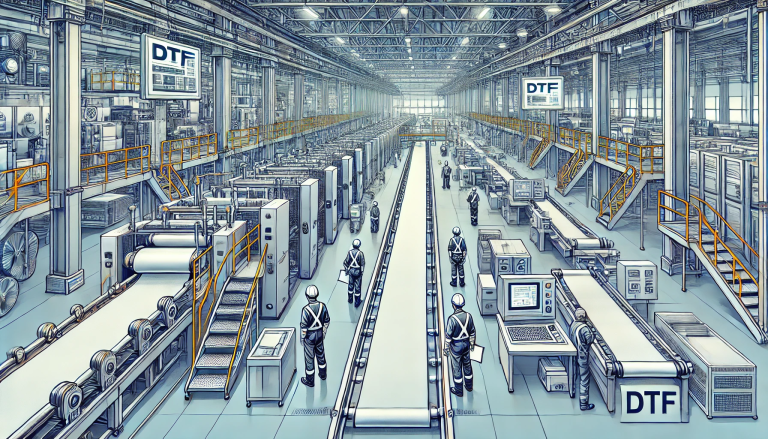
“Experience the nostalgia of vinyl with the convenience of PET Transfer Film!” -MAXDTF- DTF Transfer Film Matte Factory, DTF Paper A3 Manufacturer, Made in china
In the realm of custom printing and textile decoration, PET transfer film and vinyl are two widely used materials that often spark comparisons. Both serve as mediums for transferring designs onto various substrates, from fabrics to hard surfaces, leading many to wonder if they are similar or even interchangeable. While they share a common goal of enabling customization, PET transfer film and vinyl differ significantly in terms of composition, working principles, applications, and performance characteristics. This article delves into the core attributes of each material, highlighting their similarities and key distinctions to answer the question: Is PET transfer film similar to vinyl?
Defining the Two Materials: Core Basics
To understand the relationship between PET transfer film and vinyl, it is first essential to define each material clearly.
PET Transfer Film
PET (Polyethylene Terephthalate) transfer film is a thin, flexible film made from PET, a durable and heat-resistant thermoplastic polymer. It is primarily designed for use in digital transfer printing technologies such as DTF (Direct-to-Film) and UV DTF printing. PET transfer film typically features a specialized coating on one side to enhance ink adhesion—critical for receiving UV-curable or water-based inks during the printing process. Its core function is to act as a temporary carrier for printed designs, which are later transferred onto the target substrate (e.g., cotton, polyester, leather) via heat pressing.
Vinyl
Vinyl, in the context of custom printing, refers to polyvinyl chloride (PVC) film, though eco-friendly alternatives like polyurethane (PU) vinyl are also available. It is a versatile, self-adhesive material available in various forms, including rolls, sheets, and pre-cut designs. Vinyl is used in a range of applications, from signage and vehicle wraps to textile decoration (via heat transfer vinyl, or HTV). Unlike PET transfer film, vinyl itself is often the “design layer”—it can be cut into shapes, colored, or printed on, and then applied to substrates using heat, pressure, or its inherent adhesive.
Surface Similarities: Why Confusion Arises
Despite their differences, PET transfer film and vinyl do share a few surface similarities that contribute to the confusion between them:
1. Physical Form
Both materials are supplied as thin, flexible films or sheets, making them easy to handle, cut, and feed into printing or cutting equipment. Their lightweight and malleable nature allows them to conform to a variety of substrate shapes, from flat t-shirts to curved hard surfaces.
2. Heat-Assisted Application
A key similarity is their reliance on heat (and often pressure) for application to substrates. Whether it’s heat-pressing a printed PET transfer film onto fabric or activating the adhesive of HTV with a heat press, both materials require thermal energy to form a secure bond with the target surface.
3. Customization Capability
Both enable high levels of customization. PET transfer film supports full-color, high-resolution digital prints (including gradients, photographs, and intricate patterns), while vinyl can be cut into precise shapes, printed with specialty inks, or used in solid colors to create custom designs. This versatility makes both popular choices for personal and commercial customization projects.
Key Distinctions: Where They Diverge
The similarities between PET transfer film and vinyl are largely superficial. Their core differences—rooted in composition, working principles, and performance—make them distinct materials suited for different applications:
1. Composition and Structure
The most fundamental difference lies in their chemical composition. PET transfer film is made from polyethylene terephthalate, a rigid yet flexible polymer known for its heat resistance and dimensional stability. It often has a dual-layer structure (e.g., in UV DTF AB paper) or a single layer with a specialized coating for ink reception. Vinyl, by contrast, is typically PVC or PU-based, with a softer, more pliable texture. It often includes a self-adhesive layer on one side, which is activated by heat or pressure— a feature rarely found in PET transfer film, which relies on external hot-melt powder for adhesion during transfer.
2. Working Principle
PET transfer film acts as a temporary carrier for designs. The design is first printed onto the film (using DTF or UV DTF technology), then a layer of hot-melt powder is applied and cured. During heat pressing, the powder melts, bonding the design to the substrate, and the PET film is peeled away, leaving only the printed design on the surface. Vinyl, on the other hand, is a permanent or semi-permanent design layer. For HTV, the vinyl is cut into a design, placed on the substrate, and heat-pressed to activate its adhesive— the vinyl itself becomes part of the final product. For adhesive vinyl (used for signage), the backing is peeled off, and the vinyl is applied directly to the surface using pressure.
3. Ink Compatibility and Print Quality
PET transfer film is engineered for compatibility with digital inks, such as UV-curable inks and water-based DTF inks. Its coated surface ensures superior ink adhesion, allowing for vibrant, high-resolution prints with fine details and smooth gradients. Vinyl, by contrast, is less compatible with standard digital inks; while some vinyl can be printed on (e.g., printable vinyl), it often requires specialty inks (such as solvent-based or eco-solvent inks) and may not reproduce fine details or gradients as effectively as PET transfer film. Most vinyl applications rely on solid colors or simple cut shapes rather than full-color prints.
4. Substrate Compatibility
While both materials work with a range of substrates, their optimal uses differ. PET transfer film excels on textiles— including cotton, polyester, blends, and even leather— thanks to its compatibility with hot-melt powder, which forms a flexible bond that withstands washing. It can also be used on hard surfaces like wood or metal but is primarily associated with textile printing. Vinyl, by contrast, is more versatile across hard surfaces (glass, plastic, metal, wood) for signage and decals. HTV works on fabrics but is best suited for polyester or high-polyester blends; it may not adhere as well to 100% cotton or may stiffen the fabric more than PET transfer film-based prints.
5. Durability and Performance
Durability varies significantly based on application. PET transfer film prints, when properly applied with hot-melt powder, are highly durable on textiles— resisting peeling, cracking, and fading even after dozens of washes. The flexibility of the cured ink and adhesive layer ensures the print moves with the fabric. Vinyl (HTV) is also durable on fabrics but may become brittle over time, especially with frequent washing, and can peel if not applied correctly. Adhesive vinyl on hard surfaces is durable outdoors (resisting UV rays and weather) but is not designed for washable textiles.
6. Environmental Impact
Environmental considerations further distinguish the two materials. Traditional PVC vinyl is not biodegradable and can release harmful chemicals during production and disposal. While eco-friendly alternatives (PU vinyl, PVC-free vinyl) exist, they are less common. PET transfer film, by contrast, is often paired with low-VOC UV-curable inks and is recyclable in some cases. The DTF printing process using PET film also generates less waste than vinyl cutting, as excess ink and powder can be recycled.
Practical Applications: Choosing the Right Material
Understanding the differences between PET transfer film and vinyl is critical for selecting the right material for a project:
- Choose PET transfer film for full-color, high-resolution prints on textiles (especially cotton and blends), small-batch or on-demand customization, and designs requiring fine details or gradients. It is ideal for custom t-shirts, hoodies, and apparel with complex graphics.
- Choose vinyl for solid-color cut designs, signage, vehicle wraps, hard surface decals, or simple textile designs (e.g., names, logos) on polyester blends. It is best suited for projects where full-color printing is not required and durability on hard surfaces or simple fabric designs is prioritized.
Conclusion
While PET transfer film and vinyl share a few surface similarities— such as being flexible films and requiring heat for application— they are fundamentally different materials with distinct compositions, working principles, and applications. PET transfer film is a temporary carrier for high-resolution digital prints, optimized for textile customization with superior color reproduction and fabric compatibility. Vinyl, by contrast, is a self-adhesive design layer, better suited for solid-color cuts, signage, and hard surfaces. The confusion between the two arises from their overlapping use in customization, but their unique strengths make them irreplaceable for specific tasks. Ultimately, PET transfer film and vinyl are not similar; they are complementary materials that cater to different needs in the world of custom printing and decoration.