“Transfer your designs with ease using Can you use sublimation ink on the impresora DTF PET Film Transfer!” -MAXDTF- DTF Film A3 plus Supplier, DTF Transfer Film glossy Manufacturer, Made in china
In the realm of custom printing, enthusiasts and small business owners often seek to maximize the versatility of their equipment by exploring cross-compatible materials and inks. A common question that arises is whether sublimation ink—widely used in heat transfer printing—can be utilized with Impressora DTF (Direct-to-Film) PET film transfers. At first glance, the overlap between heat-based transfer processes might suggest compatibility, but the reality hinges on the distinct chemical properties of sublimation ink and the operational mechanics of DTF technology. This article dissects the feasibility of using sublimation ink on DTF PET film, examining technical mismatches, practical challenges, alternative solutions, and key considerations for printing success.
1. Core Principles: Why Sublimation Ink and DTF Technology Differ
To answer the question of compatibility, it is first essential to understand how sublimation ink and DTF systems function independently. Their fundamental operating principles—from ink behavior to transfer mechanisms—create inherent barriers to seamless integration.
1.1 Sublimation Ink: Vaporization and Fiber Bonding
Sublimation ink is a dye-based formulation designed to undergo a phase change when exposed to high heat (typically 180°C–210°C) and pressure. Unlike pigmented inks that sit on the surface of a substrate, sublimation dye particles vaporize, penetrate the molecular structure of polyester or polymer-coated materials, and re-solidify within the fibers. This process creates a permanent, fade-resistant bond that is soft to the touch and fully integrated with the substrate. Critically, sublimation ink relies on the substrate’s ability to absorb and retain the vaporized dye; it does not form a durable film on non-polymer surfaces and requires specific temperature and pressure parameters to activate.
1.2 DTF Technology: Pigment Ink and Adhesive Bonding
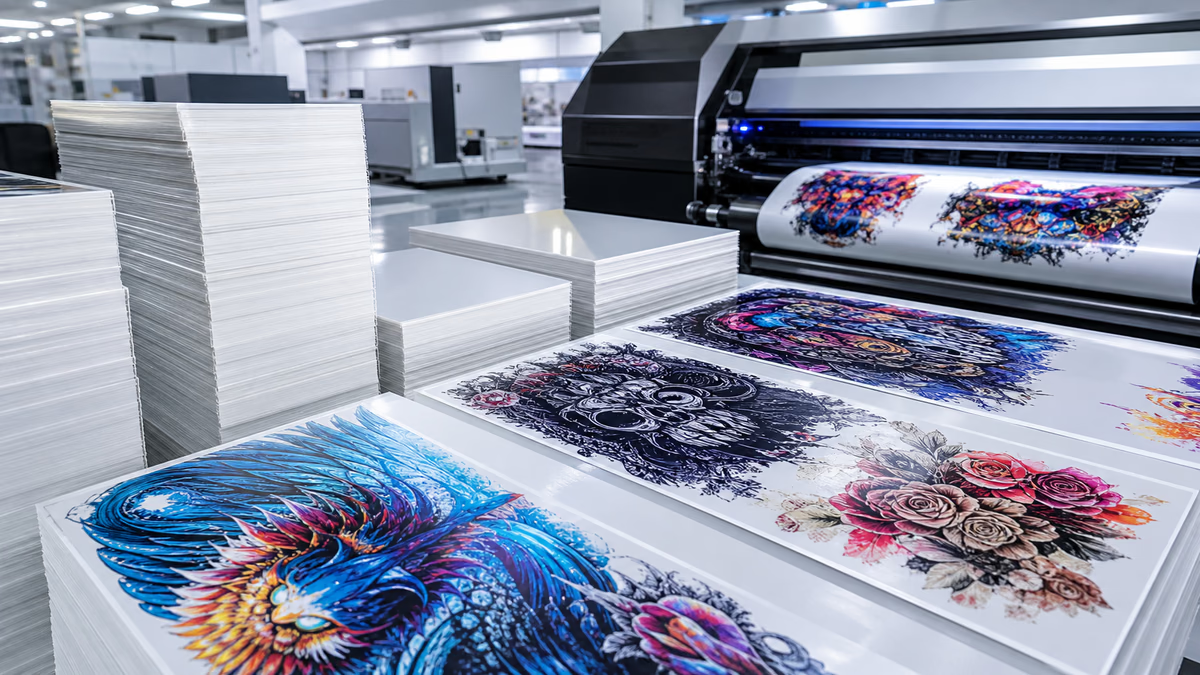
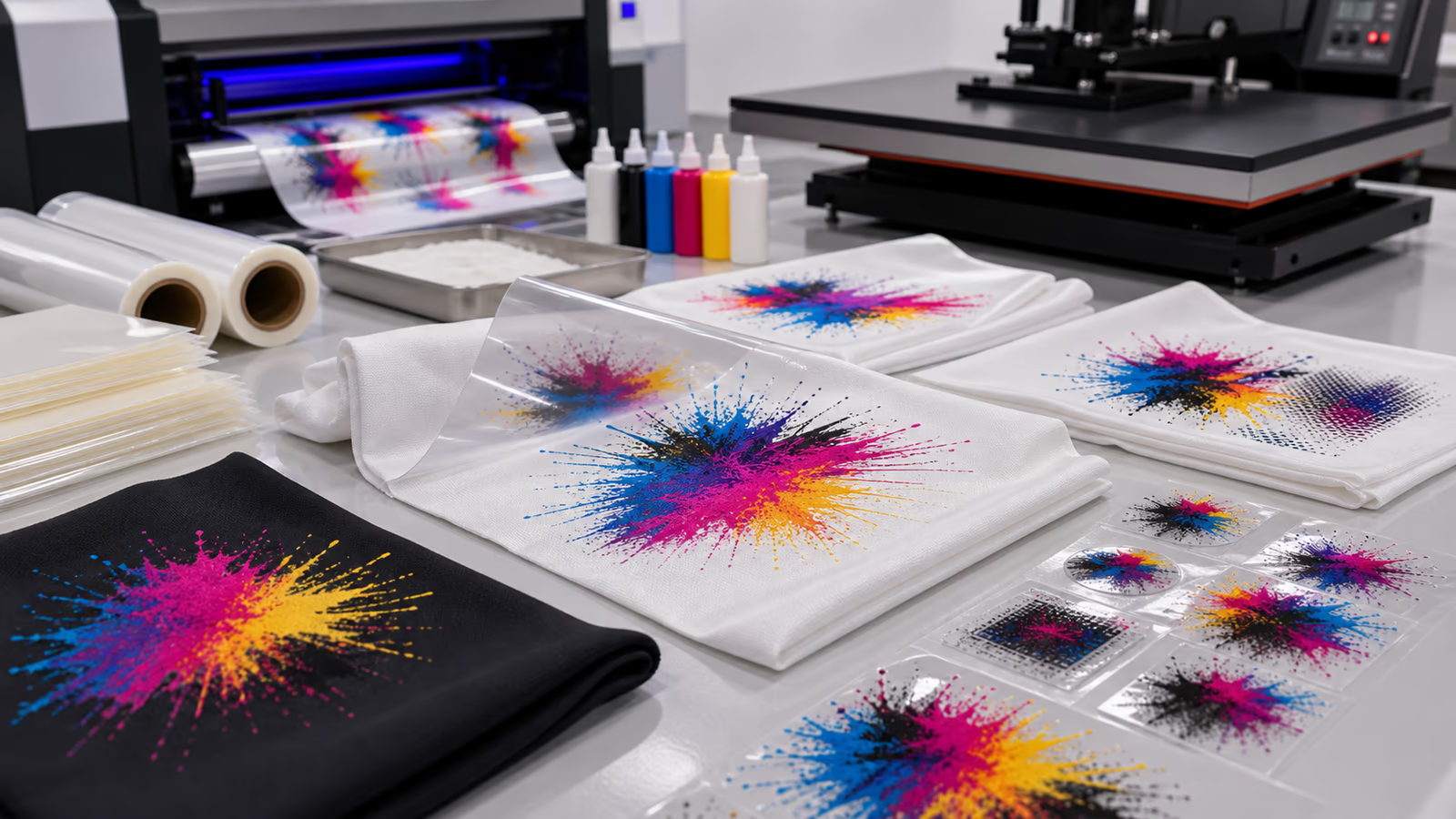
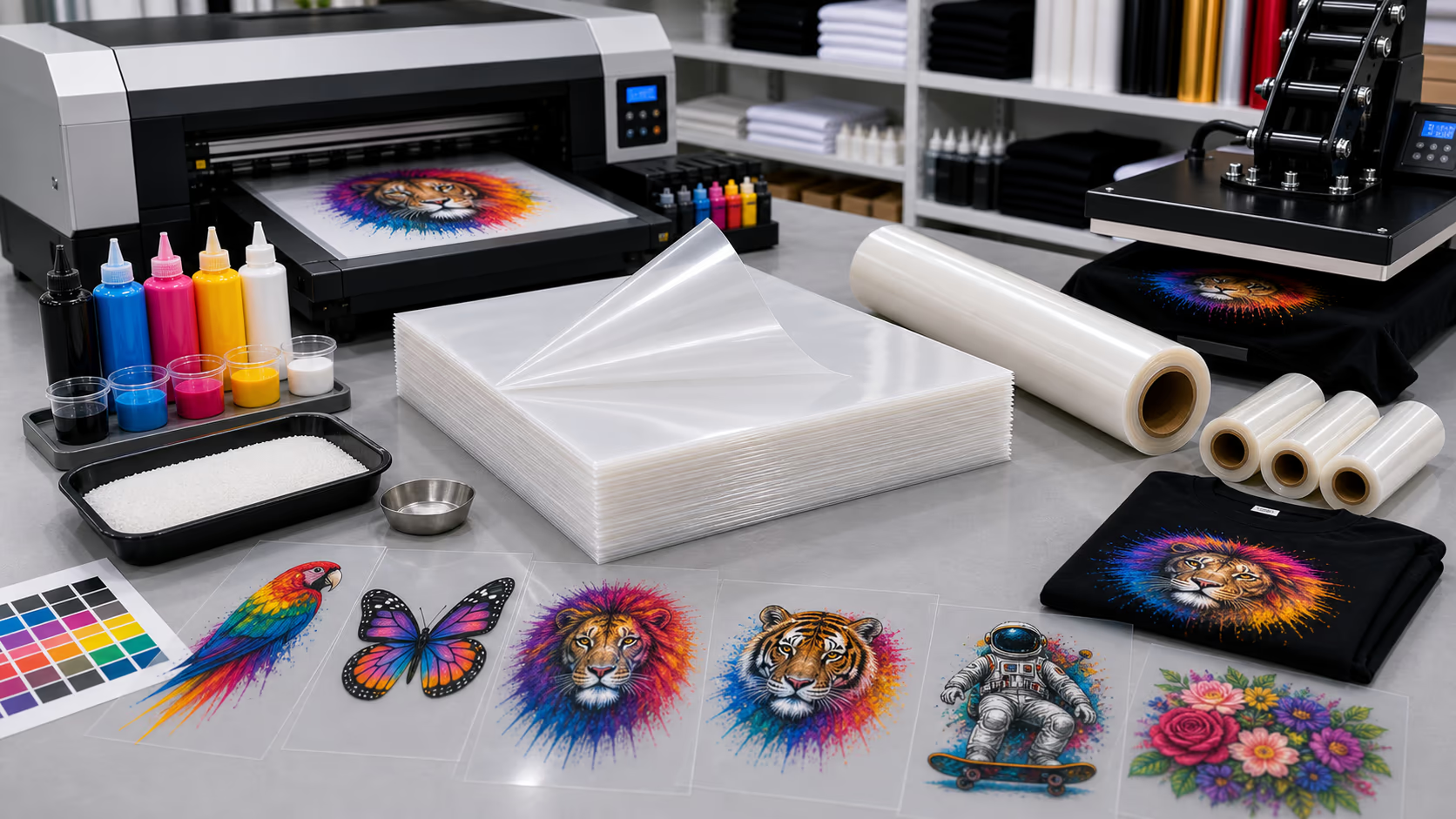
DTF printing, by contrast, uses water-based pigmented inks that sit on the surface of a PET film, paired with a hot-melt adhesive powder. The process involves printing the design onto PET film, applying adhesive powder, curing the ink and powder at moderate temperatures (100°C–130°C), and then heat-pressing the film onto the substrate (160°C–180°C). The adhesive melts during heat pressing, bonding the pigmented ink layer to the substrate—whether it is cotton, polyester, leather, or blends. The key here is that DTF relies on the physical bond of the adhesive, not the ink’s ability to penetrate the substrate. Pigmented inks are opaque and stable, maintaining their color and structure without vaporizing during the process.
2. The Compatibility Gap: Why Sublimation Ink Fails on DTF PET Film
While both processes use heat and PET film (in DTF’s case), the technical differences between sublimation ink and DTF requirements lead to several critical failures when attempting to use them together. These issues range from poor print quality on the film to complete transfer failure on the final substrate.
2.1 Poor Adhesion to PET Film
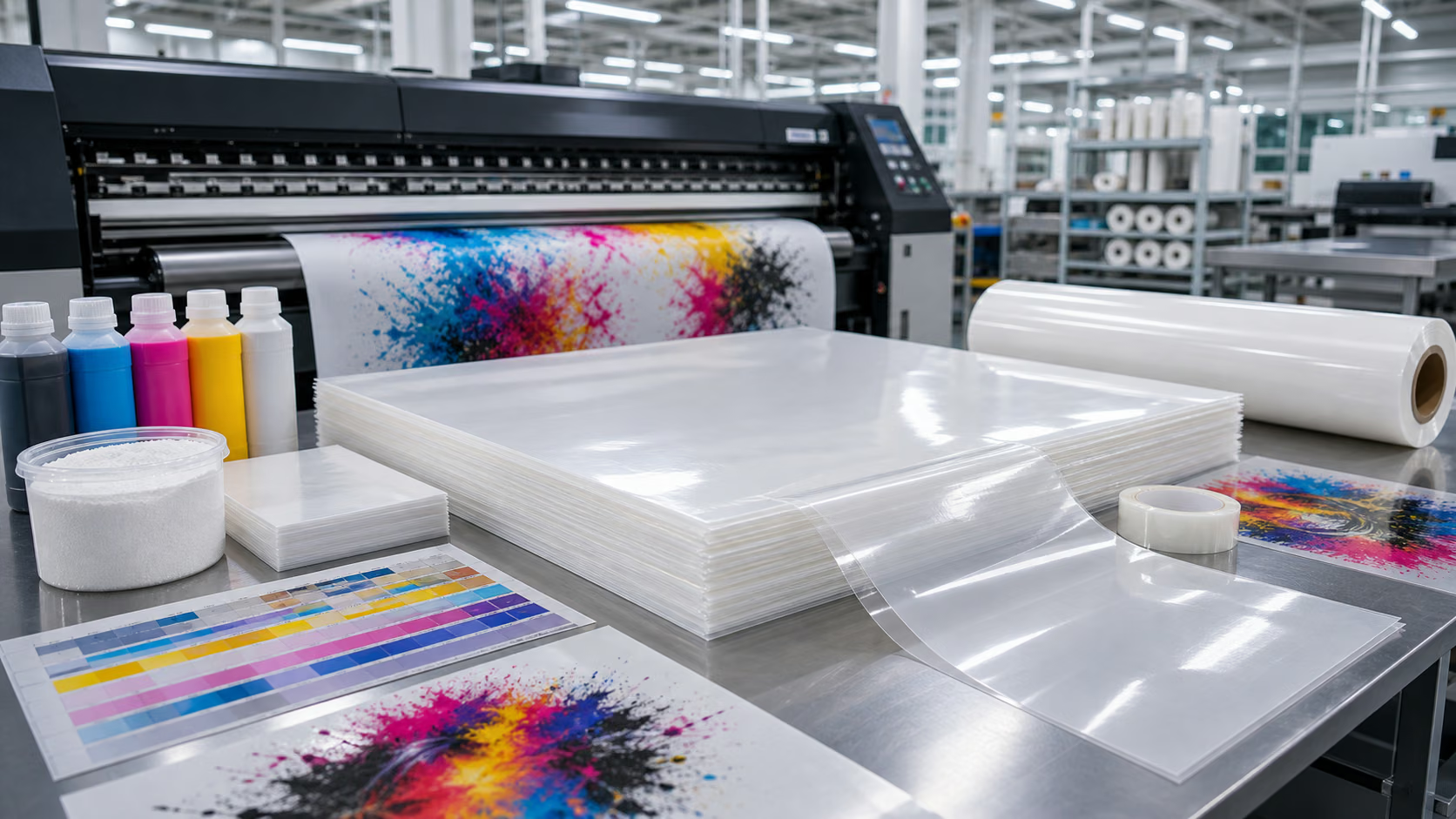
PET film used in DTF printing is coated to accept pigmented inks, creating a stable surface for the ink to adhere to during curing. Sublimation ink, however, is formulated to release from its carrier (like sublimation paper) and vaporize into the substrate—not to bond to PET film. When printed on DTF PET film, sublimation ink sits loosely on the surface, lacking the chemical affinity to adhere properly. This results in smudged prints, ink bleeding, and poor resolution, even before the adhesive powder is applied.
2.2 Incompatibility with DTF Adhesive Powder
The hot-melt adhesive powder in DTF systems is designed to bond with pigmented ink layers, which have a porous, textured surface that the melted powder can grip onto. Sublimation ink, when dried on PET film, forms a smooth, non-porous layer that repels the adhesive powder. Even if the powder is applied, it fails to adhere to the ink, leading to uneven coverage or complete separation during curing. Without a secure bond between ink and adhesive, the design cannot transfer to the substrate.
2.3 Vaporization vs. Adhesive Transfer Failure
The final heat-pressing step exposes the PET film to temperatures high enough to activate both the DTF adhesive and the sublimation ink. While the adhesive melts as intended, the sublimation ink begins to vaporize—but there is no polyester or polymer substrate to absorb it. Instead, the vaporized ink either dissipates into the air (resulting in faded, incomplete designs) or bonds weakly to the adhesive, peeling off easily when the PET film is removed. This stands in stark contrast to DTF’s pigmented inks, which remain stable during heat pressing and lock into the adhesive layer.
2.4 Limited Substrate Compatibility
Even if a partial transfer were achieved, sublimation ink would only bond to polyester or polymer-coated substrates—defeating the primary advantage of DTF printing, which is its ability to work with a wide range of materials (including cotton and blends). For non-polyester substrates like cotton, the vaporized sublimation ink would have nowhere to penetrate, resulting in a design that rubs off immediately after transfer.
3. Practical Alternatives: Achieving Versatility Without Cross-Use
The inability to use sublimation ink on DTF PET film does not mean sacrificing versatility. Instead, printers can leverage the strengths of each technology or use specialized products to achieve desired results without forcing incompatibilities.
3.1 Use DTF-Specific Pigmented Inks
The simplest solution is to use inks formulated explicitly for DTF printing. These water-based pigmented inks are engineered to adhere to DTF PET film, bond with adhesive powder, and withstand heat pressing without fading or vaporizing. They offer vibrant colors, excellent opacity (especially when paired with white adhesive powder), and compatibility with all DTF-supported substrates. Leading manufacturers like Epson and Mimaki offer DTF-specific ink sets that ensure optimal performance with A4 DTF printers.
3.2 Dual-System Setup for Specialized Needs
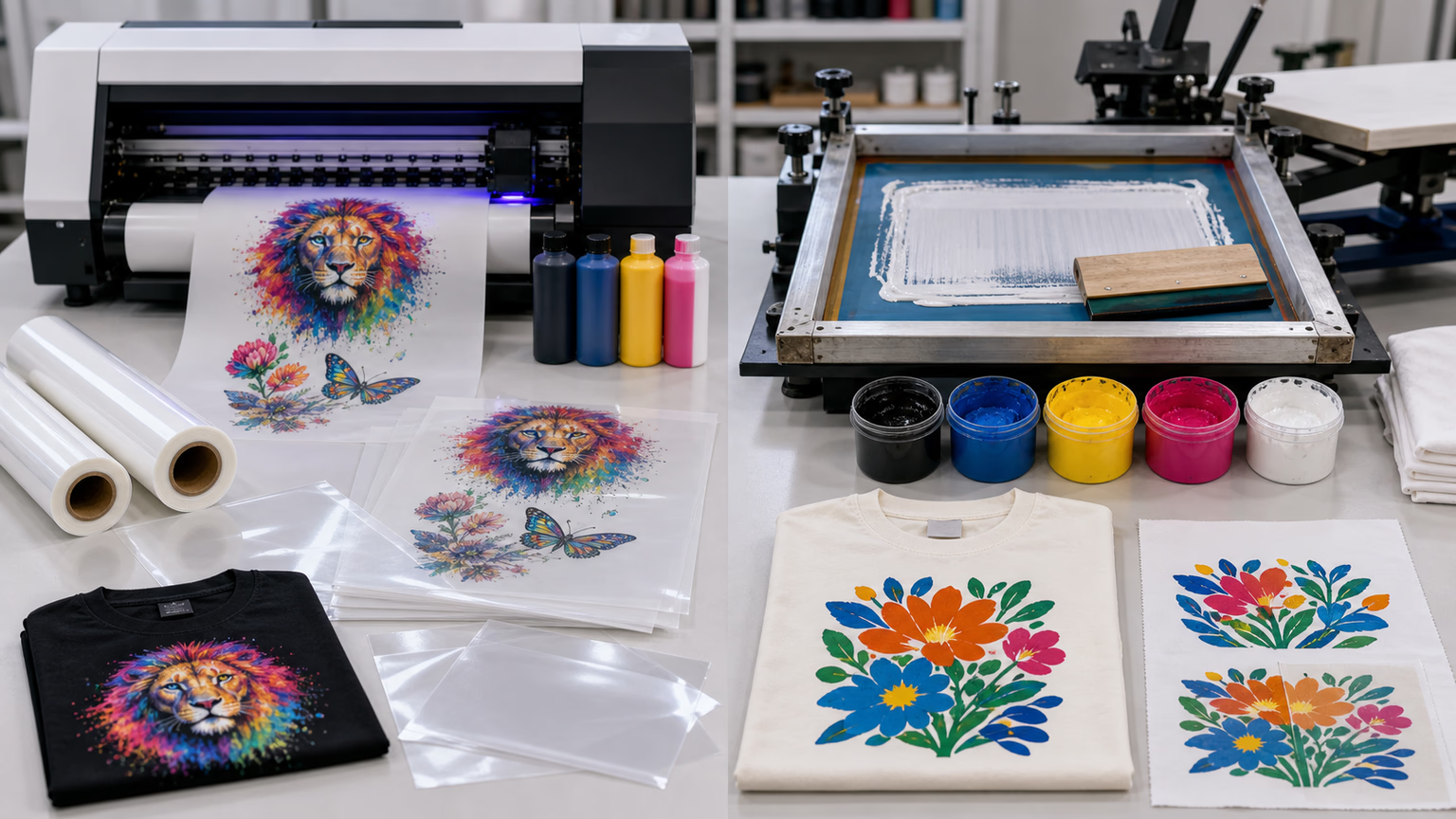
For users who need both sublimation and DTF capabilities (e.g., printing on polyester apparel and cotton t-shirts), a dual-system setup is the most reliable approach. This involves maintaining a dedicated sublimation printer with sublimation ink and paper for polyester projects, alongside an A4 DTF printer with pigmented inks and PET film for cotton, blends, and non-textile substrates. While this requires additional investment, it eliminates the risk of cross-contamination (e.g., sublimation ink residue in a DTF printer) and ensures high-quality results for each application.
3.3 Sublimation-Compatible DTF Films (A Niche Solution)
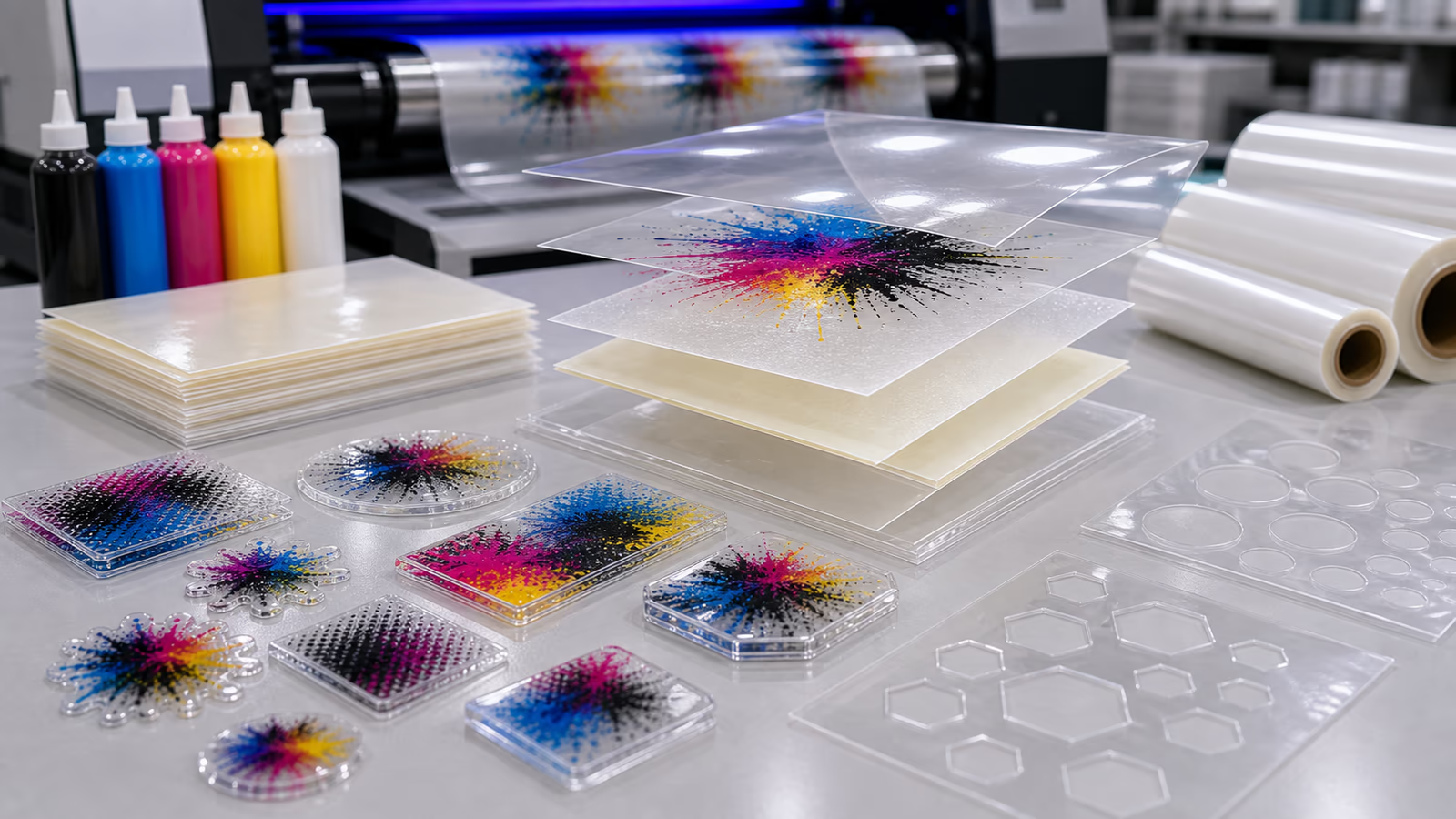
A small number of manufacturers offer “hybrid” PET films designed to work with both sublimation ink and DTF adhesive—though these are specialized products with limitations. These films have a dual coating: one side accepts sublimation ink, and the other bonds with DTF adhesive. However, they require precise temperature control (balancing sublimation activation and adhesive melting) and only work with polyester substrates. They also tend to be more expensive than standard DTF film, making them impractical for most small-scale users.
4. Key Takeaways: Avoiding the Compatibility Trap
The question of using sublimation ink on DTF PET film ultimately boils down to matching the right ink to the right technology. While the urge to cross-use materials is understandable, the technical mismatches between sublimation ink’s vaporization mechanism and DTF’s adhesive-based transfer process make it an unviable option. To ensure success with A4 DTF printers, follow these critical guidelines:
- Stick to DTF-specific inks: These are formulated to work with DTF PET film, adhesive powder, and heat-pressing parameters, guaranteeing consistent results.
- Separate sublimation and DTF equipment: Cross-contamination between ink types can ruin printers and prints. Use dedicated machines for each process.
- Invest in quality DTF supplies: Cheap or generic PET film or adhesive powder can compound issues, even with the right ink. Opt for trusted brands.
- Test niche products carefully: If using hybrid films, conduct extensive tests on sample substrates before scaling up production.
5. Conclusion: Embracing the Strengths of Each Technology
While sublimation ink and DTF PET film transfers cannot be effectively combined, this is not a limitation—it is a reflection of each technology’s specialized design. Sublimation excels at producing vibrant, soft transfers on polyester, while DTF shines in its versatility across substrates and ease of use for small-scale production. By respecting these boundaries and using the right supplies for each process, A4 DTF printer users can maximize the potential of their equipment, creating high-quality, durable transfers without falling prey to compatibility pitfalls. In the world of custom printing, success lies not in forcing mismatched tools together, but in leveraging each tool’s unique strengths to meet specific creative needs.