
Introduction
In DTF printing, moisture is often evaluated based on environmental conditions such as Humidity or material response such as Moisture Absorption. However, even when these factors appear consistent, system behavior may still vary across different areas.
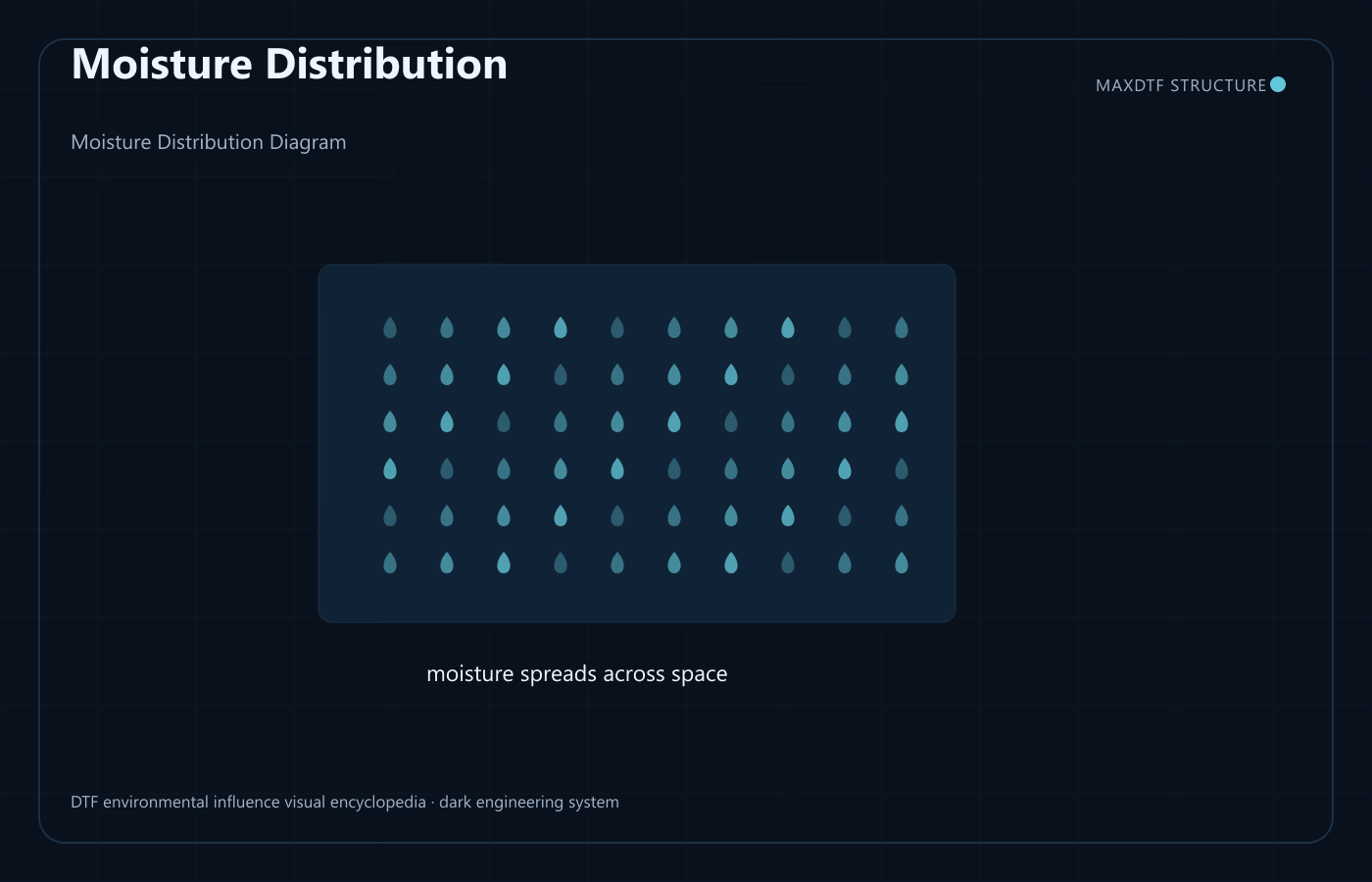
Moisture distribution describes how moisture is spatially distributed within the system, both across surfaces and within materials.
This concept is critical because materials do not respond only to how much moisture is present, but also to where that moisture exists.
Understanding moisture distribution requires shifting focus from quantity to spatial variation. Even small differences in moisture distribution can lead to significant differences in material behavior.
What Is Moisture Distribution
Moisture distribution refers to how absorbed or present moisture is spread across surfaces or within material structures.
It defines whether moisture is evenly distributed or concentrated in specific areas.
Moisture distribution is not the same as Moisture Absorption. While absorption defines how much moisture is taken in, distribution defines how that moisture is positioned.
It is closely related to Humidity, which determines moisture availability, and to Temperature, which influences how moisture moves within the system.
Moisture distribution is also influenced by Airflow, which affects how moisture is transported across the environment.
How Moisture Distribution Functions in the DTF System
Within the DTF system, moisture distribution functions as a determinant of spatial consistency in material behavior.
When moisture is evenly distributed, materials respond consistently across surfaces. Ink interaction, adhesive behavior, and separation processes become more uniform.
When moisture distribution is uneven, different areas of the system experience different moisture conditions. This leads to localized variation in material behavior.
Moisture distribution directly influences how adhesive powder behaves, linking it to Adhesive Bonding Architecture in DTF Printing.
It also affects how ink interacts with surfaces, connecting to Ink Behavior Architecture in DTF Printing.
Moisture distribution interacts with Moisture Absorption, which defines how much moisture is present within materials, and with environmental variables such as Airflow and Temperature, which influence how moisture moves.
Interaction Path
Moisture distribution emerges from the interaction between environmental conditions and material response.
When moisture is present in the environment, materials absorb it based on their properties. However, the absorbed moisture does not necessarily distribute evenly.
Air movement through Airflow can redistribute moisture across surfaces, creating areas of higher or lower moisture concentration.
Temperature differences also influence moisture movement, affecting how moisture spreads within the system.
This uneven distribution leads to localized differences in material behavior. Some areas may experience higher moisture levels, while others remain relatively dry.
Moisture distribution also interacts with environmental transitions. Through Temperature and Humidity, it contributes to conditions defined by Dew Point, where moisture may condense, leading to Condensation Risk.
Through this mechanism, moisture distribution defines the spatial variation of moisture within the system.
What Moisture Distribution Does NOT Do
Moisture distribution does not define how much moisture is present in the environment, which is determined by Humidity.
It does not define how much moisture is absorbed by materials, which is determined by Moisture Absorption.
It does not define material structure, including layers such as Release Layer, nor does it determine how these layers are constructed.
It does not define ink formulation or chemical behavior, which belong to Ink Behavior Architecture in DTF Printing.
It does not define adhesive composition or bonding mechanisms, which are described in Adhesive Bonding Architecture in DTF Printing.
Moisture distribution does not define release timing or separation behavior, which are part of Release Timing Architecture in DTF Printing.
It does not independently determine system performance.
Structural Nature
Moisture distribution exists as a system-level condition that reflects how moisture is spatially arranged within the system.
It is not a material property or structural layer, but a dynamic condition that emerges from environmental interaction.
It depends on variables such as Humidity, Temperature, and Airflow, which together define how moisture moves and spreads.
It also interacts with Moisture Absorption, which defines how much moisture is present within materials.
Moisture distribution does not act independently. It exists as part of a broader environmental system.
Performance Boundaries
Moisture distribution defines spatial consistency but does not define performance outcomes.
It operates within a range where moisture remains evenly distributed. Outside this range, localized variation leads to inconsistent material behavior.
Moisture distribution does not determine whether system performance is acceptable. It defines how consistent moisture conditions are across the system.
Common Misunderstandings
Moisture distribution is often confused with moisture level. In reality, moisture level defines quantity, while distribution defines spatial variation.
Another misunderstanding is that uniform humidity guarantees uniform conditions. In practice, moisture may still be unevenly distributed.
Moisture distribution is also often assumed to be static. In reality, it changes continuously due to environmental interaction.
It is also commonly assumed that moisture distribution directly determines system outcomes. In reality, it influences material behavior rather than directly controlling results.
Where Moisture Distribution Sits in the System
Moisture distribution belongs to the Environmental Influence layer of the DTF system.
It represents a system-level condition that connects environmental variables and material response.
Within the system, it connects Humidity, Temperature, and Airflow with material-level behavior described in System Interaction Architecture in DTF Printing.
Related Concepts
This concept is part of the Environmental Influence Architecture in DTF Printing system.
– Humidity
– Temperature
– Airflow
– Moisture Absorption
– Dew Point
– Condensation Risk
– Adhesive Bonding Architecture in DTF Printing
– System Interaction Architecture in DTF Printing