
Introduction
Release layer is commonly described as the coating that allows a printed image to be peeled from the film after transfer.
While this description reflects a visible outcome, it does not define the role of the release layer within the DTF printing system.
In manufacturing reality, release behavior is not a standalone action. It is the result of a controlled interface designed into the film structure.
The release layer is not simply a peel-enabling surface. It is a functional boundary that defines how separation occurs between the film and the transfer structure.
This distinction is important because release is often interpreted as a performance feature, when in fact it is a structural definition embedded within the material system.
Understanding the release layer requires shifting from a usage-based description to a system-level definition of how separation is structured and constrained within DTF Film.
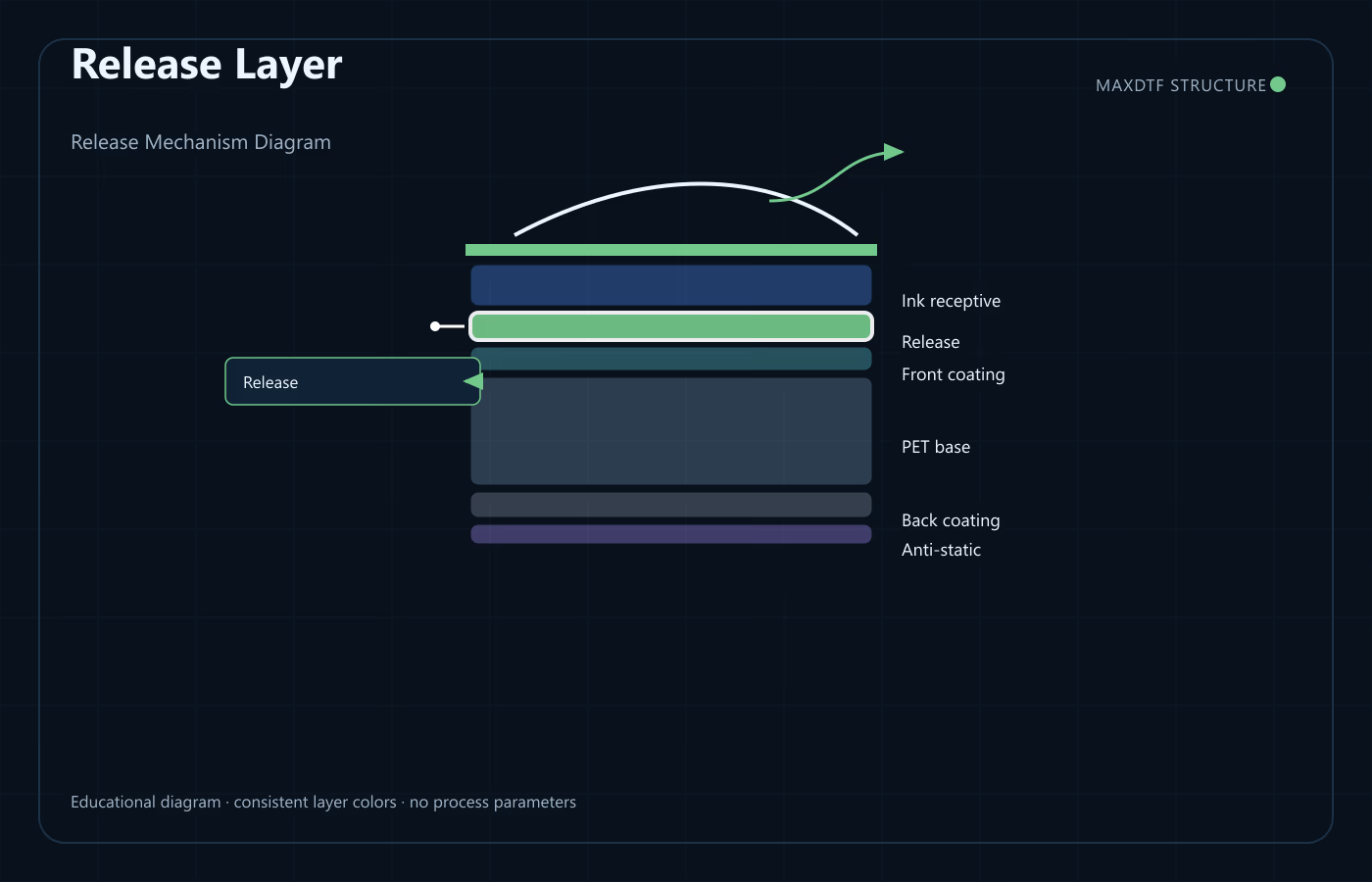
What Is Release Layer in DTF Film
Release layer is a functional surface layer that defines separation behavior between the transfer structure and the film within DTF Film.
How Release Layer Functions in the DTF System
Release layer functions as the interface that establishes the condition under which the transfer structure separates from the film surface.
It exists as the outermost functional coating on DTF Film and forms a defined boundary between the film and the material that will be transferred.
This layer operates above the Ink Receptive Layer and remains structurally connected to the overall film system.
Within the DTF printing system, the release layer does not participate in image formation or bonding. Its function is to define the interface at which separation becomes possible under controlled conditions.
What Release Layer Does NOT Do
Release layer does not control image formation.
Release layer does not define color density, sharpness, or visual appearance.
Release layer does not determine adhesion between the transfer structure and the final substrate.
Release layer does not compensate for variation in DTF Ink formulation or DTF Adhesive Powder characteristics.
Release layer does not define the internal structural stability of the film system.
Structural Nature
Release layer is a surface-level functional coating that forms the outermost boundary of the DTF Film system.
It is supported by the layered structure of DTF Film, which includes the Ink Receptive Layer and the underlying Base PET Film.
As part of this layered architecture, the release layer is not an independent element. It exists as a defined component within a system of coatings that together establish the functional behavior of the film.
Its position at the outermost surface defines its role as a boundary layer, rather than a structural support layer or a material carrier.
The release layer does not exist in isolation. Its presence is defined by its placement within the film structure and its relationship to the layers beneath it.
Performance Boundaries
Release layer operates within defined boundaries such as surface consistency, coating uniformity, and controlled separation conditions.
It defines a specific range within which separation behavior remains consistent and predictable as part of the film system.
Outside these boundaries, variation in separation behavior becomes visible.
These variations do not indicate failure of the release layer itself, but rather that the film system is operating outside its defined structural conditions.
Release layer does not extend its function beyond the separation interface. It remains limited to defining how and where separation occurs within the system.
Common Misunderstandings
Release layer is often misunderstood as the component that determines overall print performance.
In practice, it defines separation behavior but does not influence image formation or bonding.
Another common misunderstanding is that release behavior is controlled by this layer alone.
Release layer functions as part of a structured film system and does not act independently of the surrounding layers.
It is also often assumed that release layer directly controls adhesion outcomes.
In reality, adhesion is defined by other system components, while release layer defines only the boundary at which separation occurs.
Release layer is sometimes interpreted as a performance feature that can be adjusted independently.
However, it exists as part of a defined structural system and cannot be separated from the overall film architecture.
Where Release Layer Sits in the System
Release layer sits at the outermost surface of the film.
It acts as the final interface between the film and the transfer structure before separation.
It is positioned above the Ink Receptive Layer and supported by the underlying DTF Film structure.
Within the system, it defines the boundary at which the transfer structure transitions from being supported by the film to becoming independent.