
Introduction
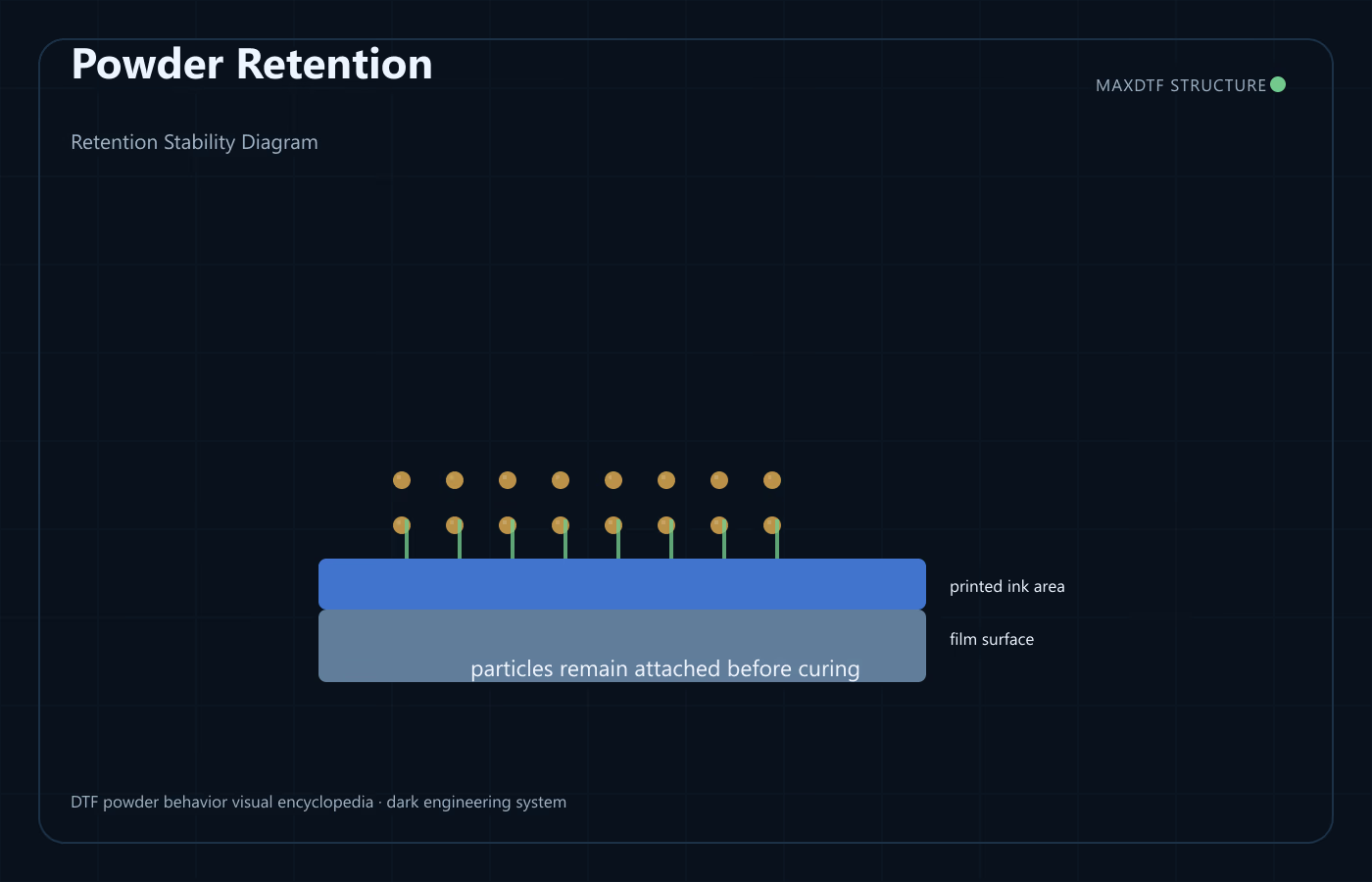
In DTF printing, powder particles must remain attached to the printed surface after distribution and before thermal activation. This retention stage defines whether particles can be carried forward into the bonding process.
Powder retention is often interpreted as a simple outcome, such as whether powder falls off or remains in place. In reality, it is a system-level condition that defines how stable particle attachment remains over time and under movement.
It does not define bonding strength or final performance. Instead, it defines whether particles can remain in position long enough to participate in subsequent transformation.
Understanding powder retention requires recognizing it as a stability condition that governs how particle attachment is maintained before curing.
What Is Powder Retention
Powder retention refers to the ability of powder particles to remain attached to the printed surface within the DTF printing system prior to thermal activation.
It defines whether particles that have been distributed and attached can stay in place under the influence of movement, airflow, and environmental conditions.
Powder retention is not a measure of bonding performance. It does not describe how strongly particles will bond after activation. It defines whether particles can remain attached before bonding occurs.
It is closely related to Powder Pickup, as pickup defines initial attachment, while retention defines whether that attachment is maintained.
It also interacts with Powder Distribution, since only retained particles contribute to the effective distribution entering the bonding stage.
How Powder Retention Functions in the DTF System
Within the DTF system, powder retention functions as a stability layer following particle attachment.
Particles are first distributed across the surface through Powder Distribution and attached through Powder Pickup. However, not all attached particles remain in place.
Powder retention defines whether these particles can withstand subsequent disturbances, such as movement or airflow.
Retention is influenced by particle behavior and surface interaction. Powder Particle Size affects how easily particles can be dislodged, while Powder Flowability influences how particles respond to movement.
Electrostatic conditions also play a role. Under certain conditions defined in Powder Electrostatics, particles may experience forces that either stabilize or destabilize their attachment.
Environmental conditions are critical. Variables described in Environmental Influence Architecture in DTF Printing, such as airflow and humidity, influence whether particles remain attached or become dislodged.
Through these interactions, powder retention defines whether particle attachment remains stable before thermal activation.
Interaction Path
Powder retention operates as a continuation of the attachment stage within the powder behavior chain.
Particles are first positioned through Powder Distribution, defining where they are located.
Powder Pickup determines which particles attach to the surface.
Powder retention then defines whether these attached particles remain in place.
Environmental conditions described in Environmental Influence Architecture in DTF Printing influence how stable this retention remains over time.
Once particles are retained, they can proceed to transformation stages defined in Adhesive Bonding Architecture in DTF Printing.
Through this sequence, powder retention defines the transition from initial attachment to stable pre-bonding positioning.
What Powder Retention Does NOT Do
Powder retention does not define how particles melt, fuse, or form a bonding structure. These behaviors belong to Adhesive Bonding Architecture in DTF Printing.
It does not determine final adhesion strength, durability, or transfer performance.
It does not define particle movement, which is described by Powder Flowability and Powder Distribution.
It does not define release or separation behavior, which are part of Release Timing Architecture in DTF Printing.
Powder retention is not a measure of performance but a condition of attachment stability.
Structural Nature
Powder retention exists as a stability condition within the Powder Behavior layer.
It does not belong to material composition or structural layers. Instead, it defines how particle attachment is maintained over time.
Its influence is expressed through whether particles remain attached under external influence.
Powder retention interacts with Powder Pickup by maintaining attachment, with Powder Distribution by preserving spatial positioning, and with Powder Electrostatics by responding to charge-related forces.
It does not define these variables individually but determines whether their effects persist.
Performance Boundaries
Powder retention defines a balance between attachment stability and susceptibility to disturbance.
High retention allows particles to remain attached under movement and environmental influence, supporting consistent system behavior.
Low retention results in particle loss, reducing effective coverage and introducing variability.
This creates a range within which retention must remain stable to ensure reliable system operation.
Powder retention does not determine performance outcomes but defines whether particle attachment remains intact.
Common Misunderstandings
Powder retention is often confused with bonding strength. In reality, retention defines pre-bonding stability, not final adhesion.
Another common misunderstanding is treating retention as independent of pickup. In practice, retention depends on initial attachment defined by Powder Pickup.
It is also often assumed that retention is constant. In reality, it varies depending on environmental conditions described in Environmental Influence Architecture in DTF Printing.
Retention is not an isolated variable but part of a broader interaction system.
Where Powder Retention Sits in the System
Powder retention belongs to the Powder Behavior layer of the DTF system.
It defines the stability stage of particle attachment before thermal activation.
Within the system, it operates alongside Powder Distribution, Powder Pickup, and Powder Electrostatics, determining whether particles remain in place.
Its effects propagate into later stages of the system, including bonding and separation processes described in System Interaction Architecture in DTF Printing.
Related Concepts
This concept is part of the Powder Behavior Architecture in DTF Printing system.
– Powder Flowability
– Powder Distribution
– Powder Pickup
– Powder Particle Size
– Powder Electrostatics
– Environmental Influence Architecture in DTF Printing
– Adhesive Bonding Architecture in DTF Printing
– Ink Behavior Architecture in DTF Printing
– Release Timing Architecture in DTF Printing