
Introduction
In the material definition of DTF Film, not all performance-relevant characteristics are expressed through visible layers. Some properties exist at the surface level and define how the material presents itself to external substances without being a separate structural component.
Within the Structural Architecture of DTF Film, surface-related attributes operate alongside layers such as Ink Receptive Layer and Release Layer. These attributes define how the film surface behaves as an interface, rather than how individual layers are constructed.
Surface energy belongs to this category of surface attributes and is defined at the material level of the film.
What Is Surface Energy
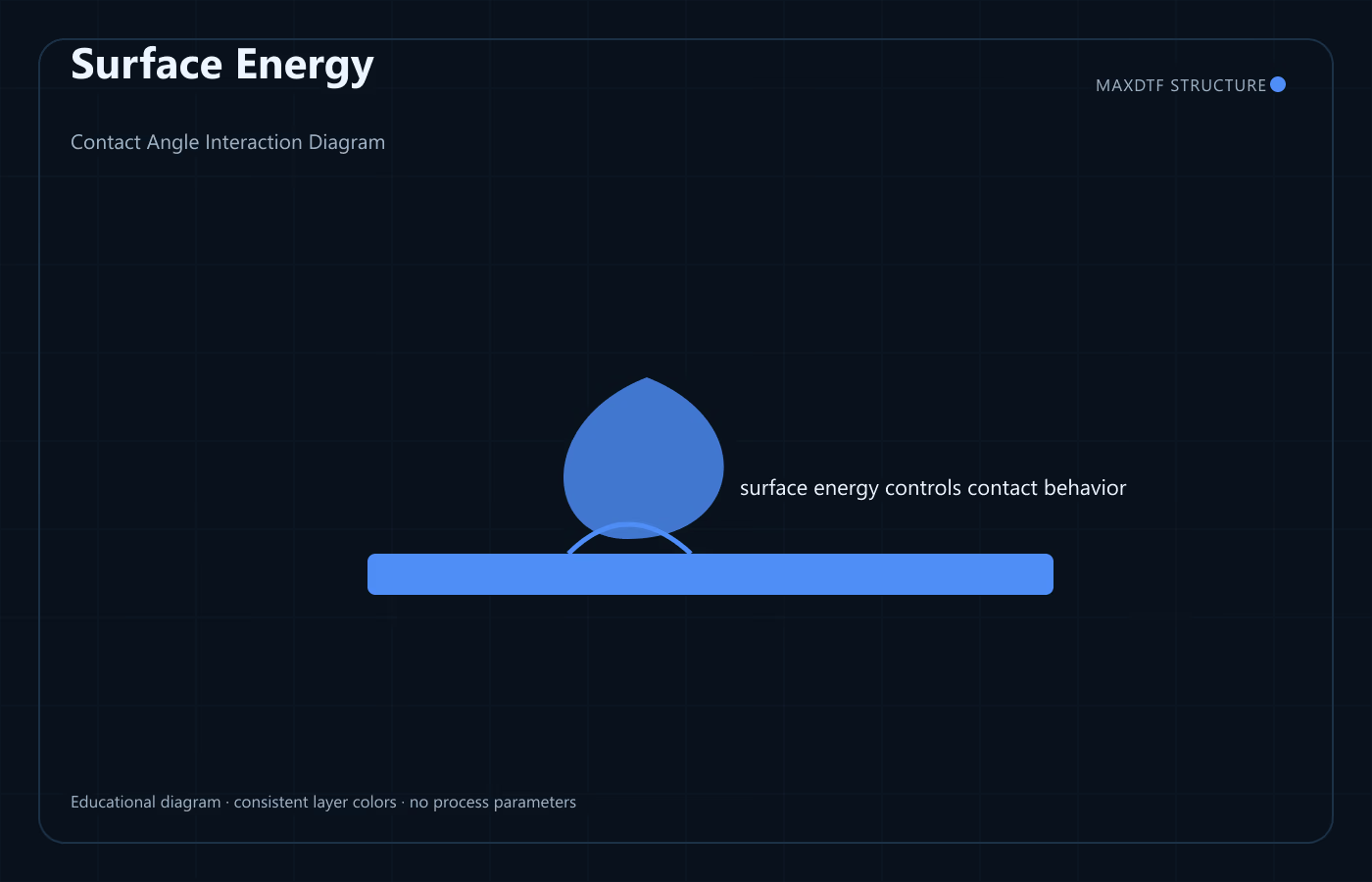
Surface energy is a material property that defines how the surface of DTF Film presents itself for interaction with liquids within the DTF system.
It defines the energetic state of the film surface and represents how the surface exists as an interface. This property is associated with the outermost functional surface of the film, typically connected to the Ink Receptive Layer or other surface-facing layers.
Surface energy is not a coating layer, not a process parameter, and not a performance result. It is a property of the material surface.
How Surface Energy Functions in the DTF System
Surface energy functions as a surface-level property within the DTF system.
It defines:
- how the film surface exists as an interface
- how the surface presents itself to external materials
- the boundary conditions of surface contact
Within the film structure, surface energy operates at the outer interface of the Layer Stack Structure in DTF Film, where surface-facing layers define how the film is exposed.
It exists alongside structural components such as Base PET Film and Front Coating Layer, but does not function as a layer itself.
What Surface Energy Does NOT Do
Surface energy does not control ink absorption.
Surface energy does not define color density or image formation.
Surface energy does not determine release behavior.
Surface energy does not control adhesive bonding strength.
Surface energy does not replace the functions of Ink Receptive Layer, Release Layer, or DTF Adhesive Powder.
It defines a surface property only, not a system outcome.
Structural Nature
Surface energy is a property of the surface state of the film rather than a structural layer.
It exists at the interface defined by the outermost functional layer, typically associated with the Ink Receptive Layer or other surface-facing coatings within the Structural Architecture of DTF Film.
Unlike Front Coating Layer or Back Coating Layer, surface energy cannot be identified as an independent layer. It reflects the condition of the surface rather than a physical component.
Performance Boundaries
Surface energy operates within defined boundaries such as the surface state of the film and its interface characteristics.
It defines how the surface exists but does not extend into:
- material structure definition
- coating composition
- mechanical properties such as PET Thickness or film stiffness
Surface energy remains limited to describing the surface-level condition of the film.
Common Misunderstandings
Surface energy is often misunderstood as a direct measure of print quality or ink behavior.
It is sometimes incorrectly treated as equivalent to ink absorption or coating performance. In reality, surface energy defines a surface property, not a functional outcome.
Another common misunderstanding is treating surface energy as a coating layer. It is not a layer and cannot be separated as a structural component.
Surface energy is also frequently confused with liquid properties such as surface tension. These belong to different material domains and should not be used interchangeably.
Where Surface Energy Sits in the System
Surface energy sits at the node level within the Structural Architecture of DTF Film.
It is associated with the surface condition of the DTF Film and is positioned alongside other material properties such as PET Thickness and film stiffness.
Within the system hierarchy:
surface energy defines the surface-level property of that system
DTF Film defines the full material system
structural layers define functional roles