
Introduction
In DTF printing, temperature is often treated as a fixed environmental condition. However, the presence of a given temperature does not guarantee that the system operates under stable thermal conditions.
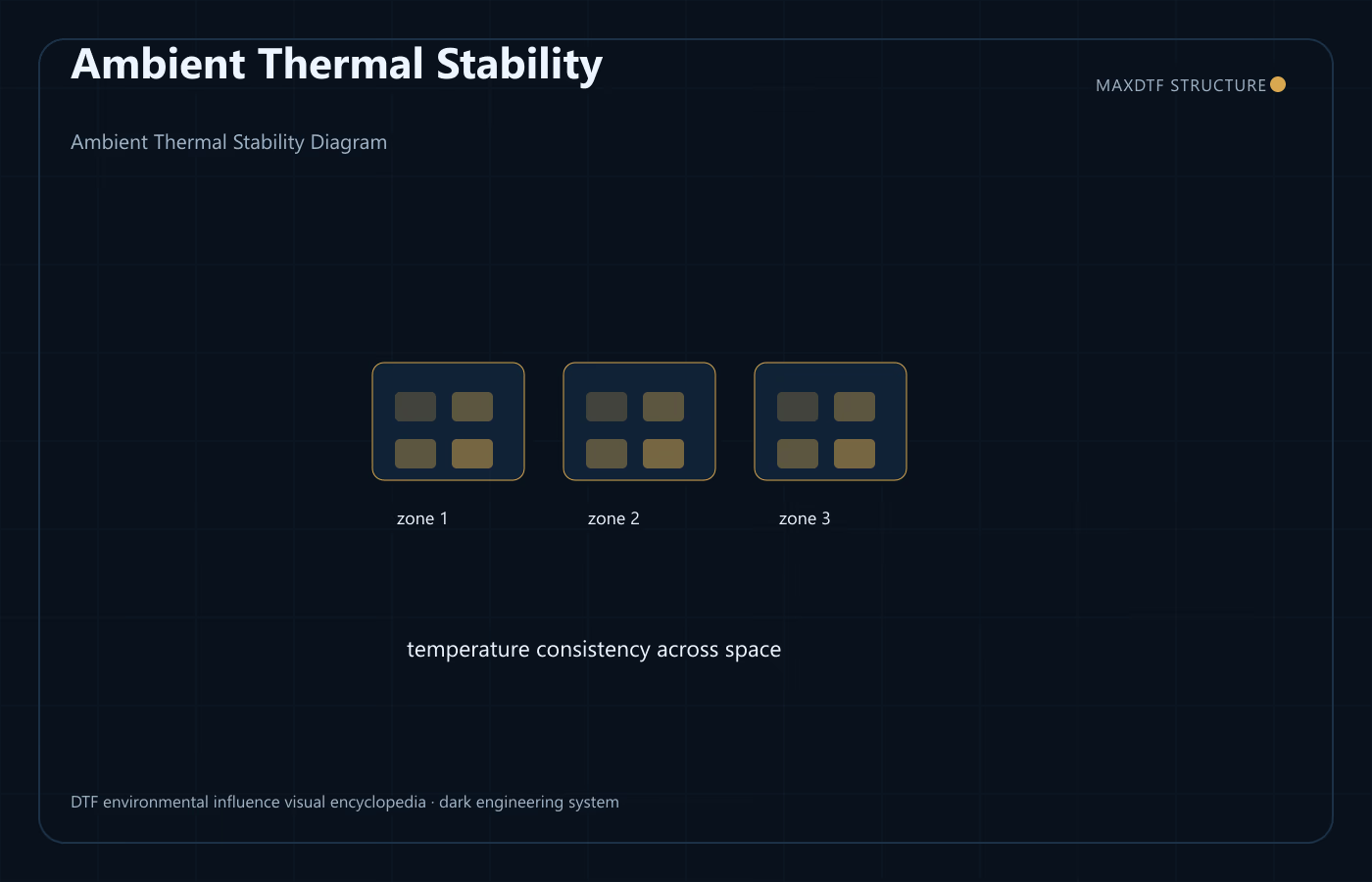
Ambient thermal stability describes how consistent temperature remains over time and across space within the printing environment.
Even when average temperature appears controlled, fluctuations and uneven distribution can lead to variations in material behavior. These variations influence how different parts of the system respond during printing.
Understanding ambient thermal stability requires shifting from static temperature values to dynamic temperature behavior.
What Is Ambient Thermal Stability
Ambient thermal stability refers to the consistency and uniformity of temperature within the printing environment.
It defines whether temperature remains stable over time and evenly distributed across different areas of the system.
Ambient thermal stability is not the same as Temperature. While temperature defines the thermal condition at a given moment, ambient thermal stability defines how consistent that condition remains.
It is closely related to Heat Retention, which affects how thermal energy is maintained within the system.
Ambient thermal stability is also influenced by environmental variables such as Airflow, which affects how heat is distributed, and Humidity, which can interact with thermal conditions.
How Ambient Thermal Stability Functions in the DTF System
Within the DTF system, ambient thermal stability functions as a control factor for consistency in material behavior.
Stable thermal conditions allow materials to respond predictably. Ink behavior, adhesive interaction, and separation processes become more consistent under stable temperature conditions.
This connects ambient thermal stability to Ink Behavior Architecture in DTF Printing, Adhesive Bonding Architecture in DTF Printing, and Release Timing Architecture in DTF Printing.
When thermal conditions fluctuate, materials experience changing physical states. This leads to variation in interaction behavior across the system.
Ambient thermal stability also interacts with Airflow, which determines how evenly heat is distributed, and with Temperature, which defines the baseline thermal condition.
Through this mechanism, ambient thermal stability defines how consistent thermal conditions are across the system.
Interaction Path
Ambient thermal stability emerges from the interaction between temperature levels, heat distribution, and environmental conditions.
When temperature is evenly distributed and remains stable over time, the system experiences consistent thermal conditions. This supports uniform material behavior.
When temperature fluctuates or varies across space, thermal conditions become unstable. Different areas of the system may experience different thermal states.
This unevenness affects how materials behave. Ink may respond differently across surfaces, adhesive powder may interact inconsistently, and separation behavior may vary.
Ambient thermal stability also interacts with moisture behavior. Through Humidity, temperature influences how moisture behaves, contributing to conditions defined by Dew Point and Condensation Risk.
Through this mechanism, ambient thermal stability defines the consistency of thermal conditions rather than their absolute value.
What Ambient Thermal Stability Does NOT Do
Ambient thermal stability does not define the actual temperature level, which is defined by Temperature.
It does not define material structure, including layers such asRelease Layer, nor does it determine how these layers are constructed.
It does not define ink formulation or chemical behavior, which belong toInk Behavior Architecture in DTF Printing.
It does not define adhesive composition or bonding mechanisms, which are described in Adhesive Bonding Architecture in DTF Printing.
It does not define release timing or separation behavior, which are part of Release Timing Architecture in DTF Printing.
Ambient thermal stability does not independently determine system performance or print quality.
Structural Nature
Ambient thermal stability exists as an environmental condition that reflects the consistency of temperature within the system.
It is not a structural layer or material property. Instead, it describes how stable thermal conditions are over time and across space.
It depends on multiple variables, including Temperature, Airflow, and Heat Retention, which together define how thermal energy behaves.
It also interacts with Humidity, as thermal conditions influence moisture behavior.
Ambient thermal stability does not act independently. It exists as part of a broader environmental system.
Performance Boundaries
Ambient thermal stability defines consistency conditions but does not define performance outcomes.
It operates within a range where thermal conditions remain stable. Outside this range, fluctuations lead to variation in material behavior.
Ambient thermal stability does not determine whether system performance is acceptable. It defines how consistent thermal conditions are across the system.
Common Misunderstandings
Ambient thermal stability is often confused with temperature itself. In reality, temperature defines the level of heat, while thermal stability defines how consistent that level remains.
Another misunderstanding is that maintaining a specific temperature guarantees stability. In practice, fluctuations and uneven distribution can still occur.
Ambient thermal stability is also often treated as a static condition, while in reality it changes over time and across different areas of the system.
It is also commonly assumed that thermal stability directly determines system performance. In reality, it influences consistency rather than directly controlling results.
Where Ambient Thermal Stability Sits in the System
Ambient thermal stability belongs to the Environmental Influence layer of the DTF system.
It represents a system-level condition rather than a single variable.
Within the system, it connects Temperature, Airflow, and Humidity, and its effects become visible through interactions described in System Interaction Architecture in DTF Printing.
Related Concepts
This concept is part of the Environmental Influence Architecture in DTF Printing system.
– Humidity
– Temperature
– Airflow
– Moisture Absorption
– Dew Point
– Condensation Risk
– Adhesive Bonding Architecture in DTF Printing
– System Interaction Architecture in DTF Printing