
Introduction
In DTF printing, separation between the printed material and the film is not only defined by whether it is complete or incomplete, but also by whether it exceeds the intended separation boundary.
While Release Completeness defines whether separation is fully achieved, it does not describe conditions where separation extends beyond the intended interface.
This condition is defined as the Over-Release Condition.
Over-Release Condition describes a state in which separation occurs beyond the defined separation interface, resulting in unintended detachment or disruption within the system.
It is often interpreted as improved release performance. However, within the system framework, it represents a deviation from the defined separation boundary.
Understanding this concept requires distinguishing between complete separation and excessive separation.
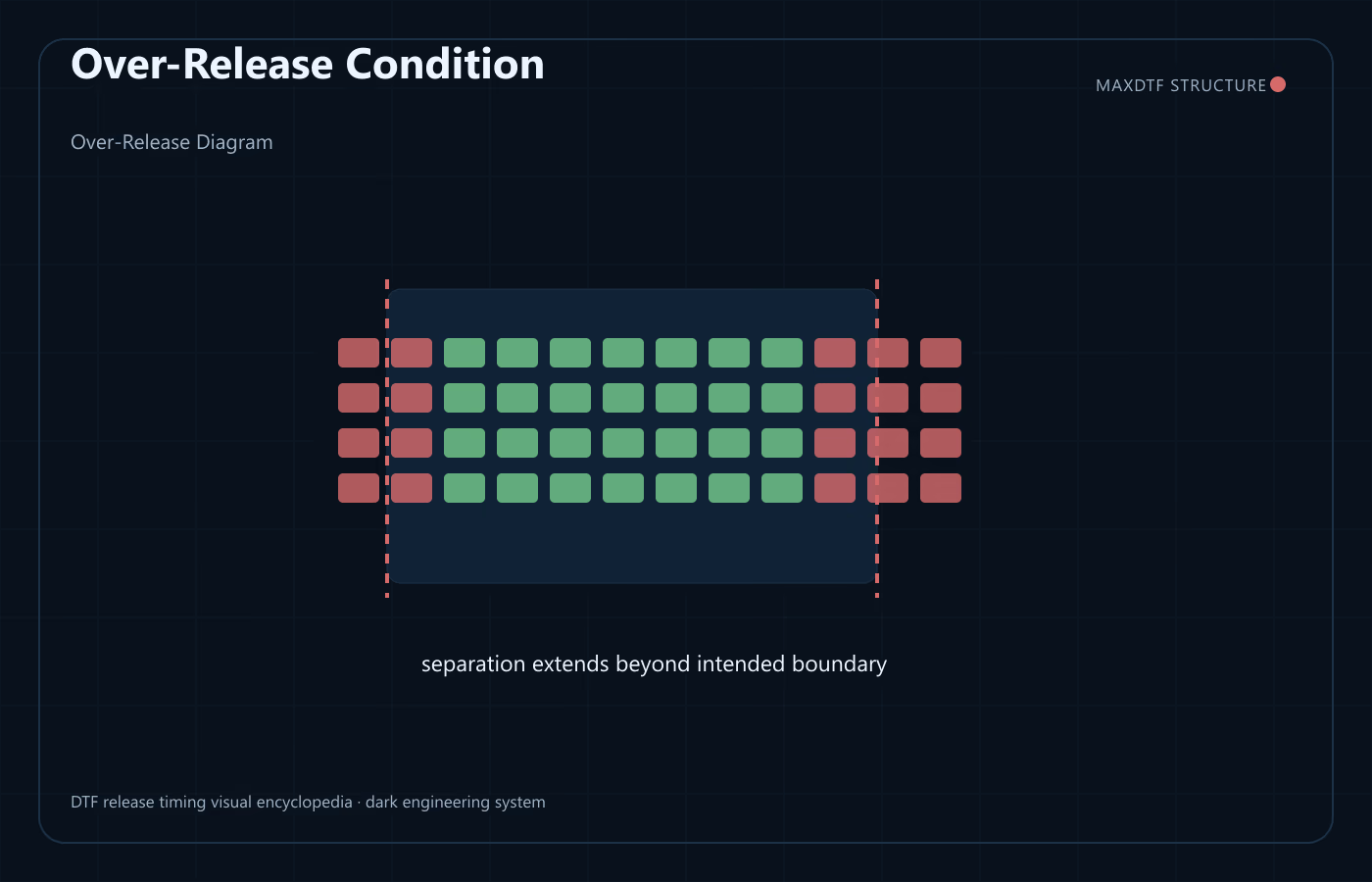
What Is Over-Release Condition
Over-Release Condition is the system state in which separation extends beyond the intended separation interface.
It describes a condition where separation affects areas or structures that are not part of the defined separation boundary.
This concept does not define why excessive separation occurs.
Instead, it defines the presence of separation beyond the intended interface.
How Over-Release Condition Functions in the DTF System
Within the DTF system, Over-Release Condition represents an outcome state where separation exceeds the defined boundary of the release interface.
It reflects situations where:
– separation extends beyond the intended interface
– unintended detachment occurs
– structural disruption appears within the separated material
Over-Release Condition operates on top of:
– Release Layer Definition
– Release Surface Energy
– Release Activation State
– Release Readiness State
– Release Force Profile
– Release Uniformity
– Release Stability
– Release Completeness
It represents one of the boundary outcome states within the system.
What Over-Release Condition Does NOT Do
Over-Release Condition does not define whether a separation interface exists (see Release Layer Definition).
Over-Release Condition does not define interfacial energy conditions (see Release Surface Energy).
Over-Release Condition does not define when separation becomes possible (see Release Activation State).
Over-Release Condition does not define whether the system is ready for separation (see Release Readiness State).
Over-Release Condition does not define force distribution during separation (see Release Force Profile).
Over-Release Condition does not define whether separation is uniform (see Release Uniformity).
Over-Release Condition does not define whether separation remains stable (see Release Stability).
Over-Release Condition does not define classification of separation behavior (see Peel Mode).
Over-Release Condition does not define failure boundaries (see Release Failure Boundary).
Over-Release Condition does not define process parameters such as temperature, pressure, or speed.
Over-Release Condition does not independently define system performance or final transfer quality.
Structural Nature
Over-Release Condition is a system-level outcome state representing separation beyond the defined interface.
It does not belong to a single material or parameter.
It emerges from the interaction between:
– interface definition
– interfacial energy
– activation condition
– system readiness
– force distribution
– separation consistency
This concept does not define any of these individual factors.
It defines only the presence of excessive separation within the system.
Performance Boundaries
Over-Release Condition exists beyond the intended separation boundary of the system.
It represents a condition where separation exceeds the defined interface.
This condition does not define performance quality.
It defines a deviation from the intended separation structure.
Common Misunderstandings
Over-Release Condition is often interpreted as improved or easier release.
In reality, it represents separation beyond the defined interface and is not inherently positive.
It is also commonly confused with Release Completeness.
Completeness defines whether separation is fully achieved within the intended boundary, while over-release describes separation beyond that boundary.
Another misunderstanding is that stronger release automatically improves system behavior.
Within the DTF system, excessive separation may lead to unintended structural effects.
Where Over-Release Condition Sits in the System
Over-Release Condition exists at the outcome boundary layer of separation behavior.
It belongs to the Failure and Boundary Layer within the Release Timing Architecture in DTF Printing.
Within the system, it represents a deviation from:
– defined separation outcome (Release Completeness)
And it relates to other boundary conditions such as:
This concept is part of the Release Timing Architecture in DTF Printing system.