
Introduction
In DTF printing, temperature is often considered in terms of its current value. However, the ability of the system to maintain that temperature over time is equally important.
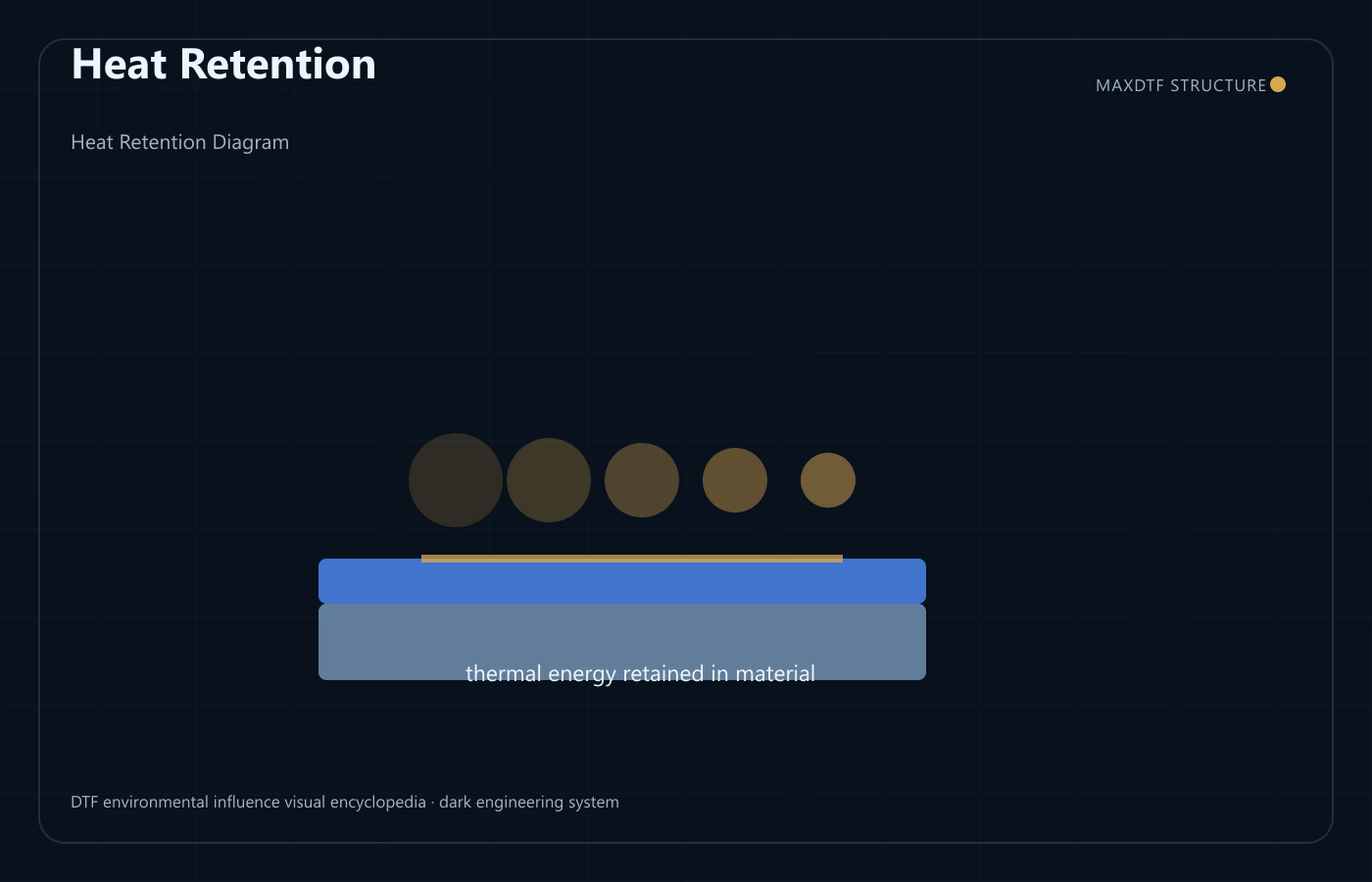
Heat retention describes how thermal energy is preserved within the printing environment and across system components.
Even when temperature is initially consistent, insufficient heat retention can lead to rapid thermal loss, causing fluctuations in material behavior. Conversely, strong heat retention allows the system to maintain stable thermal conditions over time.
Understanding heat retention requires distinguishing it from Temperature and Ambient Thermal Stability. While temperature defines the current thermal state, and thermal stability defines consistency, heat retention defines how well that state is maintained.
What Is Heat Retention
Heat retention refers to the ability of a system or environment to maintain thermal energy over time.
It defines how quickly or slowly heat is lost from the system once it is present.
Heat retention is not a measure of temperature itself. It describes the persistence of thermal energy within the system.
It is closely related to Ambient Thermal Stability, as stronger heat retention supports more stable thermal conditions.
Heat retention is influenced by environmental variables such as Airflow, which can accelerate heat loss, and by system conditions that affect how heat is contained or dispersed.
How Heat Retention Functions in the DTF System
Within the DTF system, heat retention functions as a stabilizing mechanism for thermal conditions.
When heat retention is strong, thermal energy remains within the system for longer periods. This supports consistent material behavior and reduces fluctuations.
When heat retention is weak, thermal energy is lost more quickly. This leads to temperature variation over time, even if the initial temperature is controlled.
This directly affects how materials behave. Ink response, adhesive interaction, and separation processes become less consistent when thermal conditions change.
Heat retention connects to Ink Behavior Architecture in DTF Printing, Adhesive Bonding Architecture in DTF Printing, and Release Timing Architecture in DTF Printing, as these interactions depend on stable thermal conditions.
It also interacts with Airflow, which influences how heat is redistributed or lost, and with Temperature, which defines the baseline thermal level.
Interaction Path
Heat retention influences the system by controlling how thermal energy is preserved over time.
When heat retention is strong, thermal energy remains within the system. Temperature changes slowly, and the system maintains a consistent thermal state.
When heat retention is weak, thermal energy dissipates quickly. Temperature may drop or fluctuate, leading to changing material conditions.
Heat retention interacts with Airflow, as moving air can accelerate heat loss or redistribution.
It also interacts with Ambient Thermal Stability, as the ability to retain heat contributes to maintaining consistent thermal conditions.
Through Temperature, heat retention defines how long a given thermal state persists.
Through this mechanism, heat retention defines the temporal persistence of thermal conditions within the system.
What Heat Retention Does NOT Do
Heat retention does not define the actual temperature level, which is determined by Temperature.
It does not define whether temperature is evenly distributed, which relates to Ambient Thermal Stability.
It does not define material structure, including layers such as Release Layer, nor does it determine how these layers are constructed.
It does not define ink formulation or chemical behavior, which belong to nk Behavior Architecture in DTF Printing.
It does not define adhesive composition or bonding mechanisms, which are described in Adhesive Bonding Architecture in DTF Printing.
It does not define release timing or separation behavior, which are part ofRelease Timing Architecture in DTF Printing.
Heat retention does not independently determine system performance.
Structural Nature
Heat retention exists as an environmental and system-level characteristic that defines how thermal energy behaves over time.
It is not a structural layer or material property, but a condition that emerges from how heat interacts with the environment and system components.
It depends on variables such as Airflow, which influences heat loss, and system conditions that affect how heat is maintained.
It also interacts with Temperature andAmbient Thermal Stability, forming part of the overall thermal system.
Heat retention does not act independently. It exists as part of a broader environmental interaction framework.
Performance Boundaries
Heat retention defines how thermal conditions persist but does not define performance outcomes.
It operates within a range where thermal conditions remain stable over time. Outside this range, rapid heat loss leads to variation in material behavior.
Heat retention does not determine whether system performance is acceptable. It defines how stable thermal conditions remain over time.
Common Misunderstandings
Heat retention is often confused with temperature itself. In reality, temperature defines the thermal state, while heat retention defines how long that state is maintained.
Another misunderstanding is that increasing temperature improves heat retention. In practice, heat retention depends on how well thermal energy is preserved, not just how much heat is present.
Heat retention is also often treated as constant, while in reality it changes based on environmental conditions such as Airflow.
It is also commonly assumed that heat retention directly determines system performance. In reality, it influences stability rather than directly controlling results.
Where Heat Retention Sits in the System
Heat retention belongs to the Environmental Influence layer of the DTF system.
It represents a system-level condition related to thermal persistence.
Within the system, it connects Temperature, Ambient Thermal Stability, and Airflow, and its effects become visible through interactions described in System Interaction Architecture in DTF Printing.
Related Concepts
This concept is part of the Environmental Influence Architecture in DTF Printing system.
– Temperature
– Ambient Thermal Stability
– Airflow
– Humidity
– Ink Behavior Architecture in DTF Printing
– Adhesive Bonding Architecture in DTF Printing
– System Interaction Architecture in DTF Printing