
Introduction
In DTF printing, temperature is often associated with process settings such as curing or pressing. However, beyond controlled process parameters, ambient temperature also plays a critical role in shaping system behavior.
Temperature is not limited to heat application stages. It exists as a continuous environmental condition that influences how materials behave before, during, and after printing.
While temperature does not directly define material structure or system design, it alters the physical state of materials and the stability of interactions within the system.
Understanding temperature requires distinguishing it from process heat. It functions as an environmental variable that defines the thermal condition under which all system interactions occur.
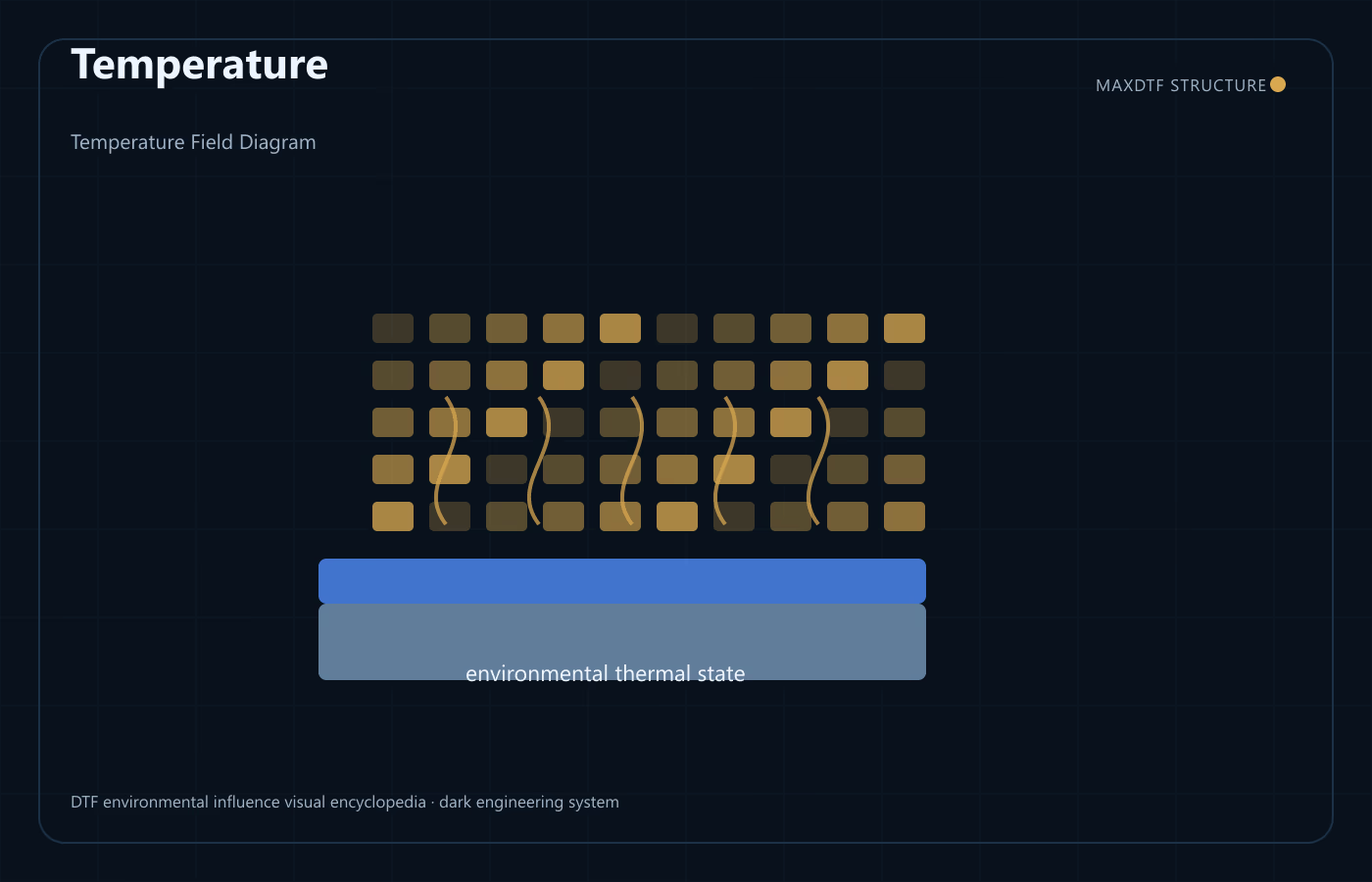
What Is Temperature
Temperature is the measure of thermal energy present in the printing environment.
It defines the thermal condition surrounding materials such as film, ink, and adhesive powder, influencing how these materials behave at a physical level.
Temperature is not a property of the material itself, but an external condition that affects material states, including viscosity, mobility, and interaction readiness.
It is closely related to Ambient Thermal Stability, as consistent or fluctuating temperature conditions determine how stable the system remains over time.
Temperature also interacts with environmental variables such as Humidity and Airflow, forming a combined environmental framework that defines overall system behavior.
How Temperature Functions in the DTF System
Within the DTF system, temperature functions by influencing material state and interaction readiness.
Changes in temperature alter how materials behave physically. For example, it affects how ink moves and stabilizes on the film surface, connecting to Ink Behavior Architecture in DTF Printing.
Temperature also influences how adhesive powder responds to surrounding conditions, particularly in relation to activation and bonding behavior described in Adhesive Bonding Architecture in DTF Printing.
In relation to separation behavior, temperature defines the conditions under which release interactions occur, linking it to Release Timing Architecture in DTF Printing.
Temperature does not operate independently. It works together with Humidity, affecting how moisture interacts with materials, and with Airflow, influencing how heat is distributed and maintained in the environment.
Interaction Path
Temperature influences the DTF system by altering material states and shifting interaction readiness across system components.
At lower temperatures, materials tend to remain in a more stable but less reactive state. Ink mobility is reduced, and interaction between materials may occur more slowly.
At higher temperatures, materials become more active. Ink behavior changes, and adhesive materials move closer to activation conditions. This shifts the system toward a more interaction-ready state.
Temperature also interacts with moisture behavior. When combined with Humidity, it defines conditions such as those described by Dew Point, where environmental state transitions may occur and lead to conditions defined as Condensation Risk.
Through this mechanism, temperature does not directly drive system behavior but determines how easily interactions between components can occur.
It defines the readiness of the system to transition between different states of interaction.
What Temperature Does NOT Do
Temperature does not define material structure, including layers such as Release Layer, nor does it determine how these layers are constructed.
It does not define ink formulation or chemical composition, which belong to Ink Behavior Architecture in DTF Printing.
It does not define adhesive composition or bonding mechanisms, which are described in Adhesive Bonding Architecture in DTF Printing.
Temperature does not define separation logic or release conditions by itself, which are part of Release Timing Architecture in DTF Printing.
It is not a standalone control variable that determines system performance, and it does not independently define print quality or final transfer results.
Structural Nature
Temperature exists as an environmental variable outside the structural and material layers of the DTF system.
It does not belong to film, ink, or adhesive components. Instead, it defines the thermal condition under which these components operate.
Its influence is expressed through its effect on material states and interaction readiness. It affects how ink behaves, how adhesive responds, and how separation processes occur.
Temperature interacts with environmental stability through Ambient Thermal Stability, and with moisture-related conditions through its relationship with Humidity.
It does not define these variables individually. It defines the thermal context in which they operate.
Performance Boundaries
Temperature defines thermal conditions but does not define performance outcomes.
It operates within a range where system behavior remains stable. Outside this range, it alters material states and interaction readiness, leading to changes in how the system behaves.
Temperature does not determine whether performance is acceptable. It defines the thermal conditions under which performance is observed.
Common Misunderstandings
Temperature is often treated as equivalent to process heat, such as curing or pressing temperature. In reality, environmental temperature operates independently from these controlled parameters and influences system behavior continuously.
Another misunderstanding is that higher temperature always improves system performance. While increased temperature may enhance interaction readiness, it may also alter material behavior in ways that affect system stability.
Temperature is also commonly treated as an isolated variable. In practice, it interacts closely with Humidity and Airflow, forming a combined environmental condition that defines overall system behavior.
Where Temperature Sits in the System
Temperature belongs to the Environmental Influence layer of the DTF system.
It is not part of the structural, material, or process layers. Instead, it defines one of the core environmental conditions affecting all components simultaneously.
Within the system, it operates alongside Humidity and Airflow, and its effects become visible through system-wide interactions described in System Interaction Architecture in DTF Printing.
Related Concepts
This concept is part of the Environmental Influence Architecture in DTF Printing system.
– Humidity
– Temperature
– Airflow
– Moisture Absorption
– Dew Point
– Condensation Risk
– Adhesive Bonding Architecture in DTF Printing
– System Interaction Architecture in DTF Printing